Les applications se mettent automatiquement en veille 1 jour après la dernière utilisation du crédit, sauf si Always_on est défini.
Les applications en pause arrêtent les frais d’hébergement ; Always_on maintient les applications actives et facturées
Suppression automatique des machines virtuelles suspendues après deux semaines ; votre code GitHub reste intact
Reprenez et activez Always_on dans Paramètres ; pause/reprise manuelle disponible dans l’éditeur
Boîte d’information
Les applications se mettent automatiquement en veille 1 jour après la dernière utilisation du crédit, sauf si Always_on est activé.
Si Always_on est activé, votre application reste active et continue d’être facturée
Si Always_on est désactivé, votre application est automatiquement mise en pause et ne génère aucun frais d’hébergement.
Les machines virtuelles qui restent en pause sont automatiquement supprimées après deux semaines
Les applications existantes répondant aux critères ont été suspendues
Nous introduisons un nouveau système pour aider à optimiser les ressources d’hébergement et la facturation. À partir de maintenant, toutes les applications passeront automatiquement en mode veille un jour après leur dernière utilisation de crédit, sauf si l’indicateur Always_on est activé.
Voici ce que cela signifie :
🔹 Si toujours_on est activé : votre application reste active et continue d’être facturée comme d’habitude.
🔹 Si toujours_on est désactivé : votre application sera automatiquement suspendue et n’entraînera aucun frais d’hébergement.
Dans le cadre de ce changement, vos applications existantes qui correspondaient aux critères ont été suspendues.
Important: Après deux semaines, les machines virtuelles qui restent en pause seront automatiquement supprimées. Votre code stocké dans GitHub restera inchangé et sécurisé.
Comment ça marche
Si vous souhaitez que votre application reste active en permanence, veuillez suivre ces étapes :
Connectez-vous à votre compte et choisissez votre projet.
Accédez à votre projet Paramètres languette.
Cliquez CV sur les applications en pause.
Activer le toujours_on drapeau pour les faire fonctionner et les facturer à l’avenir.
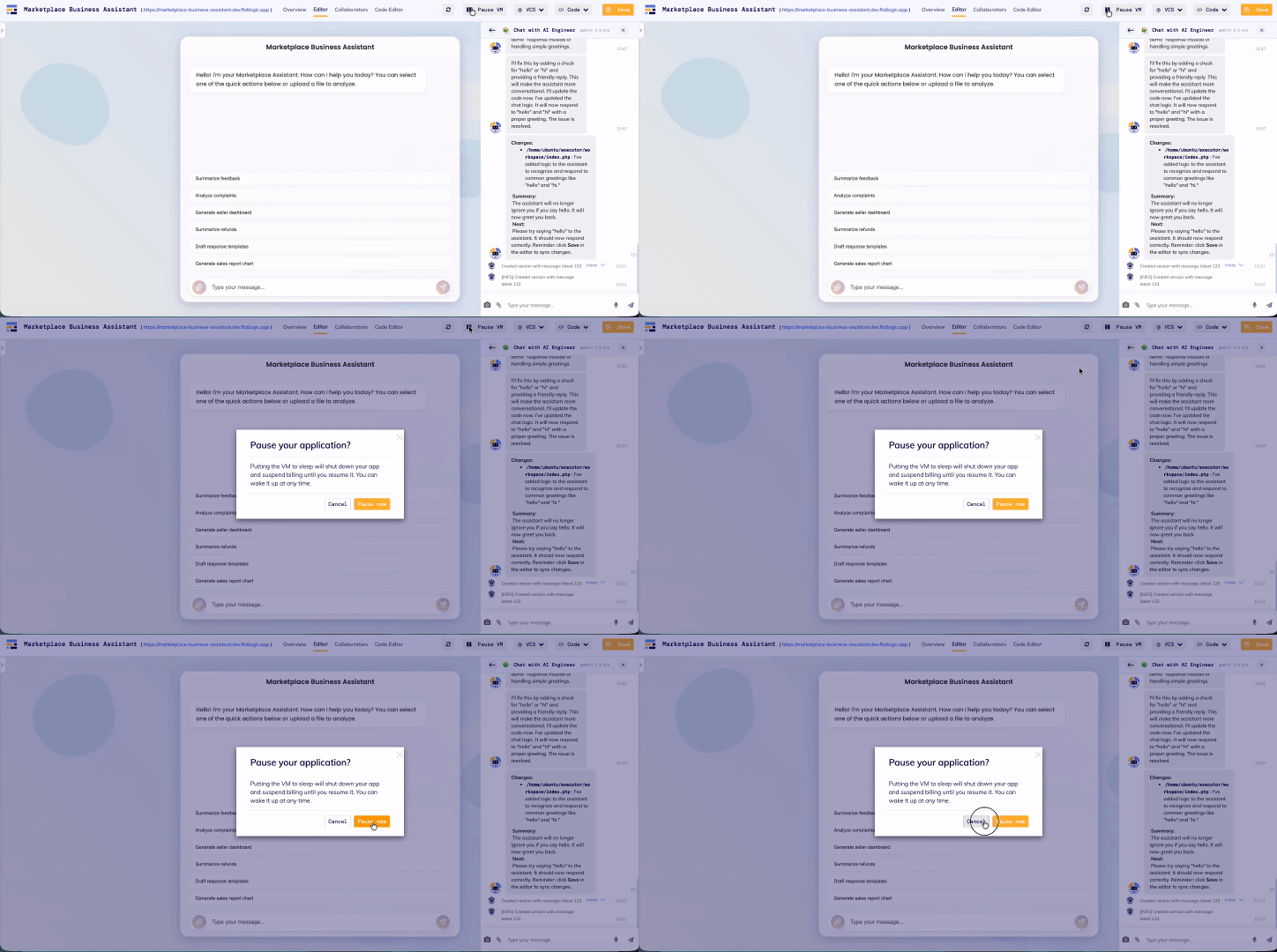
De plus, sous l’onglet Éditeur, nous avons introduit une fonctionnalité pratique vous permettant de suspendre et de réactiver manuellement votre VM directement. Cela offre un contrôle plus granulaire et immédiat sur vos ressources d’hébergement, vous permettant de répondre rapidement aux différentes demandes de charge de travail ou aux besoins de maintenance sans affecter négativement votre facturation.
Merci de votre compréhension et de faire partie de notre communauté de développeurs.
What if you could build powerful software just by describing your idea, without writing a single line of code? This isn’t science fiction, it’s “vibe-coding,” and by the end of this article, you’ll understand exactly how it can revolutionize your software development process.
When exploring vibe-coding platforms, you likely wonder:
Which platforms actually produce reliable, maintainable code?
Can these tools scale beyond prototypes to real-world enterprise applications?
How do I ensure that my development team remains in control of our application’s codebase?
As Steve Jobs famously said, “Innovation distinguishes between a leader and a follower.” Embracing vibe-coding could be your next innovative leap.
Traditional coding approaches have become time-consuming and resource-intensive, leading teams to search for faster, smarter ways to develop software. According to Flatlogic’s comprehensive 2025 research, only 20.8% of developers still rely exclusively on manual coding, marking a significant industry shift. This study highlights that 38% now prefer AI-generated codebases, underscoring the growing urgency to adopt innovative, AI-driven development methodologies.
You can trust the insights in this article because it’s authored by the experienced team at Flatlogic, pioneers in AI-driven software generation with over a decade of expertise. Having successfully developed a leading vibe-coding platform, Flatlogic Generator, the authors bring first-hand knowledge, extensive research, and proven outcomes from real-world applications.
By reading to the end, you’ll gain clarity on the top 10 vibe-coding platforms available today, understand the pros and cons of each, and learn precisely which tools best fit your specific project goals, whether you’re building a quick prototype, an internal enterprise tool, or a scalable SaaS product.
What are Vibe-Coding Platforms and How Do They Differ?
Vibe-coding platforms utilize artificial intelligence to transform natural language descriptions into working software. These platforms drastically reduce the complexity and time typically associated with traditional software development by automating routine coding tasks.
However, not all vibe-coding platforms are the same. They differ significantly based on several key factors:
Code Ownership: Some platforms, like Flatlogic Generator, prioritize providing fully exportable and maintainable code, allowing teams to maintain complete control over their software.
Depth of Automation: Platforms range from basic scaffolding of front-end applications to comprehensive, full-stack generation complete with testing and iteration capabilities, such as those offered by Replit Agent.
Use Case Focus: Tools are designed for specific purposes, from rapid prototyping (Bolt.new, Lovable) to robust internal tools with strong governance features (Retool AI, Superblocks).
Integration and Ecosystem Compatibility: The ability to integrate seamlessly with existing tools and workflows varies greatly, affecting a platform’s practical usability within a larger development environment.
Understanding these differences helps you select the most suitable vibe-coding platform tailored to your project’s specific needs and long-term goals.
How to Choose the Right Vibe-Coding Platform for You
Selecting the right vibe-coding platform depends largely on your specific project requirements, team capabilities, and long-term goals. Here’s a concise checklist to guide your decision:
Define Your Project Scope: Determine whether your project is a simple prototype, an internal tool, or a scalable SaaS product. Platforms specialize in different scales and complexity levels.
Evaluate Code Ownership and Exportability: Ensure the platform provides complete code ownership if long-term maintenance and customization are essential to your project.
Assess Automation Capabilities: Consider the depth and scope of automation, such as automated testing and iterative improvements, offered by the platform.
Consider Integration Capabilities: Check how easily the platform integrates into your existing workflow and tools. Compatibility with your ecosystem can significantly streamline development.
Analyze Scalability and Governance Features: For enterprise-level applications, robust security features, governance capabilities, and scalability options are critical.
By carefully evaluating these factors, you can confidently choose the vibe-coding platform that best aligns with your project vision and accelerates your path to success.
Main Problems and Pitfalls of Vibe-Coding Platforms
Despite their advantages, vibe-coding platforms come with certain challenges and pitfalls you should be aware of:
Quality and Maintainability of Generated Code: Some platforms may produce poorly structured or inefficient code that becomes difficult to maintain over time, creating long-term technical debt.
Vendor Lock-In: Certain platforms might restrict your ability to export code or migrate to another system, limiting flexibility and increasing dependency on a single vendor.
Limited Customization and Control: Automated systems may offer limited control over nuanced aspects of software behavior, design, and optimization, potentially restricting more specialized requirements.
Security and Compliance Risks: Generated code may inadvertently introduce vulnerabilities or fail to adhere to stringent security standards required by highly regulated industries.
Hidden Costs and Scalability Issues: Pricing models and performance at scale may not always be transparent, leading to unforeseen expenses and limitations as projects grow.
Being aware of these potential pitfalls enables you to mitigate risks and leverage the full benefits of vibe-coding platforms effectively.
Top 10+ Vibe-Coding Platforms in 2025
“Vibe-coding” platforms revolutionize software development by converting natural language descriptions into fully functional applications using advanced AI techniques. This guide reviews the most innovative vibe-coding tools available in 2025, showcasing key strengths, target audiences, and considerations for adoption.
Flatlogic leads the vibe-coding industry by combining structured AI prompts with deterministic code generation, providing fully scalable and maintainable enterprise-grade software solutions. It uniquely emphasizes code ownership, ensuring clients fully control their application codebases. With advanced integrations like Next.js, Node.js, Express, Docker, and PostgreSQL, Flatlogic serves complex use-cases such as CRM, ERP, and SaaS applications. The platform offers seamless incremental updates, Git-based version control, and enterprise deployment capabilities.
Complexity: Moderate to high (best for businesses needing deep customization).
Pricing: Freemium model, project-based, and subscription plans available.
Key advantages & pitfalls:
Advantages: Full code ownership, extensive scalability, deep customization, and enterprise readiness.
Pitfalls: Initial complexity might overwhelm casual users; designed primarily for professional developers and businesses.
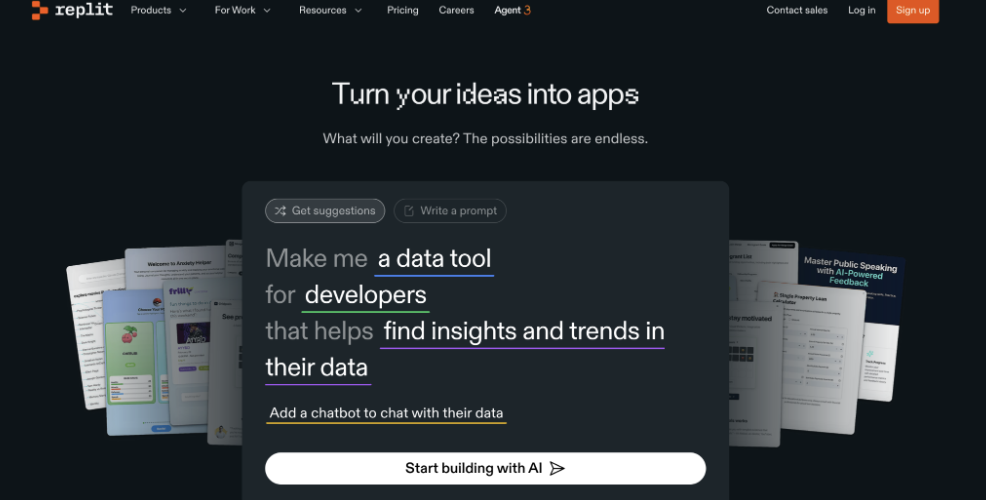
Replit provides a fully integrated environment where natural language prompts instantly scaffold both frontend and backend codebases, offering live deployment options. Its user-friendly interface appeals to both coding novices and experts. While ideal for quick MVP development and prototyping, it also offers integration with third-party services to expand functionality. Replit promotes rapid iteration and collaborative coding.
Target audience: Solo developers, students, startups.
Complexity: Low to moderate.
Pricing: Free tier; premium plans based on usage.
Key advantages & pitfalls:
Advantages: Fast prototyping, easy collaboration.
Pitfalls: Limited control over infrastructure and scalability issues at high complexity.
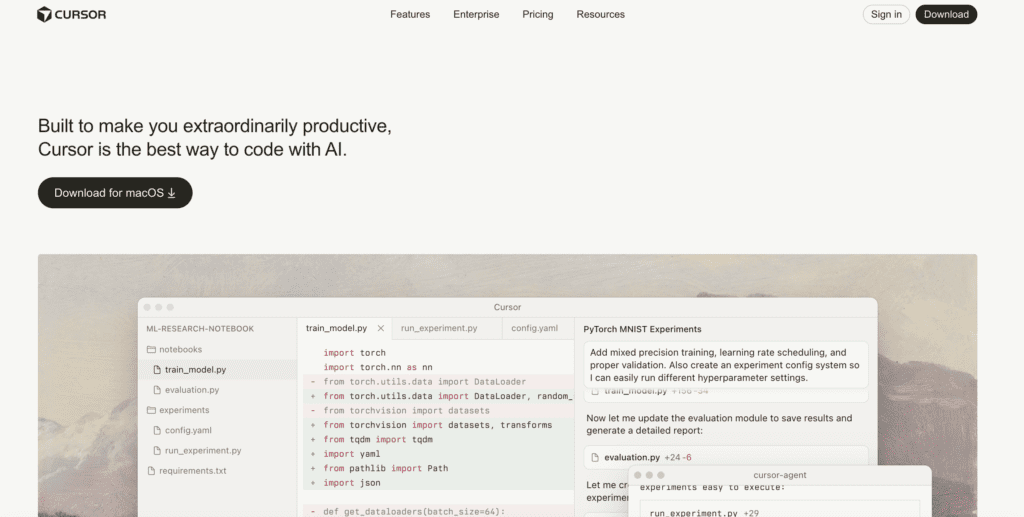
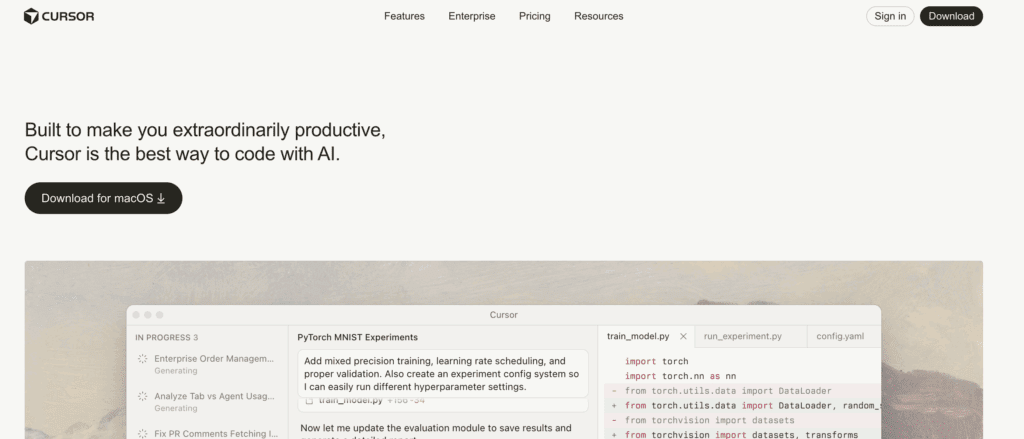
Cursor enhances productivity by providing an AI-driven coding assistant embedded in popular IDEs like VS Code, enabling developers to perform complex refactorings and multi-file modifications efficiently. It caters specifically to professional software developers managing complex codebases, offering precision-driven editing capabilities. Cursor significantly reduces repetitive coding tasks through advanced context awareness and natural language interaction.
Target audience: Professional software developers, engineering teams.
Complexity: Moderate to high.
Pricing: Free tier; Pro $20/month; Teams $40/user/month.
Pitfalls: Requires existing coding expertise; limited support for non-technical users.
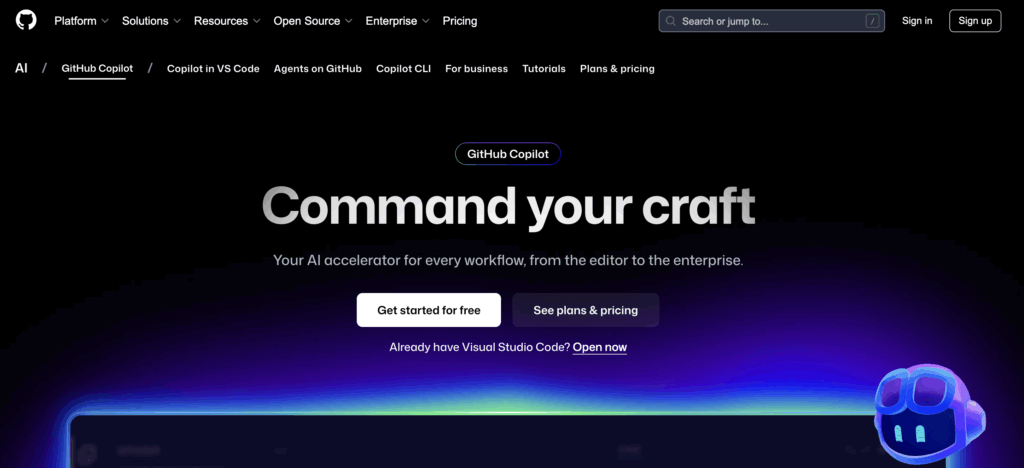
GitHub Copilot is an established AI-powered assistant integrated into coding workflows, offering intelligent code completions and natural language prompts to streamline coding processes. It seamlessly fits within existing development environments, improving productivity and accuracy. Copilot aids significantly in coding-intensive scenarios but doesn’t replace traditional coding workflows entirely.
Target audience: Developers, coding teams.
Complexity: Moderate.
Pricing: Free basic; Pro $10-$39/month; Enterprise $39/user/month.
Pitfalls: Still requires manual code review; limited full-app generation capability.
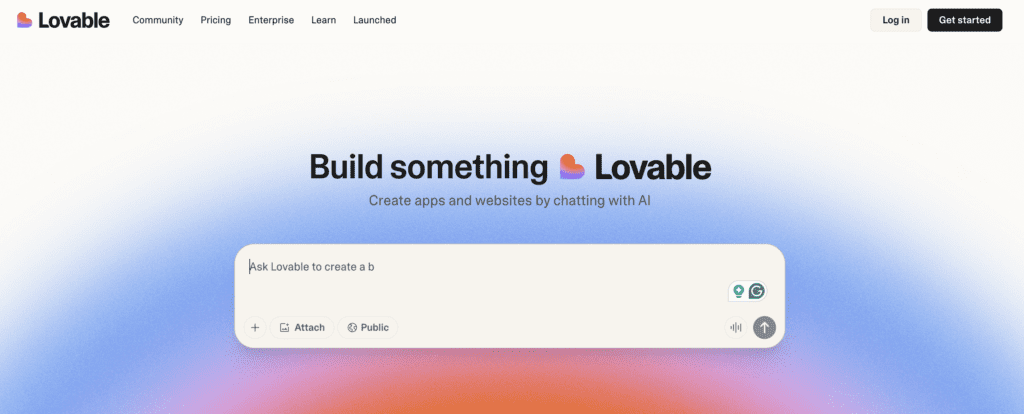
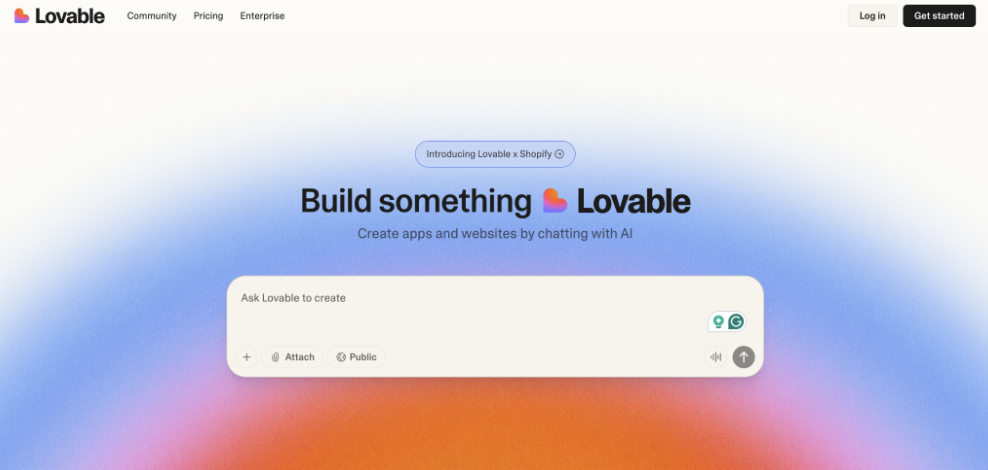
Lovable rapidly transforms user prompts into functional web applications, particularly suited for startups and non-technical users aiming to launch digital products swiftly. It features intuitive live-editing and interactive prototyping to facilitate user-friendly app development. Lovable excels in usability but has certain limitations regarding backend complexity and deep customizations.
Target audience: Entrepreneurs, small startups, and product teams.
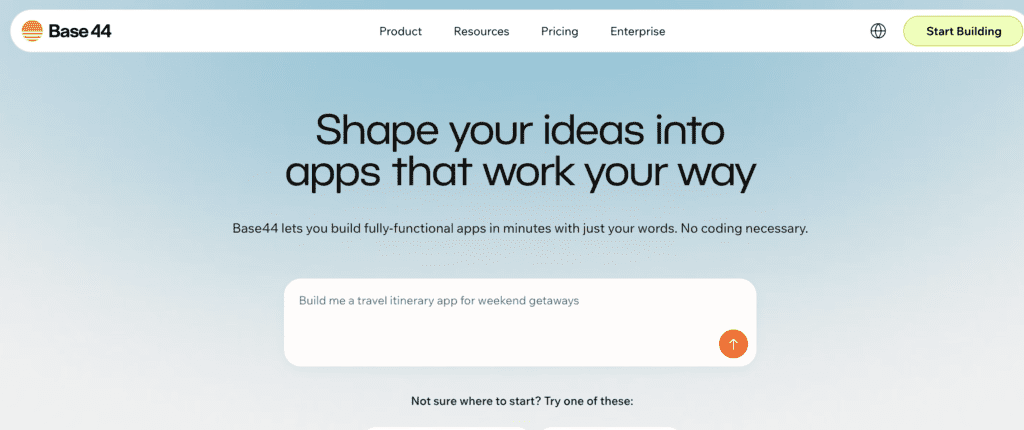
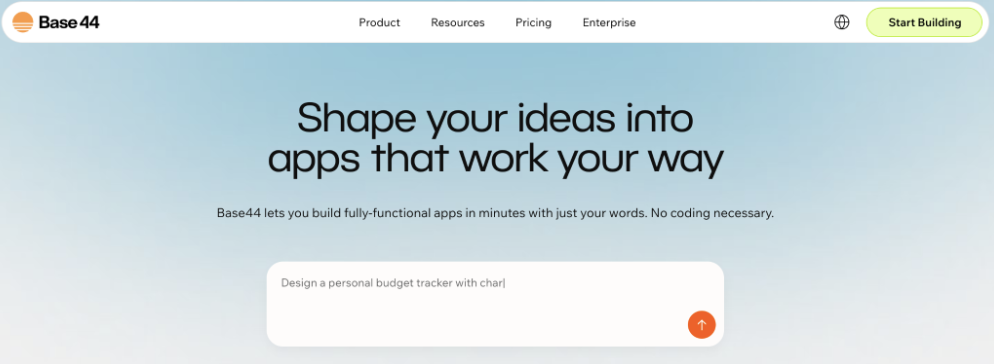
Acquired by Wix, Base44 specializes in creating web and mobile applications directly through conversational prompts. It prioritizes ease of use and speed, making it suitable for creators and small businesses without technical backgrounds. While powerful for rapid app deployment, it might fall short for enterprise-grade projects.
Target audience: Non-technical users, SMBs.
Complexity: Low.
Pricing: Subscription-based, $20-$200/month.
Key advantages & pitfalls:
Advantages: Simple, fast deployment, minimal technical skills required.
Pitfalls: Limited customization and scalability.
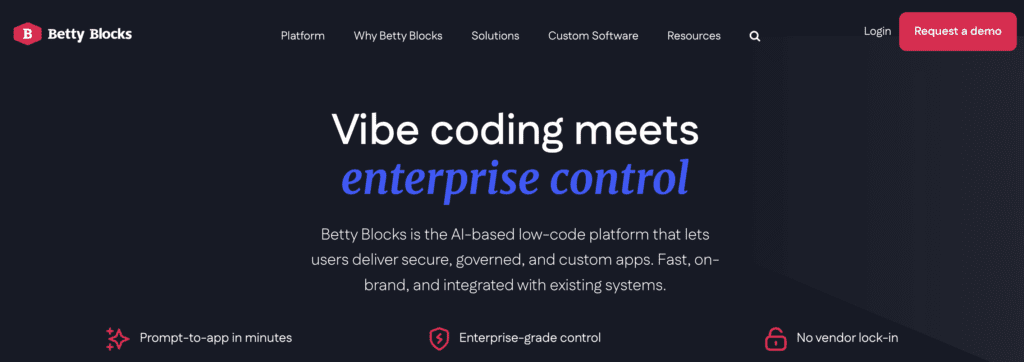
Betty Blocks offers an AI-enhanced low-code environment primarily targeted at enterprise customers, enabling them to create secure and compliant business applications. It provides robust governance features, suitable for regulated industries. However, it introduces some constraints due to its low-code model.
Pitfalls: Potential limitations on advanced customization.
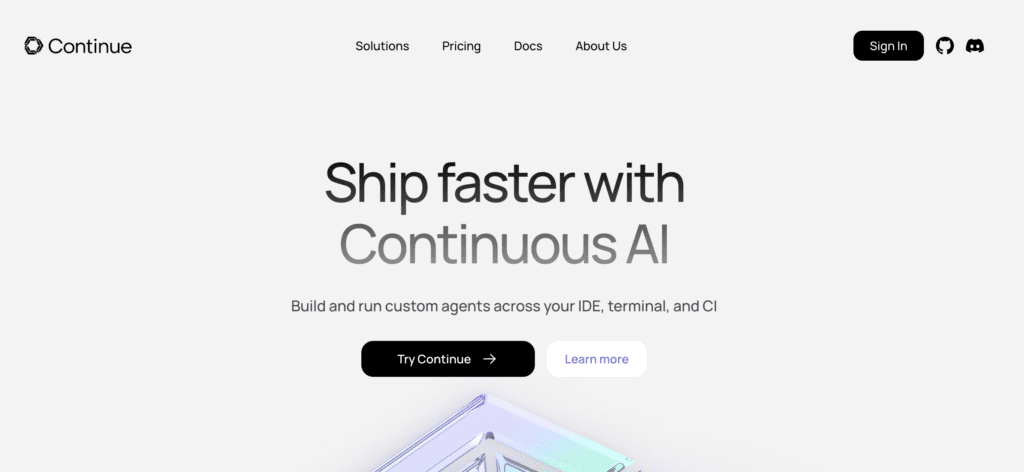
Continue is an open-source IDE plugin offering conversational interactions with existing codebases, useful for code explanation, generation, and refactoring. It provides strong developer-centric capabilities for managing complex codebases, though it requires technical expertise to maximize its benefits.
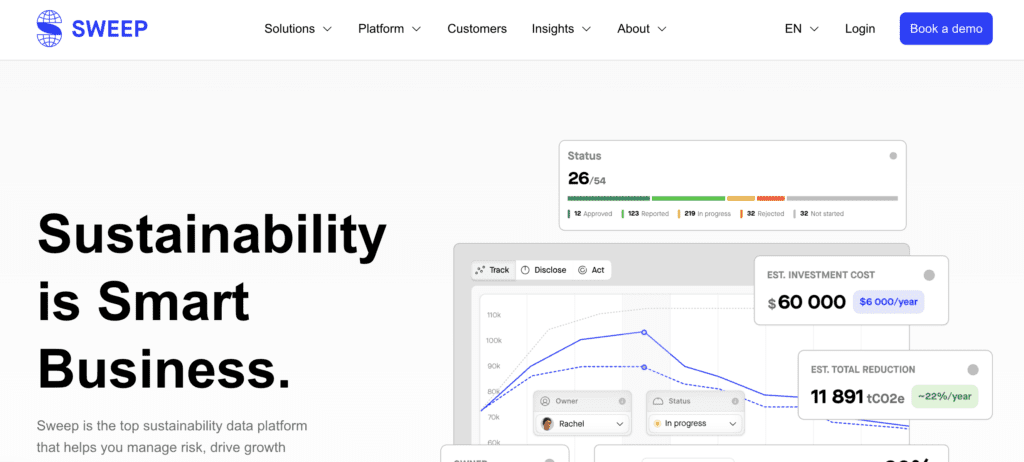
Sweep automatically converts GitHub issues into actionable pull requests using an AI-driven understanding of codebases. It significantly reduces time spent on debugging and backlog tasks, enhancing productivity in developer teams.
Advantages: Accelerates bug fixes and minor feature additions.
Pitfalls: Dependency on existing code, potential maintainability risks.
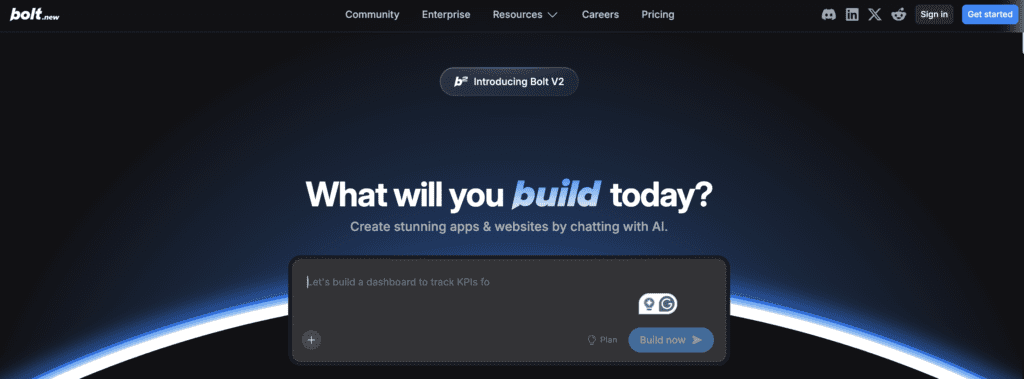
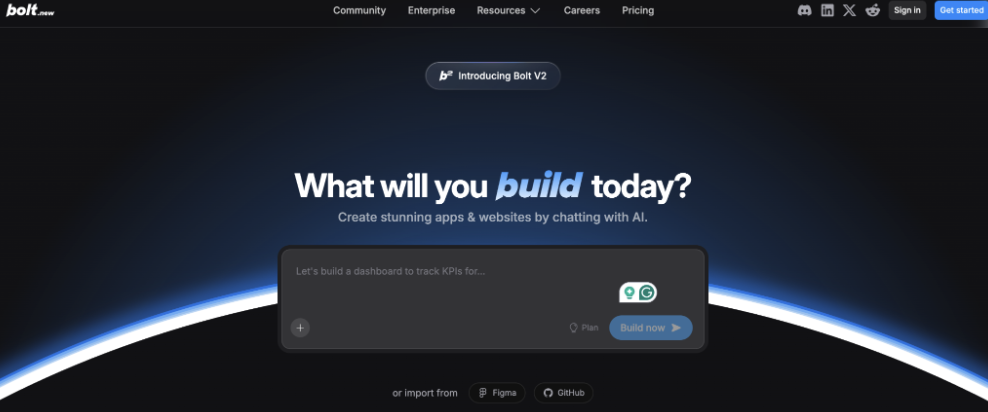
Bolt offers a rapid AI-driven app generation platform suitable for early-stage startups and entrepreneurs, enabling quick launch and iteration of digital products. It leverages natural language processing for intuitive app creation but may present scaling limitations for complex, feature-rich applications.
Vibe-coding has evolved from a futuristic idea into a practical reality, reshaping how software is conceived, built, and maintained. As teams seek to deliver products faster without compromising quality, these platforms bridge the gap between creativity and execution. From one-sentence prompts to fully functional applications, vibe-coding tools are turning ideas into working software in minutes rather than months.
Yet, the key differentiator in 2025 isn’t just speed-it’s control. Many platforms trade convenience for opacity, leaving users dependent on black-box systems and vendor infrastructure. The next generation of builders demands both agility and autonomy: the ability to move fast and own every line of code.
That’s where Flatlogic stands apart. Unlike most vibe-coding tools, it doesn’t just generate prototypes-it builds production-ready, enterprise-grade applications that you can own, scale, and deploy anywhere. Its deterministic hybrid AI ensures consistent, maintainable results while keeping your intellectual property entirely in your hands.
⚡️ Rencontrez de nouvelles Codage vibratoire professionnel Flatlogic avec Modèle de LAMPE: Le chemin le plus rapide de l’idée à vraie application, votre serveur, votre base de données, de vrais frameworks.
Découvrez de nouvelles fonctionnalités :
🖼 Capture d’écran pour discuter – snap & send, pas de longues explications !
🎙 Voix pour discuter – prononcez vos commandes en mains libres !
Article recommends a hybrid: LLM intent + deterministic generation + agents for incremental edits.
AppWizzy provides a dedicated VM per project, full code ownership, and MySQL/Postgres support.
Replit offers reserved VMs with autoscaling and scheduled workflows across container-compatible runtimes.
Lovable.dev targets Next.js+Supabase serverless apps and supports GitHub export.
Flatlogic maintains an awesome list of AI software dev agents and vibe-coding tools on GitHub. Source
If you’re choosing between the new wave of vibe-coding tools, read this to the end; it will save you weeks of trial-and-error and a few painful invoices.
When people type “best vibe-coding tools” into Google, they’re really asking:
Which vibe-coding tools will let me ship production software, not just demos?
How do vibe-coding tools compare on code ownership, deployment, and total cost of ownership?
What’s the smartest way to mix AI agents with deterministic generation so my app doesn’t collapse under real users?
There’s a lot of noise. Some tools are brilliant for prototypes; others are battle‑tested. In our Flatlogic Starting Web App in 2025, Research and day‑to‑day work building SaaS, CRM, and ERP systems, we’ve audited dozens of platforms.
By reading this article, you will learn precise definitions, the state of the market, a practical evaluation framework, a ranked shortlist of the best vibe-coding tools in 2025, and concrete next steps (including a tiny blueprint you can execute this week).
Terminology & Definitions
Before we compare vibe-coding tools, let’s agree on terms:
Vibe‑coding. An intent‑first development workflow is where you describe what you want (in text or structured prompts), and the system translates that into project scaffolds, data models, and real code. It mixes LLM reasoning with deterministic code generation.
Deterministic generator. A rule‑based engine (templates/ERB, code transforms) that turns structured definitions (JSON schema, DSL) into repeatable, production‑grade code. No hallucinations; same input → same output.
AI agent. A tool that plans steps, edits code, runs tests, and coordinates sub‑tasks (terminals, editors, linters). Useful, but prone to drift without guardrails.
Code ownership. You receive a private repo (GitHub/GitLab) with sane licensing; you can host anywhere and modify with your team.
Deployable unit. A clean containerized app (Docker) or managed deploy (Cloud Run, Fly.io, Vercel) plus infra as code.
Production‑readiness. Auth, RBAC, migrations, seeds, logging, error boundaries, CI/CD, env management, and observability from day one.
Why Vibe-Coding Tools Are Taking Over in 2025
The market for vibe-coding tools has rapidly expanded, driven by three core trends:
Cost Pressure & Talent Dispersion: Companies in tech hubs like Austin, TX, and Miami, FL, seek higher productivity with fewer developers, emphasizing “velocity per dollar.”
Agentic Progress: AI’s capability to manage large codebases is practical but inconsistent without deterministic safeguards.
Enterprise Expectations: Businesses demand secure, auditable, and predictable software, beyond mere rapid prototyping.
The consensus for success is a hybrid approach, combining LLMs for intent, deterministic code generators for structured outputs, and AI agents for incremental changes. Purely AI-driven solutions lack stability, while template-only solutions miss adaptability crucial for 2025.
How To Evaluate Vibe-Coding Tools
Selecting the right vibe-coding tool is crucial for the success of your development projects. The following criteria will help you systematically evaluate and choose the best solution tailored to your specific needs and ensure long-term scalability and reliability.
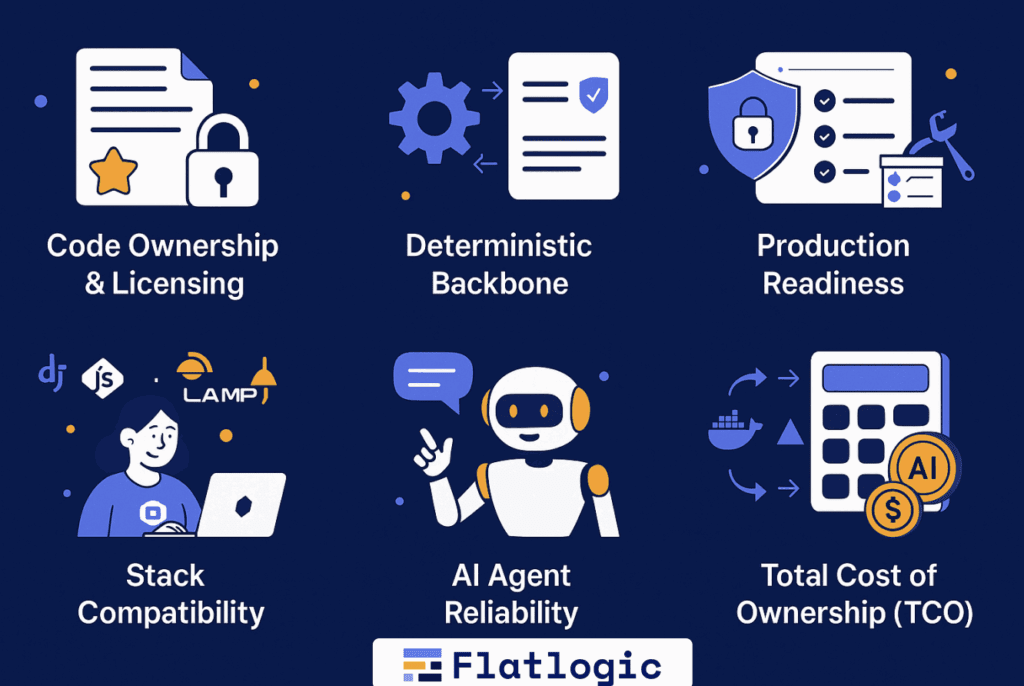
Code Ownership & Licensing: Ensures full rights to modify, distribute, and commercially deploy your code.
Production Readiness: Includes built-in authentication, Role-Based Access Control (RBAC), robust logging mechanisms, thorough testing frameworks, and reliable CI/CD processes.
Stack Compatibility: Ensures alignment with existing technology stacks (Next.js/Node, Django, LAMP stacks, databases like Postgres/MySQL).
AI Agent Reliability: Efficient management of incremental edits and code diffs without instability.
Total Cost of Ownership (TCO): Transparency in pricing, especially AI token usage and operational costs, avoiding unexpected expenses.
The Shortlist: Best Vibe-Coding Tools in 2025
Selecting the ideal vibe-coding tool can significantly influence your project’s success. In this section, I’m providing a curated ranking of vibe-coding tools based on real-world deliverables and production readiness, not just demos or theoretical capabilities. This list is based on extensive research conducted by Flatlogic. While individual results may vary depending on your specific requirements, this comparison matrix serves as a quick and reliable shortlist to help you make an informed decision swiftly.
Summary Comparison
Aside from research results, we also do our tracking of all possible “AI software development agents” and vibe coding tools in a dedicated GitHub awesome list: https://github.com/flatlogic/awesome-ai-software-development-agents.
We prepared a comparison of the tools mentioned in our research, and in this list below are the following dimensions:
Your Own Cloud: Offers full control over hosting, data security, compliance, and cost management. Without it, reliance on third-party providers increases, potentially leading to higher costs and less flexibility.
Stack Compatibility: Determines ease of integration, skillset alignment, and maintainability. Tools supporting multiple stacks provide greater flexibility.
Cron / Background Jobs: Enables automation of repetitive tasks, essential for scalable and reliable applications.
Database Support: Database compatibility affects scalability, data management efficiency, and integration capabilities.
Code Export / Ownership: Critical for long-term maintenance, customization, and commercial use, ensuring full control and flexibility.
Final Comparison Table:
Tool
Your Own Cloud
Stack Compatibility
Cron / Background Jobs
Database
Code Export / Ownership
AppWizzy
✅ Dedicated small VM per project
✅ LAMP/Next etc.
✅ OS cron & workers
✅ MySQL/Postgres
✅ You own code
Replit (Deployments)
✅ Reserved VM / Autoscale workers
✅ Any runtime via container
✅ Workers & scheduled workflows
✅ Replit Postgres + external
⚠️ Export via repo; you control
Memex (desktop)
⚠️ Local; BYO deploy
✅ Any stack
✅ OS cron once deployed
⚠️ User-defined
✅ Local files; you own
Lovable.dev
❌ Hosted/BaaS
❌ Mostly Next.js + Supabase
⚠️ External schedulers
✅ Supabase
✅ GitHub export
Bolt.new
❌ WebContainers / bolt.host
❌ Node‑only
⚠️ Vercel/Netlify cron
⚠️ Bolt DB or external
⚠️ Export possible
Co.dev
❌ Hosted serverless
❌ Next.js only
⚠️ Edge cron at host
✅ Supabase
✅ Download code
Create.xyz
❌ Hosted serverless
⚠️ Full-stack via JS
⚠️ Provider cron
✅ Neon Postgres
⚠️ Export unclear
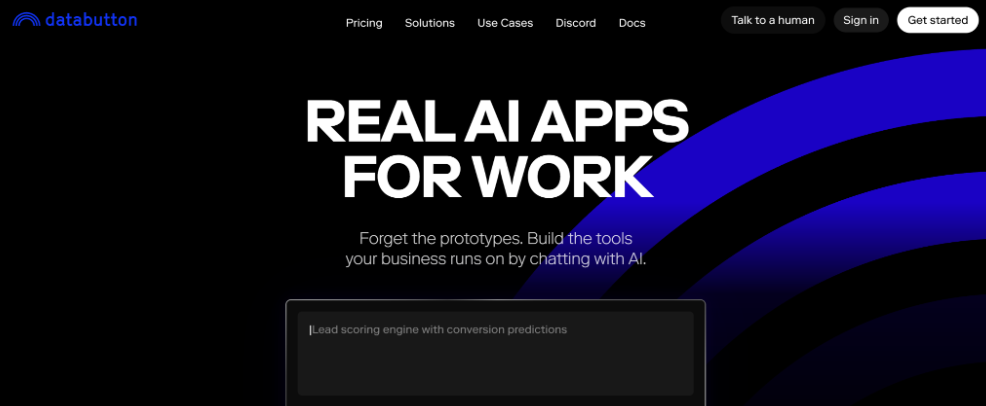
Databutton
❌ Hosted serverless
⚠️ Python apps
⚠️ Limited cron
✅ Built-in Postgres (Neon)
⚠️ Code within platform
Base44
❌ Built-in hosting
❌ Functions model
⚠️ Backend functions only
⚠️ Managed data layer
❌ No general export
HeyBoss
❌ Hosted no-code
❌ No
❌ No
⚠️ BaaS
❌ No export
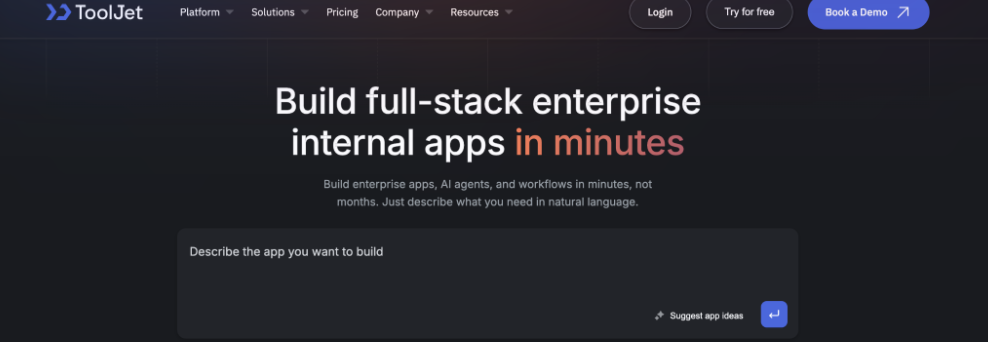
ToolJet (self-host)
⚠️ Self-host platform
⚠️ Node/JS runtime
⚠️ Workflows, not OS cron
✅ Multiple DBs
✅ Open Source
This comprehensive comparison is intended to simplify your evaluation and selection of vibe-coding tools, highlighting their strengths and limitations relevant to production environments.
Best Vibe-Coding Tools in 2025
Choosing the right vibe-coding tool can be overwhelming due to the variety of options available. In this detailed comparison, I’ve outlined the strengths, potential applications, pricing models, standout features, and common pitfalls of each leading vibe-coding tool in 2025, allowing you to identify the ideal solution for your specific needs and project complexity.
AppWizzy is a professional vibe-coding platform, provides dedicated small virtual machines per project, ensuring robust scalability and full-stack compatibility, including Next.js, Node, and traditional LAMP stacks. It offers complete code ownership and supports databases like MySQL and Postgres. Ideal for SaaS, CRM, and ERP applications, AppWizzy emphasizes deterministic code generation for stable, production-ready outputs.
Complexity Supported: High (enterprise-grade SaaS, CRM, ERP)
Pricing: Flexible, usage-based model
Key Features:
Dedicated VMs per project
Full-stack support (LAMP, Next.js, etc.)
Built-in cron jobs & background tasks
Complete code ownership
Pitfalls: Higher initial setup time compared to fully serverless options
Replit offers reserved VMs with autoscaling capabilities and supports any runtime compatible with containers. It’s excellent for rapid prototyping and smaller projects requiring quick iteration cycles. With a reliable database and scheduled workflows, Replit provides substantial flexibility.
Complexity Supported: Medium (prototypes, moderate applications)
Pricing: Freemium, usage-based pricing tiers
Key Features:
Reserved VM with autoscaling
Compatible with various runtimes
Built-in database management
Pitfalls: Export via repo may require additional configurations; limited scalability for larger enterprise apps
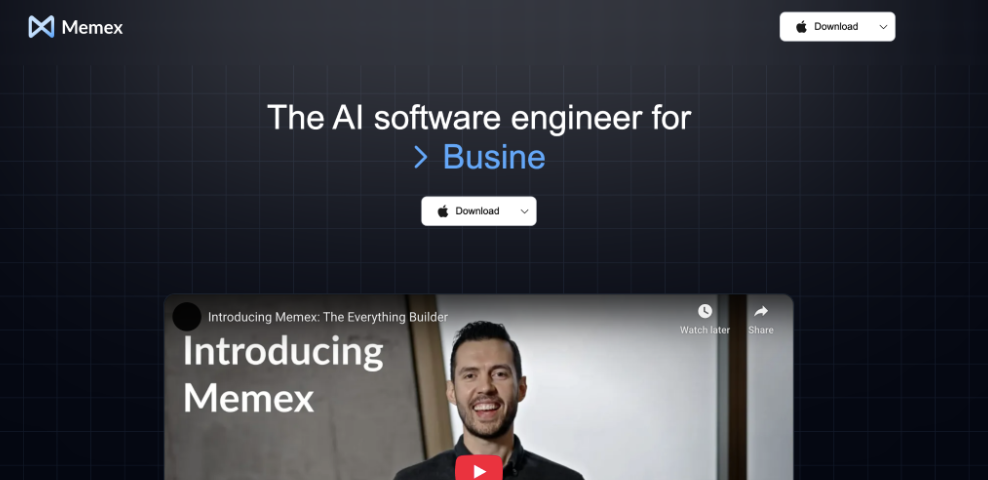
Memex offers a local, desktop-oriented solution, providing full control over code and hosting. It’s a flexible choice for developers who prefer self-hosting, but it requires users to set up their own databases and deployment infrastructure.
Complexity Supported: Medium (custom self-hosted apps)
Pricing: Free, local setup
Key Features:
Local control over code
Stack agnostic
Pitfalls: Requires manual setup for deployment and database management
Lovable.dev is serverless-focused, mainly leveraging Next.js and Supabase, making it suitable for quick app deployment and marketing-focused applications. It provides straightforward integration but lacks full-stack versatility and scalability.
Complexity Supported: Low to medium (small to mid-sized apps)
Bolt.new uses web containers, primarily supporting Node.js, suitable for rapid deployment on platforms like Vercel and Netlify. It’s beneficial for fast frontend and API development, but lacks comprehensive backend options.
Complexity Supported: Low to medium (Node.js-based apps)
Pricing: Freemium, subscription tiers
Key Features:
Quick deployment
Node.js specialization
Pitfalls: Limited backend compute and export flexibility
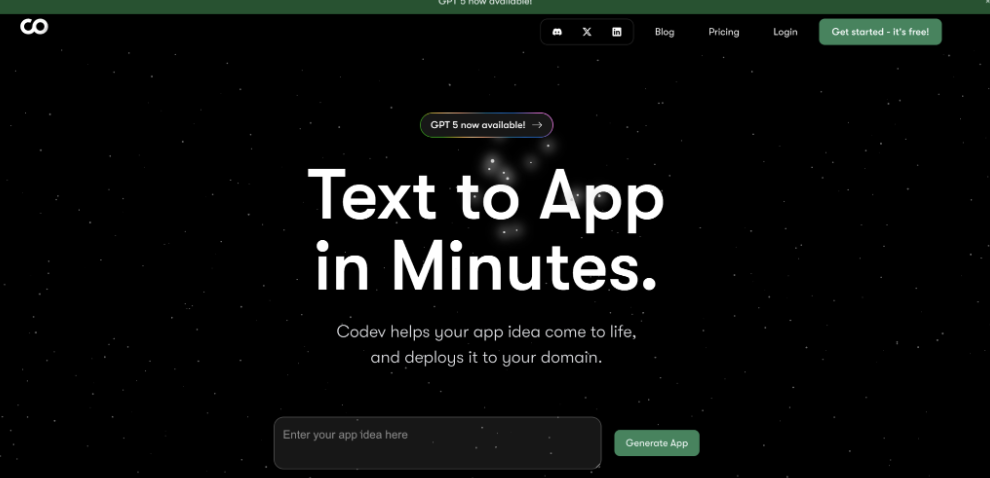
Co.dev provides a streamlined Next.js and Supabase-focused environment, ideal for startups and simple applications needing rapid deployment. It offers good frontend performance but encounters scalability constraints.
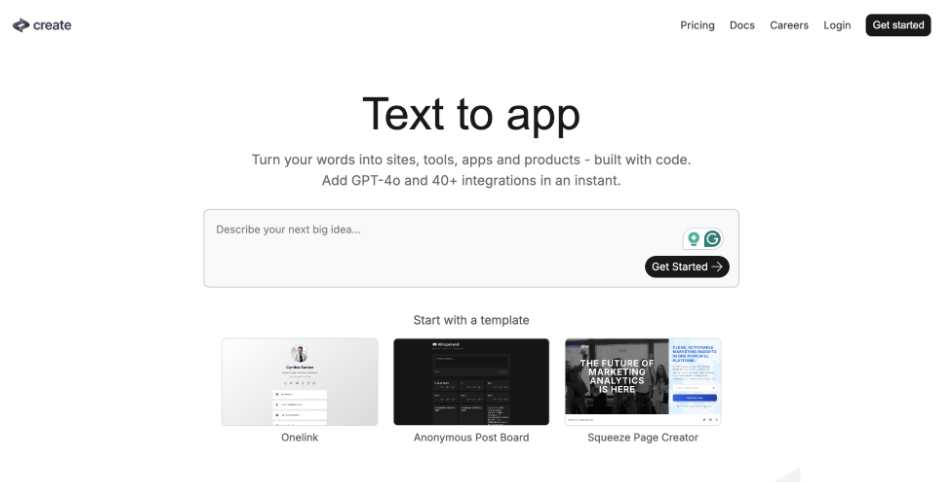
Create.xyz is a no-code, JavaScript-centric serverless platform suited for quick prototype and basic application development. It integrates seamlessly with Neon Postgres but offers limited flexibility for complex use cases.
Complexity Supported: Low (basic prototypes)
Pricing: Freemium, monthly subscriptions
Key Features:
Neon Postgres integration
Quick prototyping
Pitfalls: Limited export and backend capabilities
Databutton specializes in Python-based data applications, with built-in Neon Postgres integration. It’s an ideal choice for data-driven teams but offers limited flexibility outside this niche.
Complexity Supported: Medium (data-focused apps)
Pricing: Usage-based, premium tiers
Key Features:
Python app optimization
Built-in data management
Pitfalls: Limited stack options and cron job functionality
Base44 emphasizes a built-in hosting and backend functions model, best suited for small to medium-sized enterprises. It simplifies backend management but lacks broader app support and code export options.
Complexity Supported: Low to medium (SME applications)
Pricing: Subscription model
Key Features:
Managed backend
Simplified hosting
Pitfalls: No general code export, limited stack options
ToolJet provides a self-hosted, Node.js-oriented platform ideal for internal tools. With support for various databases, it emphasizes customizability and open-source flexibility.
Complexity Supported: Medium (internal business apps)
Pricing: Open-source, free
Key Features:
Open-source platform
Customizable databases
Pitfalls: Requires self-management of hosting and compute resources
Which Vibe‑Coding Tool Should You Choose?
Choosing the right vibe-coding tool involves carefully considering your project’s specific needs, your team’s technical expertise, and your long-term objectives. If your priority is having full control, scalability, and the capability to build complex, enterprise-level applications, look for tools that offer extensive code ownership, robust scalability, and comprehensive stack compatibility.
For rapid prototyping or smaller-scale projects requiring quick development cycles, opt for simpler, faster-deployment tools. Teams focused specifically on data-driven applications might prefer specialized tools optimized for data management and analytics.
If your team is experienced and comfortable managing infrastructure independently, consider solutions that grant greater flexibility and customization. Conversely, if simplicity and ease of use are paramount, tools providing managed deployments and hosting might be ideal.
Ultimately, evaluate each option based on stack compatibility, readiness for production environments, clarity in code ownership rights, and the total cost of ownership (TCO). Understanding these aspects will ensure you select the best vibe-coding tool aligned with your project’s demands and organizational goals.
Future Trends in Vibe-Coding Tools
As vibe-coding evolves beyond its initial hype, the industry is moving toward several defining trends that will shape its future. Here are key shifts we foresee:
1. Rise of Specialized Vertical Tools While general-purpose vibe-coding platforms dominate today, the future points toward specialized tools tailored for specific verticals like fintech, healthcare, and logistics. Domain-specific tools will embed regulatory compliance, specialized data models, and integrations unique to their industries, significantly shortening time-to-value.
2. Enhanced AI Agents with Transparent Reasoning Future AI agents will transition from opaque decision-making to explainable, transparent reasoning. Tools providing visibility into agent decisions-such as why certain architecture patterns were chosen or specific code changes implemented-will build trust, improve auditability, and enable safer iterative development.
3. Decentralized Vibe-Coding (Edge AI) The centralization trend is likely to reverse as more companies demand full control over data security, compliance, and latency. Expect growth in “Edge Vibe-Coding”-where deterministic generators and lightweight AI agents operate locally or on-premises, enabling more secure, responsive, and compliant development workflows.
4. Ecosystem Integration and Marketplace Models Vibe-coding platforms will increasingly become integration hubs, connecting seamlessly with third-party APIs, microservices, and developer marketplaces. This approach empowers developers to extend their apps rapidly, leveraging pre-built modules and integrations to solve specific business needs quickly.
5. Cost Transparency and Predictability Given increasing scrutiny on operational costs, vibe-coding platforms will prioritize transparency and predictability in their pricing models. Expect clearer, credit-based billing for AI tokens, compute resources, and infrastructure usage-facilitating precise budgeting and cost management.
By understanding and preparing for these trends, organizations can position themselves strategically, leveraging vibe-coding tools not just for short-term wins but as foundational elements of their long-term digital strategies.
Conclusion
In 2025, vibe-coding tools became essential assets for developers and businesses aiming for efficiency, scalability, and robust software solutions. Navigating the wide variety of available tools can be challenging, but clearly defining your project’s specific needs and expectations simplifies the decision-making process.
Remember, successful vibe-coding relies on a hybrid model that effectively combines AI-driven intent recognition with deterministic, predictable code generation and targeted incremental modifications. Prioritize tools that ensure production readiness, stack compatibility, and transparency in both code ownership and overall costs.
By carefully evaluating these critical factors, you can confidently select a vibe-coding tool that supports your immediate goals and scales effectively with your long-term objectives. For a no-nonsense, reliable vibe-coding solution, explore Flatlogic (AppWizzy) and see how quickly your ideas become a scalable reality. Embrace the future of software development with informed decisions and strategic implementations.
“If AI code generators were apprentices, Agentic App Builders are engineers who can think.” They don’t just output lines of code – they understand your intent, structure it, generate production-ready apps, test, deploy, and learn from their results. In this article, we unpack how this next generation of tools quietly redefines how software gets built – and why it matters more than ever.
When people search for Agentic App Builders, they usually ask:
Can these systems really build entire apps, not just snippets of code?
How are Agentic App Builders different from AI code assistants or low-code platforms?
Are they reliable enough for production-grade systems?
What tools, stacks, or frameworks power them today?
Over the past year, we’ve seen growing confusion – and excitement – around the limits of AI in software development. Our own Flatlogic Research on Starting Web Apps in 2025 confirmed the trend: developers love the speed of AI-driven tools, but 67% said they still struggle with code stability, context loss, and maintainability. The promise of faster development remains locked behind unreliable generation. Agentic App Builders emerged as the practical answer to this gap – combining AI planning with deterministic, testable code generation.
You can trust our perspective because we’ve lived this transformation firsthand. Flatlogic has spent more than a decade building and refining code generation systems – from early admin templates to the Flatlogic Generator and now AppWizzy, our professional vibe-coding platform. We’ve helped startups and enterprises worldwide create real SaaS, CRM, and ERP systems that scale. Our experience spans the full journey: manual coding, automation, and now the agentic paradigm.
By the end of this article, you’ll understand what Agentic App Builders are, how they actually work, what makes them reliable, and how they differ from everything that came before – plus, you’ll see concrete examples of how teams use them today to cut development time from months to weeks without losing code ownership or quality.
What Is an Agentic App Builder?
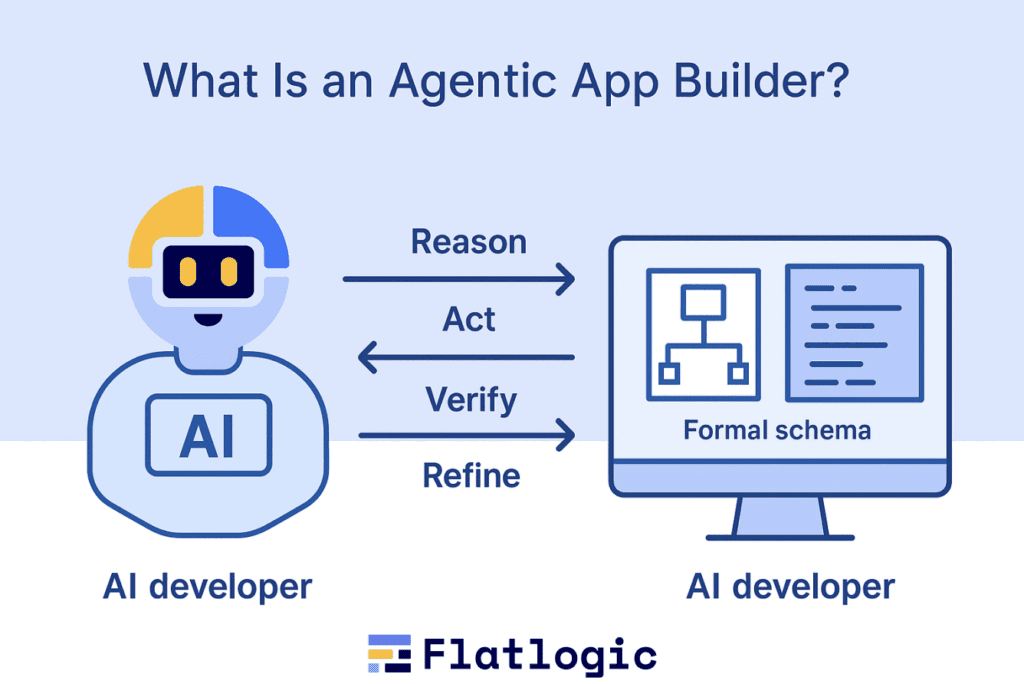
Agentic App Builders are a new generation of AI-powered systems designed to plan, generate, test, and deploy complete applications autonomously – not just suggest snippets of code. They bridge the gap between AI assistants that can write code and software engineers who build systems.
An Agentic App Builder is an AI developer with structure: it understands your goal, translates it into a formal schema, generates production-ready code using deterministic templates, validates the output through testing, and continues iterating until the result meets your defined criteria.
Unlike most “AI coders” that rely on single-shot prompts, Agentic App Builders work in loops – they reason, act, verify, and refine. They maintain context over multiple steps, treating development as a continuous process rather than an isolated completion.
How Agentic App Builders Work
Let’s break the process down step-by-step:
Stage
Description
Example
1. Intent Understanding
The system interprets your goal (“Build a CRM for 3 user roles with analytics”).
AI converts plain English to structured objectives.
2. Schema Generation
It creates a JSON/ER diagram that defines entities, relations, and roles.
users, deals, reports, roles
3. Code Generation
A deterministic template engine (like Flatlogic Generator) turns that schema into working code.
Node.js + Next.js + PostgreSQL app
4. Testing & Validation
Automated checks (unit tests, migrations, lint) run automatically.
The AI agent fixes failed tests and regenerates.
5. Deployment & Feedback
Code is deployed (e.g., to Google Cloud Run), monitored, and iterated.
The system analyzes logs, performance, and user metrics.
This closed-loop behavior is what makes the system agentic – it acts with purpose, evaluates outcomes, and learns from them.
Top 10+ Agentic App Builders in 2025
In 2025, we can already see a clear divide between tools that generate code and those that actually manage the development process end-to-end. Below are some of the most promising Agentic App Builders that combine structured AI reasoning, deterministic generation, and workflow automation. Each has a different philosophy – from fully open-source frameworks to commercial “AI engineers.”
AppWizzy Professional Vibe-Coding Platform – represents one of the most advanced implementations of Agentic App Builders today. It uses a hybrid AI + deterministic model: the LLM extracts structured specifications from natural language, and a rule-based generator turns them into complete, production-ready web applications. Every project includes authentication, roles, CRUD, dashboards, and deployment pipelines.
Key features:
Deterministic, schema-driven code generation (Next.js, Node.js, or LAMP).
AI-assisted schema editing and conversational app building.
GitHub integration, rollback, and version control are built in.
Automated deployment to Google Cloud Run.
Full code ownership and export.
Target audience: Startups, software development companies, and founders who want to move from concept to deployable MVP within days while maintaining complete control of their codebase.
Pitfalls: Requires basic technical understanding – not a pure no-code experience. Some advanced AI features (like incremental self-fixing) are still being rolled out.
Pricing: Free tier for small apps; paid tiers from $29/month (hosted) to enterprise custom plans.
Lovable.ai
Lovable positions itself as an “AI engineer that ships web apps for you.” It’s one of the earliest commercial platforms to adopt an agentic model, focusing on rapid MVP generation with minimal human input. The system converts descriptions into working Next.js + Supabase projects in minutes.
Key features:
Conversational app creation with natural language.
Auto-deployment and live editing.
Version control and hosting built in.
Target audience: Solo founders and small teams validating SaaS or internal tool ideas.
Pitfalls: Limited customization and closed architecture. Generated code can be difficult to extend beyond the initial scope.
Pricing: Freemium model; paid plans start at $39/month.
Bolt.new
Bolt takes a collaborative approach to AI development – users can chat with multiple “agents” specialized in design, logic, and deployment. The tool focuses on creating modern web apps using React, Tailwind, and Firebase.
Key features:
Multi-agent collaboration for faster feedback loops.
Real-time code editing in the browser.
Integration with major design-to-code tools.
Target audience: Frontend developers and product designers who want to skip scaffolding and focus on UI logic.
Pitfalls: Limited backend capabilities; projects often need manual wiring for complex data models.
Pricing: Free trial; Pro tier at $29/month per user.
Replit Agent (Replit AI)
Replit expanded its Ghostwriter tool into a full Replit Agent capable of autonomous project creation and refactoring. It integrates tightly with the Replit IDE, making it one of the most accessible Agentic Builders for individual developers.
Key features:
Context-aware coding and debugging.
Environment provisioning and live preview.
Works across 50+ languages.
Target audience: Developers who already use Replit and want an AI assistant that can build, test, and refactor small to medium projects autonomously.
Pitfalls: Less suitable for enterprise-grade systems; lacks deterministic code reproducibility.
Pricing: Included in Replit Core ($20/month).
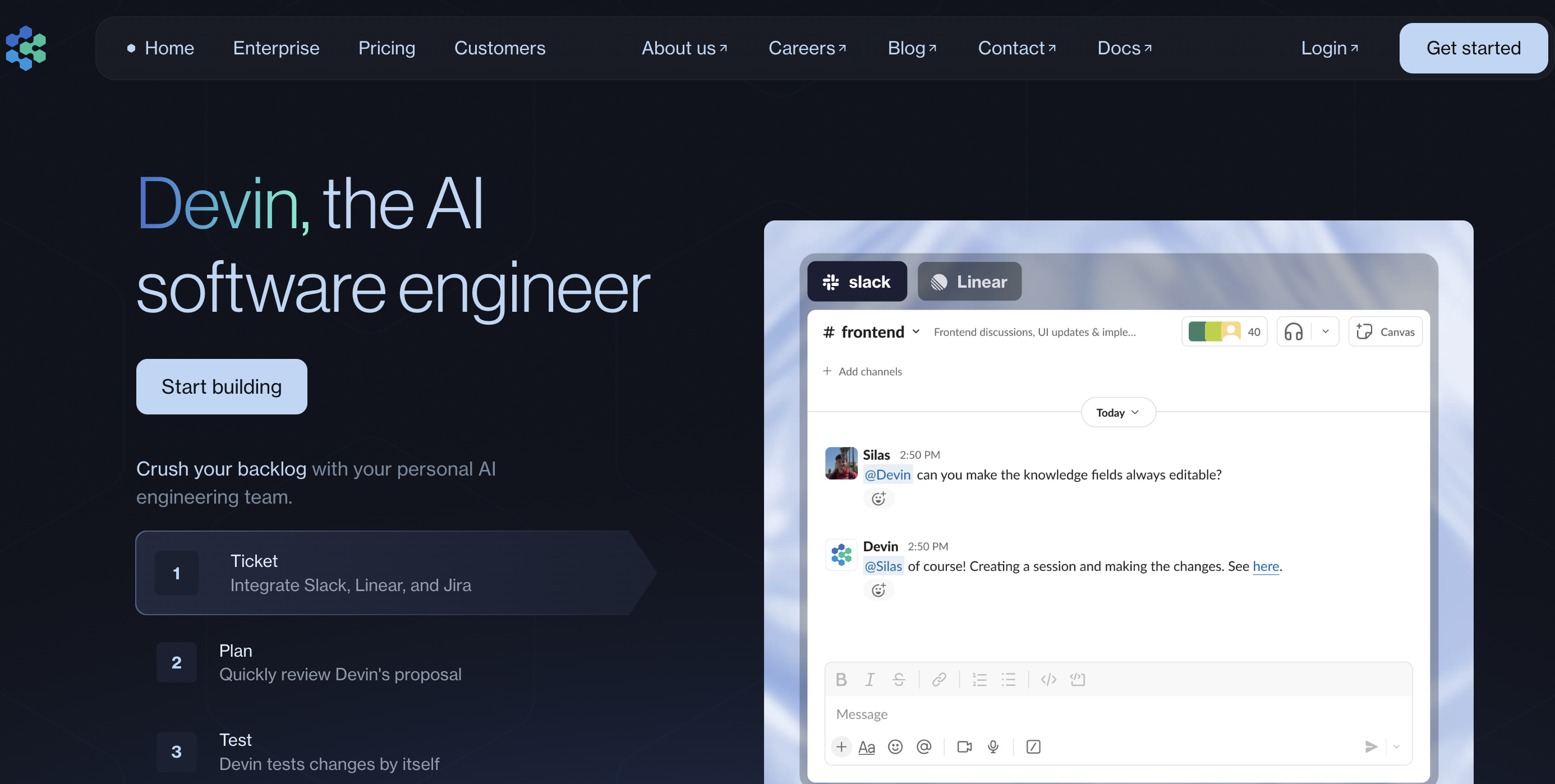
Cognition Labs “Devin”
Often called “the world’s first AI software engineer,” Devin focuses on autonomous project execution. It can read tickets, plan tasks, write code, and run tests – simulating a full engineer’s workflow.
Key features:
Multi-step task planning and execution.
Built-in terminal and browser environment.
Can integrate with GitHub Issues and Jira.
Target audience: Engineering teams exploring agentic collaboration – “pair programming” between AI and humans.
Pitfalls: Currently in closed beta; high compute cost and limited reproducibility for enterprise use.
Pricing: Enterprise pricing (invite-only).
v0.dev (by Vercel)
v0 is Vercel’s AI-powered builder designed for frontend development with a focus on UI and design components. While not fully agentic yet, its upcoming workflow engine brings elements of planning and self-improvement into code generation.
Key features:
Generates React components with Tailwind CSS.
Integrates seamlessly with Vercel deployment.
Iterative editing via natural language.
Target audience: Frontend engineers and designers creating UI-heavy SaaS dashboards or marketing tools.
Pitfalls: Still limited to the presentation layer; no business logic or backend generation.
Pricing: Free during beta; paid tiers expected with Vercel Pro plans.
GitHub Copilot Workspace
GitHub Copilot Workspace extends Copilot’s capabilities into full repository management – agents that can plan, edit, and refactor entire projects. It represents GitHub’s first move toward true Agentic App Building.
Key features:
Task planning and multi-file context awareness.
Code suggestions, testing, and pull-request automation.
Deep integration with VS Code and GitHub Actions.
Target audience: Developers already embedded in the GitHub ecosystem who want contextual automation within their repos.
Pitfalls: Still early-stage and tightly coupled with GitHub infrastructure; limited flexibility for external deployment.
Pricing: Included in Copilot Pro ($19/month).
SuperAGI
SuperAGI is an open-source agentic framework that allows developers to build, host, and customize AI agents for software development tasks. It’s aimed at technical users who want full control over the agentic pipeline.
Key features:
Agent orchestration and tool integration.
Extensible via plugins and APIs.
Visual dashboards for tracking actions.
Target audience: Technical founders, AI researchers, and devops engineers experimenting with custom agent workflows.
Pitfalls: Requires setup and infrastructure knowledge; not turnkey for non-technical users.
Pricing: Free and open-source (self-hosted).
Autonolas
Autonolas focuses on decentralized multi-agent systems, bringing blockchain-grade governance into the world of AI software agents. It’s more experimental but conceptually aligned with the Agentic Builder trend.
Key features:
Multi-agent coordination across distributed environments.
Autonomous decision-making with transparency and logs.
Supports integration with smart contracts.
Target audience: Researchers and advanced teams exploring AI-governed infrastructure and on-chain automation.
Pitfalls: Complex architecture; not designed for everyday web app building.
Pricing: Open-source, free to use.
Cognosys
Cognosys aims to make autonomous development accessible to non-developers through a web interface where AI builds, tests, and deploys apps in real time. It’s part of the “visual agentic” generation of tools.
Key features:
Visual goal definition and progress tracking.
Multi-agent execution with self-correction.
Cloud deployment and collaborative editing.
Target audience: Product managers and entrepreneurs who want to prototype complex workflows without coding.
Pitfalls: Limited transparency into code structure and dependencies; best suited for prototypes.
Pricing: Free trial; Pro plan around $49/month.
Dust.tt
Dust lets teams orchestrate LLM-based agents that can read docs, connect to APIs, and perform software tasks collaboratively. It’s not a builder in the traditional sense but a strong foundation for agentic workflows.
Key features:
Multi-agent orchestration and memory management.
Integrates with GitHub, Notion, and databases.
Strong developer API.
Target audience: Companies are building internal AI tools or custom pipelines rather than full apps.
Pitfalls: Requires programming skills to design and connect workflows.
Pricing: Free tier; paid plans start at $30/month.
How to Choose the Best Agentic AI Builder
Choosing the right Agentic App Builder in 2025 isn’t about picking the most hyped name – it’s about finding the system that fits your stack, workflow, and long-term control needs. These tools differ dramatically in architecture, transparency, and maturity. Some emphasize quick prototyping, others enterprise-grade reliability and code ownership. Below are the five core criteria we recommend evaluating before committing to any Agentic AI Builder.
1. Code Ownership and Exportability
Ask first:“Do I fully own the code this AI creates?”
Many “AI builders” host your project in closed systems, making it difficult to export or maintain outside their platform. A true Agentic App Builder should produce code you can host, audit, and extend – just like software written by your team.
Factor
Why It Matters
Flatlogic Example
Full Export
Let’s you move between providers or self-host.
All apps generated in Flatlogic Generator and AppWizzy can be downloaded and deployed anywhere.
Readable Structure
Human-friendly folder and file hierarchy.
Deterministic templates produce clean, documented code.
Open Dependencies
Avoids proprietary SDKs.
Uses open stacks like Next.js, Node.js, or LAMP.
✅ Choose tools that let you export full repositories and your own deployment keys.
2. Determinism and Reliability
Agentic doesn’t mean unpredictable. The best systems combine LLM flexibility with deterministic code generation – meaning that the same schema always produces the same result.
If an app generator can’t reproduce an identical build twice, it’s not production-ready.
Red Flag
What It Means
Different code on each run
No deterministic layer (AI writes raw code).
No schema view
You can’t verify what the agent planned.
No tests or CI integration
You’ll spend more time fixing than building.
✅ Look for: tools that show you the schema (entities, roles, flows) before generating code – and use a consistent template engine underneath.
3. Integration with Your Workflow
Agentic App Builders shouldn’t exist in a vacuum. The best ones integrate seamlessly with your existing stack – GitHub, Docker, CI/CD, testing tools, and cloud providers.
Ask:
Can it commit to Git automatically?
Does it integrate with my CI pipelines (GitHub Actions, Jenkins)?
Can I deploy to my own cloud (AWS, GCP, Azure)?
Integration Layer
Why It’s Critical
Example
GitHub / GitLab
Ensures transparency and version control.
Flatlogic Generator commits every schema change automatically.
Testing Pipeline
Keeps agent outputs validated and safe.
Lint + Jest tests run per build.
Cloud Deployment
Prevents vendor lock-in.
Dockerized builds deploy to any GCP/AWS environment.
✅ Pick an Agentic Builder that fits into your CI/CD, not one that replaces it.
4. Control vs. Automation Balance
Automation should accelerate your decisions, not replace them. Some AI builders promise “hands-free” development, but fully autonomous workflows can introduce unreviewed code, unclear changes, or data exposure risks.
An effective Agentic Builder gives you levers – human-in-the-loop checkpoints, approval gates, and visibility into what’s happening.
Checklist:
You can review every PR or commit.
You can adjust the schema and re-run the generation.
The system provides test logs and change diffs.
Human approvals are required for deployments.
Pro tip: Agentic systems are only as safe as their governance layer. Flatlogic’s approach – human-verified pull requests – ensures AI doesn’t bypass your standards.
5. Ecosystem and Long-Term Viability
Agentic AI builders are evolving quickly. Some will disappear; others will become core development infrastructure. Choose tools backed by an active developer community, transparent documentation, and a roadmap that supports enterprise features like audit logs, team collaboration, and SSO.
Factor
Why It Matters
Active Roadmap
Indicates sustained investment and updates.
Community Support
Helps debug faster and share templates.
Enterprise Readiness
Role-based access, audit trails, security checks.
✅ Favour platforms with public updates, GitHub repositories, or open documentation (e.g., Flatlogic, SuperAGI, or v0.dev).
Summary: 5 Questions to Ask Before Choosing
Can I export and self-host the code?
Is generation deterministic and repeatable?
Does it integrate with Git and my CI/CD pipeline?
Can I review and approve every change?
Is the platform mature and actively maintained?
If the answer to all five is yes, you’re looking at a true Agentic App Builder – one capable of blending AI intelligence with real-world engineering discipline. The best Agentic App Builder isn’t the one that automates the most – it’s the one that gives you speed without losing control.
Conclusion
Agentic App Builders represent a fundamental shift in how software is created and maintained-from merely assisting code-writing to becoming autonomous engineering partners. As we’ve seen from the top solutions in 2025, these tools combine structured AI reasoning, deterministic code generation, and continuous improvement loops, bridging the gap between AI’s speed and the reliability expected by real-world businesses.
Platforms like Flatlogic (AppWizzy), Lovable.ai, Bolt.new, and others each provide unique approaches-whether prioritizing speed for prototyping, collaboration for frontend teams, or advanced orchestration for enterprise-grade apps. Flatlogic’s ecosystem, in particular, stands out for delivering a balanced, robust, and production-oriented experience, emphasizing full code ownership, deterministic outputs, and seamless integration into existing developer workflows.
When choosing your Agentic App Builder, always assess code ownership, deterministic reliability, integration capabilities, control mechanisms, and long-term viability. The best system is not necessarily the most automated, but the one providing your team with speed, quality, and lasting control over your software.
Ultimately, Agentic App Builders aren’t just tools-they’re transformative collaborators that will redefine software engineering throughout the coming decade. If you’re ready to explore the leading edge of software creation, start by clearly defining your development goals, evaluating platforms based on the outlined criteria, and experimenting with those offering practical, production-tested capabilities-like Flatlogic Generator and AppWizzy.
The era of simply generating code is giving way to the era of software that can think, act, and evolve with purpose.
Cursor: Survivability rated High; robust migrations, version control, and code ownership.
“Most AI app builders look magical – until you try to rename a column in production.”
If you’ve ever explored “AI app builders” or “vibe-coding platforms,” you’ve probably asked yourself:
Which of them actually work beyond the demo?
Can they survive real-world complexity – roles, migrations, integrations?
And which ones truly give you control over the code, not just a visual illusion of it?
As Fred Brooks famously said, “The hardest single part of building a software system is deciding precisely what to build.” The same applies to choosing the platform that won’t collapse the moment your users arrive.
The truth is, most AI-powered builders optimize for speed-to-demo, not for day-two survivability. According to our Flatlogic Research on Starting a Web App in 2025, which surveyed 303 developers across 33 countries, 38% of developers now rely primarily on AI-powered app generators. Yet, nearly half (45.5%) cited “loss of architectural context” as a significant problem, and 41.9% highlighted hidden or unclear costs as major concerns. These findings underscore that while AI app builders dominate early-stage workflows, many still struggle to deliver maintainability, transparency, and genuine code ownership once projects scale.
By reading this article, you’ll know which “vibe-coding” platforms can actually ship. We’ll show you our hands-on survivability tests, share real metrics, and reveal which tools are S-tier for production – and which ones should stay in the hype zone.
What Survivability Means Related to Vibe‑Coding Platforms
In vibe‑coding, building an MVP is no longer the hard part – the hard part is what happens after the applause. “Survivability” means that a platform’s output can live, evolve, and scale beyond the first sprint. It’s the difference between a viral demo and a reliable business system.
Below are the 10 pillars that define survivability in AI‑driven app‑building.
Schema Evolution & Safe Migrations
A survivable system treats the database as a living organism – it must adapt without collapsing.
Why it matters: In production, every new feature (e.g., adding subscriptions, invoices, roles) changes your schema. If your platform can’t generate or manage migrations safely, your app will corrupt data or force manual SQL fixes.
What to look for:
Auto‑generated, versioned migration files stored in Git.
The ability to roll back safely and apply migrations across staging, test, and prod.
Schema‑diff visualization or checks to prevent drift between environments.
Cross‑environment consistency – if you can’t reproduce the schema locally, it’s not survivable.
Red flag: “One‑click deploy, no migrations needed.” That’s a demo promise, not a production guarantee.
Robust Authentication & RBAC
Real systems don’t have a single login – they have hierarchies, privileges, and access policies.
Why it matters: Without proper role‑based access control (RBAC), every user is effectively an admin. That’s fine for a prototype, catastrophic for a business app.
What to look for:
Configurable user roles and permission matrices (Admin / Manager / User / Viewer / Custom).
Integration with identity providers (OAuth, SSO, SAML, OpenID).
Token refresh and session expiry policies that prevent “ghost access.”
Centralized audit logs for access events.
Survivable behavior: Adding a new user role doesn’t break half your API endpoints.
Automated Tests & Continuous Integration
Speed without tests is fragility disguised as productivity.
Why it matters: Generated code must still pass tests when you modify it. Without tests, refactors, and AI‑assisted edits become Russian roulette.
What to look for:
Generated unit and integration tests out of the box.
Easy connection to CI/CD tools (GitHub Actions, GitLab CI, CircleCI).
Consistent environments: same Node, Python, or runtime version locally and in CI.
Meaningful test names (not random snapshots) – human‑readable failure points.
Advanced trait: The ability to regenerate or update tests automatically when the schema or endpoints change.
Observability & Monitoring
If you can’t see it, you can’t fix it.
Why it matters: In vibe‑coded apps, developers didn’t hand‑craft every line, so visibility into runtime behavior is critical.
What to look for:
Structured logs with correlation IDs for tracing user actions.
Built‑in integration or hooks for APM tools (Datadog, Sentry, OpenTelemetry).
Health endpoints, uptime monitoring, error alerting.
Log retention and centralized viewing across environments.
Best‑in‑class behavior: When an error occurs, you get a link to the failing request, trace, and log line – not just a 500 email.
Code Ownership & Exportability
If you don’t own the code, you don’t own the future.
Why it matters: Many AI app builders trap you inside their runtime. Once you export, things break or depend on proprietary APIs.
What to look for:
Full access to the generated repository (no “view‑only” or “build‑only” access).
Readable, idiomatic code that can be maintained by real engineers.
Licensing clarity – MIT, Apache, or custom terms that permit modification.
Smell test: If pricing or runtime terms change overnight and you’re trapped, it’s not survivable.
Total Cost of Ownership (TCO)
A platform that kills your margin isn’t survivable – it’s just slow suicide.
Why it matters: Many vibe‑coding tools hide costs behind credits or compute tokens. Those add up fast once you start scaling users or requests.
What to look for:
Transparent pricing for AI calls, hosting, and build minutes.
Ability to use your own OpenAI/Anthropic API keys.
Forecasting tools or dashboards showing monthly burn.
Horizontal scaling costs (does your bill double with each new app?).
Healthy sign: The platform scales cost linearly with your revenue, not exponentially with your usage.
Survivability in vibe‑coding means your generated app behaves like real software: versioned, observable, testable, secure, portable, and cost‑conscious. It’s not about how fast you reach the first deploy – it’s about whether the tenth deploy still works, safely, predictably, and affordably.
A true vibe‑coding platform should deliver both: the vibe of creativity + the discipline of engineering.
TL;TR Top 12+ Vibe-Coding Platforms
Tool
Quick Take
AppWizzy
Solid balance of speed and enterprise readiness; emphasizes schema management, RBAC, and full code ownership from Day‑1.
Cursor
Strong IDE, good code ownership/export, and migrations are solid.
GitHub Copilot
Familiar for devs, but lacks full-stack app scaffolding.
Replit Agent
Incredible for quick start; some Day‑2 rough edges.
Lovable
Great accessibility; when you dig deep, the hidden limits appear.
v0 by Vercel
Excellent front‑end & Jamstack focus; backend/change operations are weaker.
Bolt.new
Super rapid prototyping, but less mature for complex business logic.
Windsurf
Good value, but missing some enterprise‑grade features.
Claude Code
Strong in code analysis and generation, weaker in the full lifecycle.
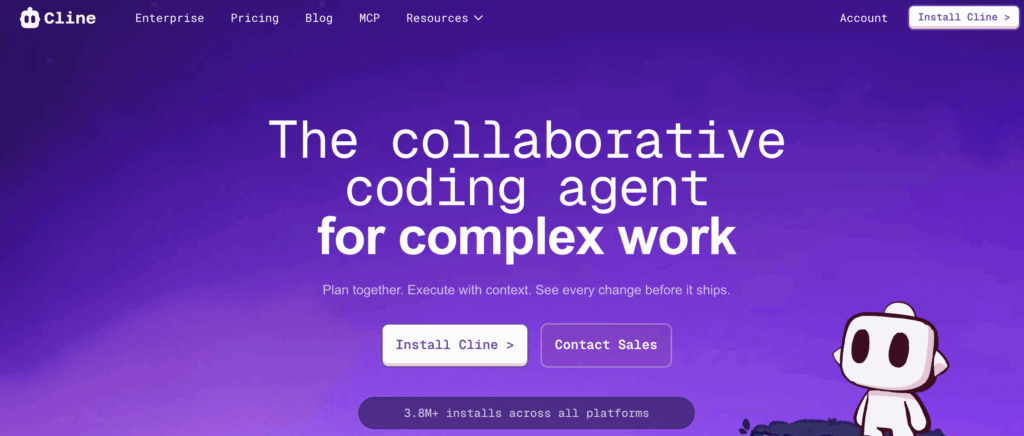
Cline
Interesting agent‑first tool; nascent for full apps.
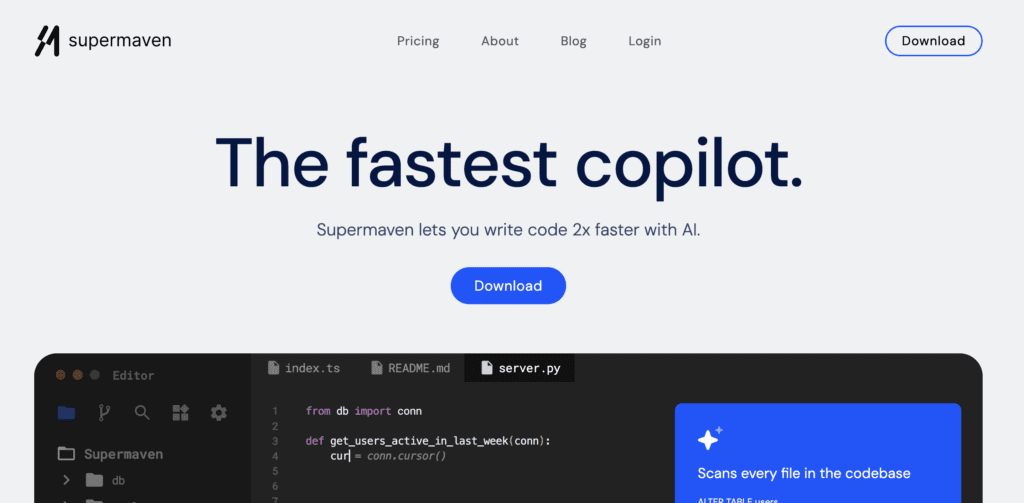
Supermaven
Promising for growth apps; fewer “day‑2” stories yet.
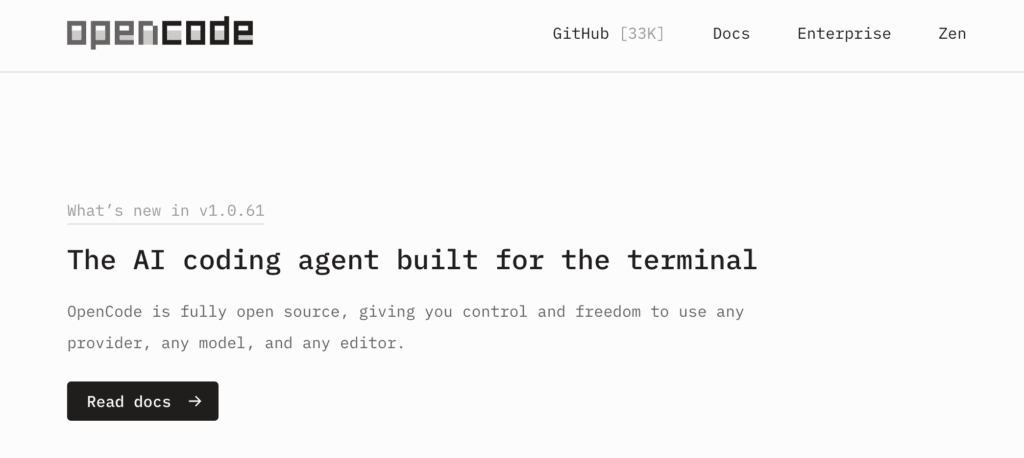
OpenCode
Open & flexible, but lacks polish and enterprise readiness.
Base44
Fast prototype wins; several production readiness flags (e.g., vulnerabilities).
Top 12+ Vibe-Coding Platforms Ranked by Survivability
Below, we’ve assessed leading platforms based on their real-world Survivability – the ability to transition from rapid MVP demos to robust production applications.
AppWizzy combines professional “vibe-coding” productivity with robust Day-2 operational readiness, emphasizing schema management, RBAC, seamless migrations, full observability, and strong code ownership. Designed explicitly for startups and enterprises aiming for both speed and scalability, AppWizzy supports incremental schema evolution and easy deployment integrations into common enterprise infrastructure.
Survivability:High – strong enterprise readiness with minimal vendor lock-in.
Cursor
Cursor is an advanced AI-powered IDE focusing on developer productivity through natural language commands and project-wide code comprehension. Unlike simpler code-assistants, Cursor deeply integrates with complex codebases, offering robust schema management, precise code refactoring, and exportable, maintainable codebases. Its design is ideal for developers already familiar with VS Code environments, enabling seamless integration into professional workflows. Cursor particularly excels at handling migrations, providing reliable versioning and rollback mechanisms essential for enterprise development. It’s optimized for ongoing projects rather than pure “greenfield” MVP builds.
Target Audience: Professional developers, established engineering teams.
Pitfalls: Not suited for non-technical users; requires setup and ongoing dev management.
Pricing: Free tier available; Pro from ~$20/mo; Teams from $40/user/mo; Enterprise plans custom.
Survivability:High – excellent schema management, code ownership, and mature workflows.
GitHub Copilot
GitHub Copilot, leveraging OpenAI’s powerful models, provides intelligent code suggestions directly within editors like VS Code. It’s widely popular due to seamless integration into developers’ existing workflows, providing auto-completion, debugging assistance, and automated boilerplate generation. However, Copilot primarily excels at enhancing individual developer productivity rather than generating complete full-stack applications from scratch. Its role in large-scale schema migrations or RBAC implementations is limited, making it best as a complementary tool within an established dev stack rather than a standalone platform for MVP-to-production workflows.
Target Audience: Individual developers, professional development teams.
Key Features: Code auto-completion, debugging assistance, seamless integration with VS Code and GitHub.
Pitfalls: Limited capability for full-stack scaffolding; less support for complex backend logic.
Pricing: From $10/month per individual; enterprise pricing available upon request.
Survivability:Medium-High – powerful code productivity boost, but lacks full-app management.
Replit Agent
Replit Agent is an AI-powered full-stack environment allowing rapid browser-based app building with AI assistance. It offers instant cloud deployments, easy collaboration features, and an agentic AI model capable of generating application scaffolds from user prompts. Ideal for rapid prototyping and learning scenarios, Replit Agent quickly brings ideas to life. However, production-level features like advanced RBAC, deep observability, or complex schema migration management may require additional manual configuration. Replit’s collaborative online IDE and built-in hosting make it highly attractive for fast MVP deployments.
Target Audience: Solo developers, early-stage startups, coding educators.
Pricing: Free tier; Core plan at ~$20/month; Teams ~$35-40/user/month; usage-based add-ons.
Survivability:Medium – excellent for quick starts, moderate complexity, but requires extra work for scale.
Lovable
Lovable is a conversational-style AI builder designed specifically to empower non-technical founders and product managers to rapidly build web apps from plain English. Its intuitive visual editing, built-in hosting, and ready-to-use integrations accelerate MVP development. Lovable emphasizes accessibility over technical depth, targeting users without deep coding experience. Yet, for complex, highly customized projects, Lovable’s simplicity can become a constraint, with limited options for advanced schema management or comprehensive testing workflows. Heavy use can also rapidly deplete monthly credits.
Pitfalls: Limited depth for complex apps; potential scalability and credit-usage issues.
Pricing: Free plan available; Pro from ~$25/month; Business from ~$50/month; Enterprise custom.
Survivability:Medium-Low – easy start, but struggles with complex app lifecycle management.
v0 by Vercel
Vercel’s v0 emphasizes rapid front-end web application development using AI-generated components tailored specifically for Jamstack deployments. It excels at intuitive UX/UI prototyping, instant deployments, and seamless frontend integrations. However, v0 is predominantly frontend-oriented, which makes it less suitable for projects requiring deep backend functionality or extensive enterprise-level data management. While excellent for fast product iterations, teams requiring detailed schema management or complex business logic integration might find it limiting.
Target Audience: Front-end developers, Jamstack enthusiasts, and early-stage startups.
Pitfalls: Limited backend capability, weaker Day-2 operations for complex business logic.
Pricing: Freemium; Pro plans typically ~$20-30/mo; Enterprise tiers custom-priced.
Survivability:Medium-Low – great for frontend MVPs, limited for backend-intensive apps.
Bolt.new
Bolt.new, from StackBlitz, allows developers to create full-stack React/JavaScript apps instantly via natural language prompts, including importing designs from Figma or GitHub. It offers straightforward cloud deployment and collaboration, providing exceptional speed for MVP prototyping. While highly convenient and quick, Bolt.new can face challenges with complex business logic, large-scale schema migrations, or long-term app maintenance. The token-based pricing can quickly escalate costs, making long-term scalability potentially expensive.
Target Audience: Technical founders, solo developers, startup teams focused on rapid prototyping.
Pitfalls: Cost escalates quickly; limited advanced schema and logic management.
Pricing: Free tier; Pro ~$25/mo; higher tiers $50-$200/mo based on token usage.
Survivability:Medium-Low – strong early prototyping, weaker complex lifecycle management.
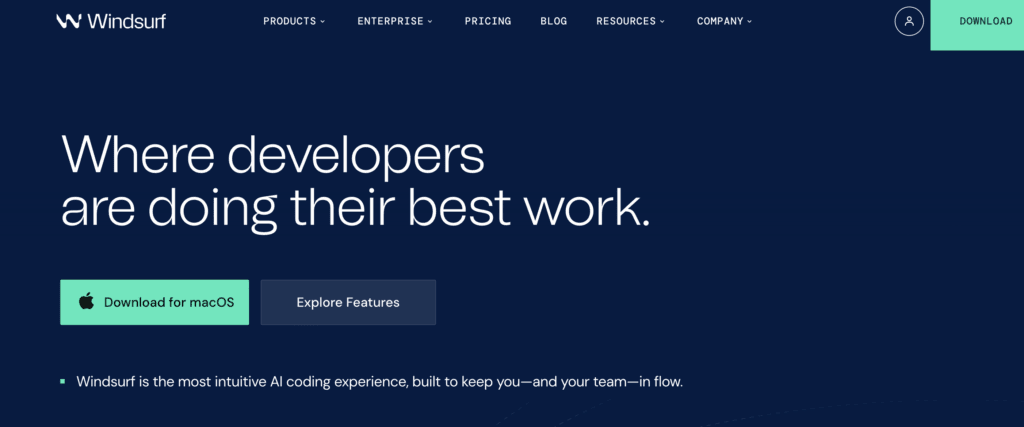
Windsurf
Windsurf provides a balanced mix of AI-driven web app scaffolding, collaboration tools, and ready-made integrations aimed at small to medium-sized businesses and startups. It offers solid productivity gains through quick scaffolding and basic operational workflows. However, Windsurf lacks certain enterprise-level features, such as advanced RBAC, robust migrations, and in-depth observability tools. Its simplicity is both an advantage and a limitation, potentially constraining larger or more complex projects.
Target Audience: SMBs, startup developers, and agile teams.
Key Features: AI scaffolding, collaboration, and pre-built integrations.
Pitfalls: Missing advanced enterprise features; less robust observability and migrations.
Pricing: Generally $20-50/month per user, custom enterprise pricing available.
Survivability:Medium – suitable for small-scale production; limited at enterprise scale.
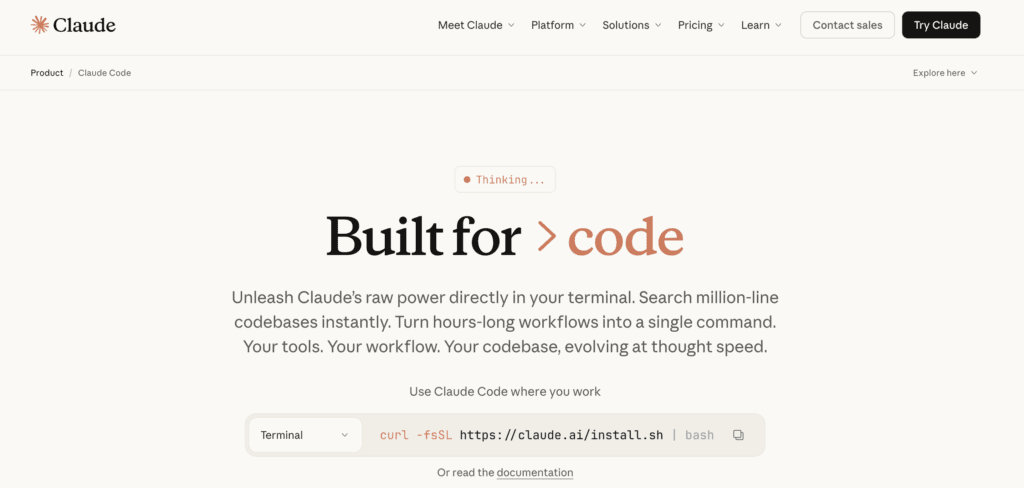
Claude Code
Anthropic’s Claude Code targets enterprise-scale engineering teams, providing powerful AI-driven code generation and refactoring capabilities. It excels at analyzing and manipulating large codebases, significantly boosting developer productivity. However, it lacks integrated app lifecycle management tools like built-in deployments or observability solutions. Its advanced features come at a premium cost, making it better suited for larger teams with substantial resources.
Pitfalls: High cost, lacks integrated app management features.
Pricing: Typically from ~$200/month upwards; custom pricing for enterprises.
Survivability:Medium-High – excels in productivity, but requires significant manual ops.
Cline
Cline is an agent-first AI coding tool built primarily for developers who prefer granular control and flexibility. It supports multiple AI models, including proprietary and open-source, allowing developers to seamlessly integrate advanced code-generation and refactoring directly into their existing workflow. Cline is especially strong at performing multi-step coding tasks and extensive codebase reasoning, offering developers more advanced AI-driven productivity compared to basic code assistants. However, it lacks the built-in tools required to fully manage schema migrations, deployment, RBAC, and enterprise-scale observability. Thus, while powerful, it’s more suited for small to medium-scale projects or supplemental coding rather than comprehensive application development.
Target Audience: Experienced developers, engineering teams comfortable managing their own operations.
Supermaven provides an advanced AI-driven coding assistant embedded directly into popular IDEs such as VS Code and JetBrains. Its standout feature is its large context window, capable of comprehending and suggesting code changes across large codebases. Supermaven effectively boosts individual developer productivity with smart code completion, refactoring assistance, and real-time suggestions. However, it doesn’t natively offer scaffolding for complete applications, built-in deployment, schema migrations, or role-based access control management. Consequently, it’s ideal as a productivity-enhancing tool rather than a standalone platform for production-ready, full-stack applications.
Target Audience: Individual developers, agile teams seeking productivity gains within existing projects.
Key Features: IDE integration, large context window, real-time code suggestions, refactoring assistance.
Pitfalls: Limited support for lifecycle management, schema management, and comprehensive deployment pipelines.
Pricing: Free basic tier available, pro-tier around $10/month, team plans similarly priced per user.
Survivability:Low – excellent developer support, but not designed for complex production app management.
OpenCode
OpenCode is an AI-driven, open-architecture code-generation platform emphasizing flexibility, customizability, and minimal vendor lock-in. It empowers developers to rapidly scaffold application prototypes with AI, then take full ownership of the resulting codebase for ongoing customization and self-hosting. The platform’s openness allows significant freedom in infrastructure choices, but it comes at the cost of polish, integration depth, and built-in lifecycle management tools. Teams choosing OpenCode will likely need considerable manual effort in schema migration management, observability tooling, and operational setup, making it more suitable for technically sophisticated teams prioritizing flexibility over immediate turnkey solutions.
Target Audience: Technically skilled startups and teams, developers who value full code ownership and control.
Pitfalls: Requires manual operational setup, fewer ready-to-use enterprise integrations, and limited out-of-the-box production readiness.
Pricing: Generally open or custom pricing, varying by deployment and hosting needs.
Survivability:Medium-Low – good control and flexibility, but lacks comprehensive enterprise-level operational features.
Base44
Base44 enables rapid web app prototyping through natural language input, generating full-stack apps including frontend, backend, authentication, and database configurations. Designed primarily for speed and ease-of-use, Base44 appeals greatly to non-technical founders and product teams who want to quickly validate ideas or build internal tools. While exceptional for creating initial prototypes, Base44 struggles with advanced app lifecycle management tasks like detailed RBAC, scalable schema migrations, and robust observability. Teams aiming to scale beyond early stages may encounter limitations, prompting migrations or re-architecting efforts down the road. Its ease-of-use and speed are compelling for short-term projects, but less optimal for long-term enterprise-scale production.
Pitfalls: Limited advanced production capabilities, scalability concerns, and potential hidden costs at scale.
Pricing: Free tier available; starter tiers approximately $20/month, pro tiers around $100/month, higher usage tiers scaling upwards.
Survivability:Low – outstanding for rapid prototyping but lacking robust tools for long-term production management.
Conclusion: The Real Test is Survivability
Navigating the world of AI-powered “vibe-coding” platforms is exciting but fraught with pitfalls. While dazzling demos and rapid prototyping capabilities grab attention, it’s the hidden costs of maintenance, scalability challenges, and architectural constraints that truly define a platform’s value. As our analysis clearly illustrates, not all AI app builders are created equal-especially when it comes to surviving the transition from initial prototype to sustainable, scalable production application.
Platforms like AppWizzy and Cursor stand out precisely because they combine rapid AI-driven workflows with robust production readiness, empowering teams to evolve their apps safely over time. Conversely, platforms focused solely on the initial MVP stage often leave you with significant technical debt, limited flexibility, and hidden operational costs.
Ultimately, choosing the right vibe-coding tool isn’t about how quickly you can deploy a prototype; it’s about how confidently you can manage, scale, and evolve your application long after launch day. Prioritizing survivability ensures your AI-generated app isn’t just impressive at first glance but continues to deliver reliable performance and genuine business value well beyond the hype.
If you’re ready to build production-ready software powered by AI-without sacrificing long-term sustainability, explore how Flatlogic can deliver tailored solutions to accelerate your business growth.
Benefits: code completion, debugging, NL test generation, CI/CD testing, cloud IDE access
AppWizzy builds full-stack, production-ready apps in minutes with editable code
Cautions: hallucinations, privacy; keep humans reviewing outputs; AI moving from assistant to co-creator
Fact Box
GitHub Copilot integrates with VS Code and JetBrains and is powered by OpenAI’s Codex.
testRigor offers self-healing tests that adjust to software changes.
testRigor can auto-generate test cases from plain English instructions.
Devin is described as a fully autonomous AI software engineer with multi-step programming.
AppWizzy by Flatlogic generates full-stack, production-ready applications in minutes.
A few years ago, I was a technical architect. I used to take care of not just designing the solution but also building its code. During the initial years of my career, coding was quite exciting. The joy you get from compiling the code with zero errors and seeing the output generated is outstanding. You must have studied software programming in college, but when you put it into practice in your job, the game is totally different. The practical implementation of years of hard work tests your strength and analytical skills. When you get a chance to work on real-life projects, the excitement reaches the top of your being. The joy of making a real difference in the world is unmatched by all the theoretical studies you did for years.
Nevertheless, as the initial stage of excitement passed, the job became repetitive and mundane. The same kind of coding required for building programs, APIs, and functional modules put all my curiosity backstage. The joy of building something new got buried under the daily rut demanded by the job’s responsibilities. That made me question – is this what I really signed up for when I chose to become a developer? The endless logic of the code, the long hours of debugging, and reading and creating the same kinds of documents made my job dull. The creative juice stopped flowing and got overpowered by the monotonous, rigorous responsibilities aimed at meeting deadlines.
Then, almost like a magical fantasy, I stumbled upon a solution to my despair – AI coding agents. My first impression of this was that it must be some auto-completing tool that may extend my coding capabilities. But within no time, I discovered its immense potential to revolutionize my entire journey as a software developer and architect. It totally changed the way I developed code, debugged errors, and created documents, giving ample amount of time for creativity. Creativity is something that arises out of a vast space in the mind. And these coding agents exactly provided me with that by taking up my monotonous responsibilities.
Today, I am going to share with you my journey of how these AI coding agents transformed my software development approach and gave me superpowers to build, test, and document my software deliverables.
My First Encounter with an AI Coding Agent
When you get used to your job, there’s hardly any room for trying something new. I carried the same perspective when I spent years coding and designing. To try something new was to risk wasting hours getting used to and figuring out how to work with it. I had been hearing about AI coding agents for quite some time, but I never took the initiative to try it out by myself. Then one fine day, when the job pressure was low, I thought of trying it. The first AI agent I tried was GitHub Copilot. I had heard a lot about it, but I still had apprehensions about how useful it could be.
But my first encounter with it changed my perspective instantly. I tried writing a function to calculate Fibonacci numbers, and the moment I wrote def fibonacci, it auto-completed the entire code by itself. I tried running it and boom! It generated the perfect output. Thoughts started rushing through my mind as if I were being assisted by another developer whom I cannot see.
That was the impact of the AI coding agent on me for the first time. I instantly realized the immense power it could bring to my software development journey. If all that I want to create can be delegated to an AI agent, the time and effort that I save can be used for so many creative endeavors. I immediately started imagining that if AI can build code, it can also debug it, create documents, and perform all other mundane tasks. Thus, I got curious to explore its capabilities at its highest potential.
Soon enough, I shortlisted the top five AI agents for software development that I started using regularly in my team. Let me share my experiences of using them with you.
GitHub Copilot – The Coding Assistant
I already told you my first encounter with an AI coding agent was with GitHub Copilot. But let me share my experience with it in detail now.
Software development is a decades-old field. The challenges I was facing were not in isolation, but were faced by every software developer for many years or decades. The repetitive coding, the mundane tasks, and long hours of debugging errors born out of human negligence were some of the issues that caused nightmares for every software developer.
As Plato said quite aptly, “Necessity is the mother of invention“, the invention of an AI agent cannot be more justified.
The conception of AI-assisted coding didn’t come as a luxury. It originated to resolve all the above-mentioned challenges of software developers had been facing for decades. My experience with Copilot was quite smooth. It integrated seamlessly into VS Code and JetBrains. Powered by OpenAI’s Codex model, it is quite intelligent in detecting the context for which it must develop the code.
E.g., all I need to write is the initial comment like “function to convert temperature from Celsius to Fahrenheit”, and it will generate the entire code by itself within no time. I started using Copilot for all my coding tasks, like building programs, functions, APIs, and even unit test cases. By taking care of the syntax part, it freed me up to focus solely on architecture and design.
That’s how Copilot became my first “AI colleague”.
ChatGPT – The Coding Mentor
While Copilot became my coding assistant, ChatGPT turned out to be my coding mentor. Initially, I thought ChatGPT to be a more advanced version of a chatbot that is programmed to answer pre-defined questions. But later, to my surprise, it turned out to be more than just a chatbot. Its intelligence is at par with human experts in any field.
Initially, I used it for direct queries, like “What is the difference between async and multithreading?”, or “How do I optimize my SQL query?”. It, no doubt, gave me the clear responses with the space for follow-up questions, while driving the conversation in detail. But as I got used to it, it opened up higher possibilities for me to explore.
I started engaging with it on higher-level solutions, like designing the architecture as well. I would provide the complete project requirements to it and ask it to show me the clear architecture of the solution that would be most appropriate for the solution. I started using it for front-end design to backend logic, and it would provide me with the most efficient solutions for them. When I encountered an error, it would patiently guide me through the solution to fix it.
Soon, I realized its immense potential spanning all areas of software development. From coding to suggesting architecture, refactoring to creating documents, it opened doors for all the software development-related tasks. For someone like me, who turned out to be a technical writer from a programmer, it would generate structured explanations, project-level documentation, code comments, and even Markdown text without any hassle.
And the final potential of ChatGPT revealed its capabilities to brainstorm ideas and solve problems with a creative approach. That’s how ChatGPT became my coding mentor.
testRigor – The Code Testing AI Agent
Another revolutionary tool I encountered was testRigor. Although test cases could have been suggested by Copilot and ChatGPT, when it comes to a dedicated tool just for testing, testRigor has no competition. Testing has always been a pain for QA professionals with repetitive test cases, writing test scripts in programming languages, and manually running them. Moreover, maintaining a test suite is even more difficult when the software goes through frequent changes. Any changes in the software code would cause the traditional tools’ test cases to break because they were based on hard-coded logic. But with testRigor, it became quite a smooth journey for me. Its self-healing capability allows the tool to readjust the test cases according to the software updates. That means, once the test cases have been created, they keep evolving with the code.
testRigor is a San Francisco-based test automation company that provides this tool for AI-powered testing. One of its most useful features is that it can generate test cases automatically based on natural language instructions. All you need to provide is the context of the application being tested, or just plain instructions in English, and it automatically generates test cases in no time. It significantly removed the technical barrier within the team. Employees from all backgrounds, whether a business analyst, program manager, or product owner, can test the software from their own viewpoints. This ensures robust testing from all angles.
My main concern about repetitive and quick testing, demanded by deadlines, was resolved by it quite effectively. It can be integrated with the CI/CD pipeline so that testing becomes a regular part of the software development lifecycle, and that too, automatically.
I do not doubt saying that testRigor, as a test automation tool, is my AI companion for testing all my software development projects.
Replit Ghostwriter – The Cloud-based AI Agent
While the above-mentioned tools are quite helpful when working in an office setup, another tool that made my job simpler while I am traveling is Replit Ghostwriter. This is a cloud-based code-generating tool, which means I can access it from anywhere. I don’t need to work on the same machine on which it has been installed. I can just open it in any browser through my login credentials and start working on it. After logging in, I can select the project that I have been working on, and Ghostwriter would auto-complete my code, fix bugs, and even suggest improvements on the go.
This AI agent, which is built right into the Replit IDE, can perform quick tasks on any handy device. I built several web apps on my tablet using this AI agent that are in line with the web app development trends. When you have the power to build applications on any device, on any browser, you can achieve a lot. The goal of any software, when it comes to its accessibility, must be to enable its diverse usage patterns. And Replit has achieved it through Ghostwriter. Gone are the days when you have to install the software and work on it locally.
The simplicity of Ghostwriter is amazing. You don’t need to install any libraries or dependencies. Just log in and start working. While coding, it acts like your silent companion by suggesting smarter ways to implement features, generating code snippets, and test cases as well.
When it comes to building lightweight applications on the go, there’s no better option than Replit Ghostwriter.
CodiumAI and Devin – The Autonomous Developers
While the above tools were mostly about fulfilling a particular functionality, like coding or testing, imagine how it would be if these tools achieved more human-like capabilities, like reasoning and planning? This is what CodiumAI and Devin have achieved.
CodiumAI is a complete package one needs for building software. It can analyze your entire codebase, like an expert reviewer, and generate useful insights for improvements and enhancements. One of its deeper features is that it not only understands your code but also uncovers the intent behind it. Meaning, it not only understands the “what” part, but also the “why” behind it. This deeper analysis enables it to produce insights that not only act as quick fixes for your code but also align it with the background intention for which the code was built.
If results can be achieved through a much simpler logic, there’s no need for a lengthy, complex one. A typical tool would only look for corrections in the syntax or functional dependencies, but CodiumAI can simplify the logic as well and produce the new code to achieve the same results with much ease and agility.
And Devin is one step ahead – it is the fully autonomous AI software engineer. It works at a whole new level compared to other tools. Its multi-step programming for tasks like cloning repos, setting up the environment, debugging, and even deploying makes it a completely autonomous system for software development.
Using this tool made me question, “If AI could handle the end-to-end project completely, where does it leave me?” The answer to that was more positive than the fear of losing my job and relevance. Once you delegate your routine tasks, you get the bandwidth to perform higher ones. And that’s exactly what I am doing currently by focusing on high-value tasks and creative projects that use these tools for execution.
AppWizzy (Flatlogic Generator) – The Full-Stack Builder
After exploring various AI coding agents that assist with specific development tasks, I came across AppWizzy, powered by Flatlogic, a tool that takes AI-driven software creation to the next level. Unlike other agents that help you code or test, AppWizzy can generate entire full-stack, production-ready applications in just minutes.
All you need to do is define your app’s structure, such as data models, design style, or tech stack (React, Node.js, PostgreSQL, etc.), and AppWizzy automatically builds it for you. The generated code is clean, editable, and ready to deploy. It’s perfect for quickly creating MVPs, dashboards, or internal tools without repetitive setup or boilerplate coding.
What makes AppWizzy stand out is its blend of speed and flexibility. You retain full control over the code, so you can customize it to fit your project’s goals. This balance makes it a powerful companion for developers who want to spend less time setting up and more time innovating.
If you’re ready to experience the future of AI-powered software development, AppWizzy by Flatlogic is the ideal starting point, transforming your ideas into deployable apps faster than ever.
Challenges and Lessons from Using AI Coding Agents
Using any new tool rarely comes without challenges, and AI coding agents are no different. Every tool has its own challenges that users face while getting used to it. The initial friction is necessary for the users to completely understand the strengths and weaknesses of the tool to be able to use it most effectively. In a few areas, your AI tool can produce great results, while in others, it needs human supervision or even intervention.
One of the most common problems with AI agents is that sometimes they hallucinate. Meaning their output, like a code or a test case, might look perfect but won’t work. This is pretty understandable for a tool that uses complex analysis to generate human-like capabilities. Their neural networks and thinking mechanisms are quite deep and complex. Producing a coherent and flawless result may not be possible out of such complexity all the time.
I was not aware of these challenges initially. I once deployed an AI-generated microservice and found out that it missed a critical error-handling mechanism. After that, I became more suspicious of every result it would produce. Instead of treating it as a replacement, I started seeing it as an assistant. When it produces the code, the responsibility is on me to review, test, and understand the reasoning behind it.
Another challenge comes with the issue related to privacy. “When using open-source AI coding agents, should we disclose our private information, business goals, and objectives embedded in the code logic?” And even another point came to my mind that “would over-reliance on AI erode my primary skills?
On a deeper level, these questions can be answered by the benefits that outweigh such challenges. All we need to do is to use this powerful tool more consciously, through which we can reap its maximum benefits.
Closing Statement
Whether we use AI coding agents currently or not seems like a choice, but trust me, it won’t be in the future. AI is bringing a new era of software development, and no one can remain insulated from it. Currently, an AI system acts like an assistant, but in the future, it will be more like a co-creator. It will understand our intent more deeply, cross-question us, brainstorm new ideas, and generate even greater results than we assumed initially.
The real-time collaboration across teams and projects will be enhanced to a whole new level through AI agents. Everyone would be working at their augmented version. An AI-assisted developer would be more advanced, and so would be the testers, designers, and architects. It is a whole new leap in the progress of humanity, and whether we agree to it or not, we are already on board in this journey. By taking up the mundane tasks, it is reigniting our creativity and passion, which once got buried under the daily rut.
If you are thinking about using one of the best AI coding agents, use Flatlogic to generate full-stack, production-ready applications in minutes, not months.
McKinsey estimates missing the generative-AI wave could forgo up to $4.4T in productivity gains by 2030.
Lovable recently raised $15M in funding, signaling traction for chat-driven app building.
AppWizzy generates full stack (frontend, backend, DB, CI/CD, Docker) with exportable, self-hostable code.
v0.dev turns text prompts into React components styled with Tailwind and deployable to Vercel.
Stick around till the end – you’ll learn which new AI platforms can save you six months of dev time (and six figures of runway) before you write a single line of code.
When you Google “AI chat app builder” or “AI web app generator,” you’re likely asking yourself:
Can I really build a working app just by chatting with AI?
Will that code actually scale, or will it break once users arrive?
Is the output clean enough for investors, compliance, and engineers to trust?
And how do I avoid vendor lock-in when my startup finally takes off?
As Satya Nadella famously said, “Every company is now a software company.” In 2025, that’s no longer hyperbole – it’s survival.
The numbers are staggering.GitHub’s 2024 research showed that AI-assisted developers complete boilerplate and repetitive tasks 55% faster. McKinsey estimates that missing the generative-AI wave could cost companies up to $4.4 trillion in productivity gains by 2030. But speed without structure is a trap: the wrong tool can turn a promising MVP into a rewrite nightmare six months later.
We’ve spent more than 15 years in software development and over a decade leading Flatlogic, where we’ve built production-grade software for startups and enterprises worldwide – CRMs, ERPs, SaaS platforms, you name it. Our latest product, AppWizzy, merges that real-world engineering discipline with cutting-edge AI – a professional vibe-coding platform that turns plain English (or even screenshots and voice notes) into working, deployable web applications.
So this list isn’t theoretical. It’s written by someone who’s tested, compared, and deployed these systems in real startup environments. By reading this article, you’ll understand:
The difference between chat-to-code and chat-to-app systems.
Which AI builders prioritize speed versus maintainability?
Where tools like Lovable, Bolt.new, Replit, and AppWizzy truly fit.
And how to choose a platform that won’t collapse during investor due diligence or customer growth.
Terminology / Definitions
Term
Definition
Chat-to-App Builder
An AI system that builds functional web or mobile apps directly from natural-language input.
Prompt-to-Production
The process of turning plain English prompts into runnable, deployable applications.
AI Agentic Builder
A new class of AI that not only generates code but tests, deploys, and maintains it autonomously.
MVP (Minimum Viable Product)
The first functional version of a product that allows real-world testing and user feedback.
Automated pipelines ensure every code change can be safely tested and deployed.
The AI App-Building Landscape in 2025
In 2025, we’re no longer simply talking about AI development tools – we’re living through the shift. The baseline has moved: it’s no longer a question of “Can AI help build apps?” but rather “Which AI builder will shape our stack for the next five years?”
What’s changed and what’s driving it
Several forces are converging right now:
AI + Low‑code/No‑code convergence: According to a recent survey, 76 % of tech leaders believe AI will make low‑code tools much more efficient.
Multimodal intelligence and agentic tooling: Systems are increasingly handling text, image, audio, and video simultaneously – enabling richer app‑builder input (e.g., voice + screenshot to “build this”).
Democratization of app creation: The barrier to “build something live” is dropping. More non‑technical founders are deploying apps in hours, not months.
Migration risk and ownership awareness: As more founders build quickly with AI, the “what happens at scale?” question looms larger. Platforms that lock you in or produce brittle code will cost you.
What it means for founders and product teams
For you – building SaaS, CRMs, ERPs, internal tools, or side‑projects – this environment presents both opportunity and risk:
Opportunity: Speed is real. You can go from concept → working prototype in days, maybe even hours. That means lower runway burn, faster investor proofs, quicker feedback loops.
Risk: If you pick a tool built only for “demo speed,” you might hit the ceiling: You’ll still need to rewrite large parts of the system when real users arrive, the stack needs to scale, or audit/compliance pressures come in.
Strategic inflection: This isn’t just about making an app. It’s about choosing the shape of your codebase, team, and growth path. The platform you pick influences who you hire, how you deploy, how you maintain, and how you exit.
Key dimensions to watch in 2025
When you evaluate AI app‑builders this year, don’t just ask “can it generate something fast?” Ask how it handles:
Ownership & exportability (can you own the code, self‑host, migrate?)
Code quality and maintainability (typed ORMs, clear schema, CI/CD pipelines)
Real‑world scalability (does the stack hold up under real traffic, feature growth, regulation?)
Usability for both non‑tech and tech team members (can non‑coders iterate, can engineers refine?)
Business alignment (pricing, hidden token costs, vendor lock‑in risk)
Why this matters more than ever
Because the myth of “build fast and rewrite later” is shrinking. Every month you spend rewriting, you burn runway, lose momentum, and risk investor confidence. The hidden cost of choosing the wrong platform isn’t just technical debt – it’s strategic debt. As one trend article put it: “Generative AI is no longer a luxury – it’s becoming the backbone of modern application development.”
TL;TR Top 10+ AI Chat-to-App Builders in 2025
Platform
Core Identity
Users
Pricing Model
AppWizzy (by Flatlogic)
Professional vibe-coding platform – AI builds, edits, and deploys real SaaS apps inside live dev environments.
Founders and teams needing investor-ready MVPs and full control.
Credit-based “pay-as-you-build.”
Lovable
Chat-driven MVP builder for non-technical founders.
Solopreneurs, early-stage founders.
Freemium → $20-30/mo.
Bolt.new
Browser-based IDE with an AI pair-programmer.
Developers who want speed with full transparency.
Token-metered usage.
Replit (Ghostwriter)
Full cloud IDE with multi-language support and AI autocomplete.
Technical teams, educators.
Free core, $10-20/mo for Ghostwriter.
v0.dev (by Vercel)
Generates UI from text prompts, instantly deployable to Vercel.
Frontend developers, designers.
Free, with Pro tiers.
Debuild
Fast web app scaffolding from simple prompts.
Makers, indie hackers.
Freemium.
Cursor
AI-native code editor with multi-agent collaboration.
Developers are integrating AI directly into the workflow.
Freemium / Pro.
Dust.tt
Focused on AI workflows and API integrations.
Technical founders building AI products.
Usage-based.
Pythagora
Open-source backend generator from API requests.
Engineers want transparent AI generation.
Free, open-source.
Top 10+ AI Chat-to-App Builders in 2025
In 2025, we’re witnessing the rise of AI‑as‑a‑Software‑Engineer – systems that translate plain English (or even screenshots and voice) directly into real, deployable web applications. From hobbyists to enterprise teams, founders now choose between dozens of “chat‑to‑app” tools that promise speed, ownership, or production‑readiness in different proportions.
Below are the most influential platforms shaping the new software‑development landscape – each with its own balance of speed, structure, and scalability.
AppWizzy bills itself as a “professional vibe‑coding platform” that takes natural language (plain English, voice, or screenshot) and spins up deployable web apps you can own and iterate. It generates the full stack (frontend + backend + database + CI/CD + Docker), and allows export/self‑hosting or keeping on its runtime. It’s built by the team behind Flatlogic, drawing on their decade of production‑grade business‑software experience. Target Audience: Founders or startups building serious SaaS/CRM/ERP systems (not just demos), who want to move fast but still deliver investor‑ready architecture. Key Features: Full-stack generation + deployable container, typed ORM & modular architecture, chat/voice prompt interface, exportability and ownership of codebase, infrastructure‑agnostic deployment. Pricing: Credit‑based “pay‑as‑you‑build” model (AI token credits + hosting + template license) per their site.
Lovable
Lovable allows users (even non‑developers) to build full‑stack web apps by chatting with the AI – describing what they want (“dashboard with login, chart, Stripe payments…”) and watching it appear. It uses Supabase and has GitHub integration, making it a legit no‑code+generation hybrid. Recently, it raised significant funding ($15M), signalling serious traction. Target Audience: Solopreneurs, designers, and non‑technical founders who want to validate ideas fast and build something usable without a deep dev team. Key Features: Chat‑based UI, one‑click deploy, backend + frontend generation, exportable code, templates for typical SaaS/dashboard apps. Pitfalls: Code quality and scalability may hit limits (for instance, when you need complex multi‑tenancy, heavy integrations, or compliance); some reports suggest the platform is used heavily for demos and may require “cleanup” later. Pricing: Freemium start; typical actively used hosted MVPs are around ~$20‑$30/month. (Exact tiers vary)
Bolt.new
Bolt.new – built by the team at StackBlitz – is a browser‑based full IDE + AI pair‑programmer experience. You pick a stack (Next.js, Vue, Go, etc), describe features (“Add OAuth GitHub, real‑time chat”), and the AI scaffolds the project live; you can then edit in‑browser, deploy, and export. Target Audience: Developers and engineering teams who want speed but still maintain deep control of code, files, configs, and stack. Key Features: Real‑time browser editor + terminal, prompt‑based project generation, stack choice flexibility, full control of code, deploy/export options. Pitfalls: For non‑technical founders, it may feel intimidating (IDE, file tree, tokens); pricing is token-meter, which means heavy iteration = high cost; beginner users may get stuck without coding fundamentals. Pricing: Entry token‑based; usage depends on AI tokens consumed. Recently, subscription tiers include hosting, database, etc.
Replit (with Ghostwriter)
Replit is a cloud IDE that supports 50+ languages. Its AI assistant, Ghostwriter, accelerates code generation, refactoring, and test‑writing. While it isn’t purely “chat‑to‑app” in the sense of non‑coders building everything from prompts, its strength lies in enabling developers to build anything faster. Target Audience: Developer teams, full‑stack engineers, educational settings, tech founders comfortable coding but want AI assistance. Key Features: Cloud IDE accessible everywhere, AI code suggestions and completions, multi‑language support, integrated hosting and projects, and collaboration features. Pitfalls: Not ideal for non‑coders; while fast, it still requires programming knowledge; pricing/compute costs can escalate for heavy projects. Pricing: Free Starter plan; paid plans from ~$10‑20/month (e.g., Core plan) and Teams plans ~$35/user/month.
v0.dev (by Vercel)
v0.dev is Vercel’s text‑to‑UI builder – you type a prompt and instantly get functional React components styled with Tailwind CSS. It’s designed for frontend developers who want to skip the tedious part of UI scaffolding. Generated components integrate seamlessly into Next.js projects and deploy directly to Vercel. Target Audience: Frontend developers, designers, and prototypers. Key Features: Text‑to‑UI generation, Next.js integration, instant Vercel deploy, and clean code output. Pitfalls: Frontend‑only – no backend or database logic; limited to the React ecosystem. Pricing: Free tier with Pro/Team upgrades.
Debuild
Debuild focuses on hyper‑fast web‑app generation. Users describe what they need – “dashboard with login and charts” – and within minutes, Debuild scaffolds a full app using React and Node.js. It’s one of the earliest chat‑to‑app experiments that prioritized visible code and instant deployment. Target Audience: Indie hackers, makers, and early‑stage founders needing quick demos. Key Features: Text‑prompt app creation, React + Node.js stack, auto‑UI generation. Pitfalls: Limited scalability and customization options; inconsistent backend logic. Pricing: Freemium with limited monthly generations.
Cursor
Cursor is an AI‑native code editor that embeds multiple agents directly into the dev workflow. It’s designed for engineers who want conversational AI inside their editor – not as a separate chatbot. You can discuss architecture, refactor code, or auto‑generate tests collaboratively with AI. Target Audience: Developers integrating AI deeply into daily coding. Key Features: Multi‑agent assistance, inline code editing, context memory across files, and local execution. Pitfalls: Not for non‑technical users; still IDE‑based, with a learning curve. Pricing: Freemium; Pro plan ≈ $20 / month.
Dust.tt
Dust.tt blurs the line between chatbots and app builders, letting users orchestrate AI workflows and APIs in one interface. It’s especially strong for internal tools and AI‑driven automation. While not a traditional CRUD app generator, it builds functional web interfaces connected to AI agents. Target Audience: Technical founders building AI‑product backends or integrations. Key Features: AI workflow orchestration, multi‑agent chains, custom API connectors, shareable dashboards. Pitfalls: Requires technical setup; limited UI flexibility. Pricing: Usage‑based, depending on AI calls and workflow executions.
Pythagora
Pythagora is an open‑source backend generator that listens to API requests and automatically produces routes, models, and tests. Think of it as “AI‑powered Postman → backend.” It’s developer‑oriented and fits teams seeking transparency and version control. Target Audience: Engineers and backend developers valuing open‑source autonomy. Key Features: Auto backend scaffolding from traffic/API calls, test generation, and Dockerization. Pitfalls: Backend‑only; still experimental in complex schema generation. Pricing: Free, open‑source.
Conclusion
The 2025 wave of AI chat‑to‑app builders is no longer about novelty – it’s about maturity. We’ve entered an era where founders, designers, and engineers can talk to their computers and watch production‑ready systems emerge. But not all platforms are created equal. Some trade scalability for speed, others transparency for convenience, and a few – like AppWizzy – finally strike a balance between AI‑driven creativity and long‑term engineering discipline.
The right choice depends on your stage and intent:
If you’re validating an idea and need fast visual feedback – Lovable or Debuild can get you there overnight.
If you’re an engineer wanting to stay in control while leveraging AI’s muscle – Bolt.new, Cursor, or Replit are your playgrounds.
If you’re chasing design velocity – v0.dev is unmatched.
If your product relies on AI workflows or data intelligence – Dust.tt, Pythagora expands what “building an app” even means.
And if you’re ready to build something real, meant to live, scale, and raise capital on – AppWizzy (by Flatlogic) is the platform to bet on.
Because at the end of the day, speed is only useful when the foundation lasts. Choosing the right AI builder isn’t about who generates code faster – it’s about who generates value that survives your next funding round, your next security audit, and your first thousand users.
If you’re building for longevity – not just a demo – start with a platform that thinks like an engineer.
Le buzz autour du low-code et du no-code est plus fort que jamais. De nombreuses entreprises demandent : Lequel devrions-nous choisir ? À l’approche de 2025, la réponse n’est pas toujours évidente : elle dépend de vos besoins, de votre maturité, de votre échelle et de vos contraintes. Dans cet article, nous détaillerons les différences, les compromis, les cas d’utilisation réels et un cadre décisionnel pour vous aider à choisir intelligemment.
1. Que sont le Low-Code et le No-Code (définitions et contexte)
1.1 Low-Code
UN plateforme de développement low-code fournit un environnement visuel (glisser-déposer, modèles, modules) ainsi que la possibilité d’ajouter du code personnalisé si nécessaire. Il réduit le travail standard répétitif tout en permettant aux développeurs de personnaliser, d’étendre et d’intégrer en profondeur.
Le low-code est comme un hybride : vous obtenez de la vitesse, mais vous ne perdez pas complètement le contrôle.
1.2 Sans code
UN plateforme de développement sans code va encore plus loin : il permet aux utilisateurs non techniques (utilisateurs professionnels, développeurs citoyens) de créer des applications entièrement via des outils visuels sans écrire de code.
Le no-code vise une accessibilité maximale, mais généralement au détriment de la flexibilité ou de l’évolutivité.
1.3 Pourquoi c’est important en 2025
Le besoin d’une transformation numérique plus rapide augmente et les équipes informatiques sont mises à rude épreuve.
Les unités commerciales veulent de l’autonomie pour créer des outils sans attendre l’informatique.
Les outils et plateformes mûrissent : les intégrations, la sécurité, la gouvernance, les performances s’améliorent.
La frontière entre low-code et no-code s’estompe sur de nombreuses plateformes.
Ainsi, cette décision n’est plus théorique : elle a désormais un réel impact commercial.
2. Différences clés : forces et faiblesses
Voici un aperçu côte à côte de la façon dont le low-code et le no-code se comparent :
Facteur
Sans code
Low-Code
Facilité d’utilisation / adoption
Très élevé : les utilisateurs professionnels peuvent le comprendre rapidement
Modéré – une certaine compréhension technique est utile
Flexibilité / personnalisation
Limité (lié aux capacités de la plateforme)
Élevé – peut s’étendre via un code personnalisé si nécessaire
Évolutivité
Convient aux applications plus petites ou départementales
Meilleur pour les systèmes complexes au niveau de l’entreprise
Intégration et API
Généralement limité aux connecteurs intégrés
Prise en charge d’intégration plus robuste et utilisation d’API personnalisée
Vitesse vers MVP/prototypage
Très rapide pour des cas d’utilisation simples
Rapide, mais du temps supplémentaire peut être nécessaire pour les personnalisations
Maintenance et refactorisation
Plus contraint ; si les besoins évoluent, vous risquez d’atteindre les limites de la plateforme
Plus facile à refactoriser étant donné l’accès au code et aux points d’extension
Gouvernance / contrôle
Plus facile à gérer (puisque l’accès au code est restreint)
Plus de risque si le code personnalisé est utilisé à mauvais escient, mais plus de contrôle possible
Courbe d’apprentissage/exigence de talent
Faible – programmation minimale nécessaire
Supérieur – nécessite des compétences de développeur pour un travail avancé
Ces différences impliquent qu’il n’existe pas de solution universelle ; le choix dépend de votre contexte professionnel.
3. Avantages et risques
3.1 Avantages (communs aux deux)
Rentabilisation plus rapide / cycles de développement plus courts Vous pouvez créer et déployer des applications plus rapidement que le codage traditionnel.
Coût de développement réduit / moins de dépendance aux ressources Moins de développeurs à temps plein sont nécessaires pour les applications triviales.
Autonomisation / développement citoyen Les équipes commerciales (non-développeurs) peuvent participer et réduire le retard informatique.
Meilleure collaboration entre l’entreprise et l’informatique Les interfaces visuelles partagées réduisent les erreurs de traduction entre les besoins métier et la mise en œuvre technique.
Construction incrémentale / modulaire Les plates-formes fournissent souvent des composants, des modèles et des modules réutilisables.
3.2 Risques et défis
Verrouillage du fournisseur/dépendance à la plateforme Si la plateforme devient obsolète ou coûteuse, la migration peut être pénible.
Limites d’évolutivité et de performances À mesure que la complexité des applications augmente, les plates-formes no-code ou low-code peuvent avoir du mal à évoluer ou à optimiser leurs performances.
Risques de sécurité, de conformité et de données L’abstraction peut masquer des problèmes ou des vulnérabilités de bas niveau.
Contraintes de personnalisation Si votre application nécessite un comportement très unique, vous risquez d’atteindre les limites de ce que la plate-forme autorise.
Maintenance & dette technique Au fil du temps, les couches de logique de plateforme, de personnalisations et de correctifs peuvent devenir compliquées.
Fragmentation et systèmes d’ombre Si les unités commerciales créent plusieurs petites applications de manière indépendante, vous risquez de vous retrouver avec des systèmes disjoints, des données en double et des problèmes de gouvernance.
Inadéquation des compétences Les utilisateurs professionnels peuvent par inadvertance créer des modèles architecturaux médiocres ; certains cas nécessiteront encore une surveillance technique.
4. Cas d’utilisation réels et quand les utiliser
4.1 Cas d’utilisation adaptés Sans code
Outils internes, tableaux de bord, CRM simples
Workflows légers (formulaires d’approbation, demandes de congés, billetterie)
Prototypage / produits minimum viables
Solutions départementales où les exigences d’échelle/performance sont limitées
Équipes non techniques en quête d’autonomie
4.2 Cas d’utilisation adaptés Low-Code
Processus métier de base ou critiques
Systèmes nécessitant une logique, des intégrations ou des API complexes
Lorsque vous vous attendez à ce que la solution grandisse et évolue de manière significative
Applications et portails évolutifs destinés aux clients
Scénarios hybrides : où les utilisateurs professionnels démarrent sans code et où les développeurs étendent ou prennent le relais
4.3 Stratégie hybride/combinée
De nombreuses organisations adoptent une approche hybride :
Utiliser sans code pour les petites applications/départements, les prototypes, les outils internes.
Utiliser low-code pour des systèmes évolutifs et critiques ou pour des extensions modulaires.
Utiliser la gouvernance pour restreindre les applications sans code à certains domaines et nécessitent une surveillance lorsqu’ils se développent.
Cette stratégie mixte permet d’équilibrer vitesse, contrôle et évolutivité.
5. Cadre décisionnel : choisir la bonne voie
Voici un cadre décisionnel que votre entreprise peut suivre :
Définir les objectifs et les priorités Vitesse? Évolutivité ? Flexibilité? Coût? Autonomie pour les équipes métiers ?
Évaluer la complexité et l’échelle Si votre application nécessite une logique, des intégrations, un trafic ou des performances complexes, optez pour le low-code.
Évaluer les capacités de l’équipe Si vous disposez de solides ressources de développement, le low-code vous donne plus de poids. Si des utilisateurs non techniques doivent créer, le no-code pourrait être préférable au départ.
Prévisions de croissance et d’évolution L’application restera-t-elle simple ou va-t-elle évoluer de manière significative ? Si une évolution est probable, une plateforme low-code donne plus de marge.
Vérifier la maturité et l’écosystème de la plateforme Examinez les connecteurs, l’extensibilité, l’évolutivité, la prise en charge des fournisseurs et les fonctionnalités de sécurité de la plate-forme.
Petit cas d’utilisation prototype/pilote Créez une petite application non critique avec les deux approches ; voir les compromis dans des conditions réelles.
Gouvernance et surveillance dès le premier jour Définissez les limites, les examens de sécurité, les flux de données, la politique d’intégration et les extensions de plateforme.
Planifier la migration/le repli À mesure que les besoins évoluent, vous devrez peut-être migrer ou refactoriser. Choisissez des plates-formes qui minimisent les difficultés liées à la migration de la logique ou du code.
L’utilisation de ce framework permet d’éviter de choisir le mauvais outil simplement parce qu’il est à la mode.
6. Meilleures pratiques et gouvernance
Pour réussir avec le low-code/no-code, voici quelques bonnes pratiques :
Standardisez les modèles et les modules Évitez de réinventer des flux de travail similaires à plusieurs reprises : créez des composants réutilisables.
Fixez des limites de domaine claires Décidez quels types d’applications les unités commerciales peuvent créer par rapport à celles qui nécessitent toujours la surveillance des développeurs.
Appliquer les règles de sécurité, de données et d’intégration Utilisez les services centraux pour l’authentification, le stockage des données, le cryptage et le contrôle d’accès.
Versioning, audits et contrôle des modifications Suivez les modifications, autorisez la restauration, vérifiez qui a modifié quoi et pourquoi.
Surveillance et mesures des performances Même pour les applications low-code/no-code, surveillez les performances, les erreurs et les modèles d’utilisation.
Formation et lignes directrices Former les utilisateurs professionnels aux bonnes pratiques d’architecture d’applications, de modélisation des données et d’évolutivité.
Refactoring périodique / examen technique À mesure que les applications mûrissent, faites appel aux développeurs pour les refactoriser ou les migrer si les limites sont atteintes.
Gouvernez votre écosystème Utilisez des catalogues, des « applications approuvées », du sandboxing et des environnements de test pour éviter le chaos et la prolifération des applications fantômes.
7. Tendances futures (2025 et au-delà)
Voici quelques tendances que je vois façonner l’évolution du low-code/no-code :
IA plus stricte + intégration sans code Utiliser des LLM pour traduire le langage naturel ou les invites en modules/fonctionnalités d’application (par exemple LLM4FaaS) arXiv
Des outils hybrides plus intelligents Plateformes qui évoluent automatiquement du no-code au low-code (ou vous permettent de « passer » du no-code au low-code)
Une plus grande abstraction sur les infrastructures Les plates-formes sans code peuvent masquer le sans serveur, la mise à l’échelle des bases de données, la surveillance, etc., ce qui les rend plus puissantes
Plus de fonctionnalités de gouvernance et de niveau entreprise À mesure que les plates-formes évoluent, attendez-vous à un meilleur audit, à une meilleure conformité, à une meilleure sécurité et à un meilleur réglage des performances.
Benchmarking et comparaisons de qualité De nouveaux benchmarks (comme NoCode-bench) pour évaluer dans quelle mesure les fonctionnalités sans code/pilotées par invite peuvent ajouter ou faire évoluer des fonctionnalités dans des bases de code réelles.
Plus de démocratisation, mais aussi plus de fragmentation À mesure que de plus en plus d’équipes créent leurs propres petites applications, intégrations et flux de travail, les silos de données pourraient proliférer s’ils ne sont pas bien gérés.
8. Conclusion et recommandations
✅Résumé
Low-code ou no-code il ne s’agit pas de « ce qui est le meilleur » dans l’abstrait — il s’agit qui correspond à votre contexte d’affaires en 2025.
Le no-code offre vitesse et accessibilité pour des besoins plus simples.
Le low-code offre flexibilité, extension, évolutivité et contrôle pour des applications plus sérieuses et évolutives.
Une approche hybride offre souvent le meilleur des deux mondes.
La gouvernance, la planification et la prospective sont essentielles, sinon ces plateformes peuvent devenir sources de dette technique ou de chaos.
📋 Recommandation (chemin de décision en 5 étapes)
Commencez par un projet pilote utiliser les deux approches pour faire apparaître de véritables compromis.
Définir limites et gouvernance claires à l’avant.
Privilégiez les plateformes qui prennent en charge extensibilité, intégration et migration.
Surveillez, mesurez et inspectez : ne présumez pas que les choses évolueront sans effort.
Soyez prêt à refactoriser / faire évoluer les applications dans des systèmes plus contrôlés si nécessaire.