Rejoignez-nous du 6 au 8 mars 2026 au Durham College pour un camp axé sur le développement des compétences techniques et tactiques, le jeu par matchs compétitif et une chance de développer le jeu de volleyball assis en Ontario !
Plus d’informations et de détails d’inscription peuvent être trouvés sur la page de séance d’Équipe Ontario via le lien ci-dessous.
Berikut daftar game slot online paling populer yang banyak dimainkan oleh pemain slot di Indonesia dan dunia — termasuk judul-judul yang sering muncul di berbagai kasino online:
Slot Online Paling Populer (Global & Indonesia)
1. Gates of Olympus
Provider: Pragmatic Play
Tema: Mitologi Yunani dengan fitur multiplier tak terbatas.
Sering masuk daftar top slot karena volatilitas tinggi dan potensi kemenangan besar.
2. Sweet Bonanza
Provider: Pragmatic Play
Tema: Permen/ Buah-buahan dengan sistem cluster win.
Populer karena visual menarik dan bonus scatter yang sering keluar.
3. Starlight Princess
Provider: Pragmatic Play
Tema: Anime/ Fantasi dengan pengganda besar.
Salah satu slot terpopuler di Asia Tenggara.
4. Mahjong Ways 2
Provider: PG Soft
Tema: Mahjong klasik dengan mekanik tumble.
Banyak direkomendasikan komunitas pemain slot karena bonus cepat.
5. Lucky Neko
Provider: PG Soft
Slot bertema kucing keberuntungan (“Neko”) dengan RTP tinggi.
Salah satu favorit pemain karena sering memberikan fitur bonus.
6. Starburst
Provider: NetEnt
Salah satu slot paling dimainkan di dunia, terkenal karena gameplay sederhana dan sering muncul di banyak kasino online.
7. Book of Dead
Provider: Play’n GO
Tema: Mitologi Mesir & petualangan, dengan free spin yang ikonik.
Termasuk slot klasik yang masih populer hingga kini.
8. Wild West Gold
Provider: Pragmatic Play
Tema koboi dengan fitur sticky wild free spins.
Banyak disukai karena volatilitasnya dan potensi kemenangan tinggi. Agen234 Hal yang Perlu Kamu Tahu
Judul-judul di atas sering disebut di daftar slot teratas menurut pemain dan statistik permainan, baik di Indonesia maupun global.
Banyak dari game ini hadir dengan fitur bonus scatter, pengganda (multiplier), free spins, dan grafik visual menarik yang membuatnya populer di kalangan pemain.
Catatan Penting: Slot online adalah bentuk perjudian — pastikan bermain secara bertanggung jawab dan pahami risiko kehilangan uang sebelum bermain. Ini bukan rekomendasi untuk berjudi; hanya informasi permainan yang populer secara umum.
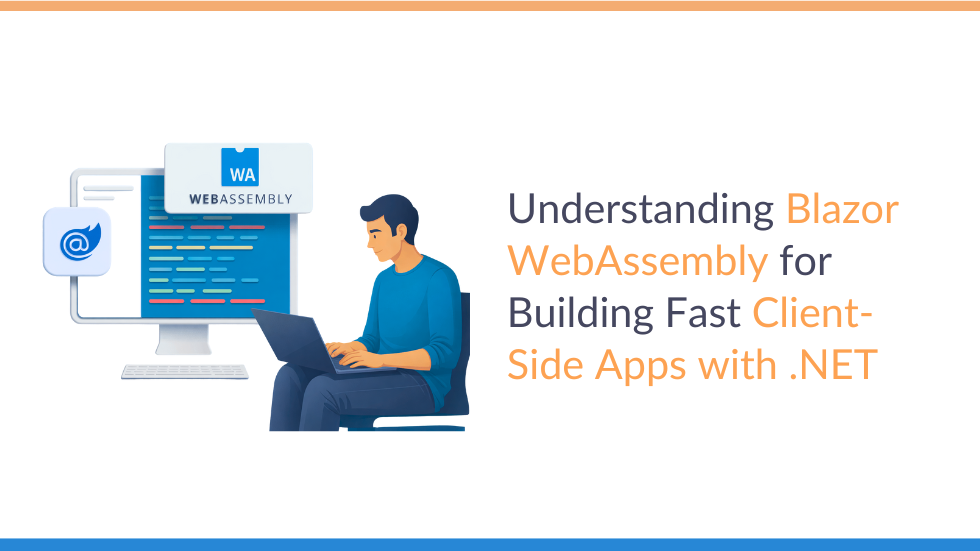
Dans ce blog, nous explorerons Blazor WebAssembly pour créer des applications rapides côté client avec .NET et comment il change la façon dont les applications Web modernes sont créées. Blazor WebAssembly permet aux développeurs de créer des applications Web interactives et performantes à l’aide de C# et .NET sans dépendre fortement de JavaScript. Nous expliquerons ce qu’est Blazor WebAssembly, comment il fonctionne dans le navigateur et pourquoi il devient un choix puissant pour le développement côté client.
Qu’est-ce que Blazor WebAssembly
Blazor WebAssembly fait partie du framework Blazor développé par Microsoft. Il permet d’exécuter du code C# directement dans le navigateur à l’aide de WebAssembly, un format d’instruction binaire pour une machine virtuelle basée sur une pile. Cela permet aux développeurs de créer des applications Web riches avec un langage et des outils familiers.
Principales fonctionnalités de Blazor WebAssembly pour créer des applications rapides côté client avec .NET
Développement Full-Stack: Utilisez C# pour le développement côté client et côté serveur.
Architecture basée sur les composants: Créez des applications à l’aide de composants réutilisables.
Interopérabilité: Appelez des fonctions JavaScript depuis C# et vice versa.
Un écosystème riche: Tirez parti des bibliothèques et des outils .NET existants.
Pourquoi choisir Blazor WebAssembly
Suivre Blazor WebAssembly offre de nombreux avantages aux développeurs :
Performance: WebAssembly offre des performances quasi natives dans le navigateur.
Langue unique: Éliminez le besoin de basculer entre les langues pour le client et le serveur code.
Développement d’interface utilisateur riche: Créez des interfaces utilisateur interactives avec un minimum d’effort en utilisant C#.
Présentation technique de Blazor WebAssembly pour créer des applications rapides côté client avec .NET
Commençons par Blazor WebAssembly, vous devez comprendre son architecture et son fonctionnement :
Les applications Blazor WebAssembly sont déployées sous forme de fichiers statiques.
L’application s’exécute dans le runtime JavaScript du navigateur via WebAssembly.
Les composants sont construits à l’aide de la syntaxe Razor, combinant HTML et C#.
Exemple partagé ci-dessous : création d’un composant Blazor simple. Voici un bref exemple d’un composant Blazor simple :
Fondamentalement, l’architecture d’une application Blazor WebAssembly peut être visualisée comme suit :
Conclusion
Blazor WebAssembly pour la création d’applications rapides côté client avec .NET permet aux développeurs de créer des applications Web modernes et hautes performances à l’aide de C#. Son architecture basée sur des composants et son intégration transparente avec les bibliothèques .NET en font un choix judicieux pour le développement côté client. En explorant Blazor WebAssembly, vous verrez comment il simplifie le processus de développement tout en fournissant des applications puissantes, évolutives et réactives.
Start with a narrow niche; design your domain model; add analytics and billing from day one.
Iterate on workflows, not features; decide to stay or migrate based on cost, compliance, and velocity.
Flatlogic can help with AppWizzy and engineers to design, generate, and harden a production SaaS.
Fact Box
Global SaaS market is ~$399B in 2024, projected to exceed $800B by 2030 at ~12% annual growth.
Broader SaaS ecosystem is projected to reach $1.25T by 2034, with strong vertical and AI-native growth.
Over 70% of builders worry about security vulnerabilities in vibe-coding platforms.
Replit projects about $1B in revenue by 2026, driven by AI coding agents.
AppWizzy credits: 1 credit = $1; hosting starts at about 0.25 credits/day.
If you want to launch a SaaS in 2026 without becoming yet another AI toy that never found a market, this is the one guide you should read to the end.
If you’re here, you’re probably asking yourself variations of the same questions:
Which AI builder should I actually use to build my SaaS?
How far can I get with tools like AppWizzy, Lovable, Bolt, or Replit before I need a real dev team?
How do I avoid becoming just another failed AI wrapper burning through my savings?
Or, more bluntly: What’s the actual playbook for turning an idea into a serious SaaS product in this new AI-first world?
As Marc Andreessen famously put it, “The only thing that matters is getting to product/market fit.”
The uncomfortable part: the odds are still brutal. Analyses of SaaS startups estimate that roughly 90% fail within the first few years, most often due to a lack of product-market fit, weak go-to-market strategies, cash flow issues, and mounting technical debt, rather than because the founders couldn’t ship features. At the same time, AI builders make it trivial to spin up yet another dashboard or CRM in an afternoon. The result is a crowded market where shipping software is easy, but building a durable SaaS business is harder than ever.
In this article, you’ll see how to build a SaaS in 2026 by combining agentic AI builders with a disciplined SaaS strategy: understanding the market, picking the right tool for your stage, avoiding the common traps of vibe coding, and knowing when to bring in experienced partners. By the time you reach the end, you’ll not only understand what each tool can do, but you’ll also know how to orchestrate them into a real, revenue-generating product, and where a firm like Flatlogic fits into that picture.
SaaS Landscape in 2026: Why This Is Not 2015 Anymore
Let’s start with the environment you’re walking into.
The global SaaS market is already massive and still growing fast. One recent forecast estimates the market at about $399B in 2024, heading toward over $800B by 2030, with ~12% annual growth driven by cloud adoption and AI.
Another analysis projects the broader SaaS ecosystem hitting $1.25 trillion by 2034, with especially strong growth in vertical and AI-native SaaS.
On top of that, AI has changed the game:
Investors like Bessemer are now talking about a full Cloud AI universe and publishing dedicated State of AI benchmarks for developer tools, horizontal AI infrastructure, and application-layer SaaS.
Platforms such as Replit, which started as a browser IDE, have raised hundreds of millions and are projecting $1B in revenue by 2026, driven largely by AI coding agents that replace or augment early-stage engineering teams.
StackBlitz’s Bolt.new, Lovable, and others are repositioning themselves from simple AI coders into end‑to‑end platforms that combine code generation with hosting, auth, databases, payments, and domains to keep you inside their ecosystem.
Big clouds are reacting: AWS launched Kiro, a structured agentic IDE designed to fix the chaos of pure vibe coding and make AI‑built prototypes production‑grade.
At the same time, founders are nervous. Surveys of builders show over 70% worry about security vulnerabilities in vibe‑coding platforms, while many still perceive more traditional visual or low-code approaches as safer.
So 2026 looks like this:
Building a v1 SaaS has never been faster or cheaper.
The market has never been more saturated with mediocre products.
The bar for security, reliability, and governance is higher than ever, especially in B2B.
The job isn’t to use AI to generate code. The job is to turn AI‑accelerated code into a defensible SaaS business.
Terminology & Definitions
Before we go deeper, let’s align on vocabulary.
SaaS (Software as a Service)
A software product delivered over the internet, typically via subscription. Customers don’t install binaries; they access your product via browser or API, and you own the hosting, updates, and security.
MRR / ARR
MRR (Monthly Recurring Revenue): Your normalized subscription revenue per month.
ARR (Annual Recurring Revenue): MRR × 12.
Most B2B SaaS investors anchor everything, valuation, health, risk, around ARR.
Product-Market Fit (PMF)
The moment when you’ve found a repeatable match between a specific segment, a specific painful problem, and a solution they are willing to pay for and keep using. Andreessen’s line, The only thing that matters is getting to product/market fit, isn’t hyperbole; it’s a survival rule.
Vibe Coding
A term popularized by Replit and others: building software primarily via natural‑language prompts to an AI agent, instead of writing most of the code yourself. You describe what you want; an AI agent plans, writes, tests, and refines the app.
Agentic App Builder
Borrowing from Flatlogic’s own research and writings: an AI system that can plan, generate, test, and deploy entire applications autonomously, not just suggest snippets. It uses structured representations (schemas, diagrams) plus deterministic templates to create production‑grade apps with auth, roles, CRUD, dashboards, and CI/CD baked in.
Code Ownership vs. Platform Lock‑In
Code ownership: You can export the full repo, host it anywhere, and modify it with any tools you like.
Lock‑in: Your app only really exists inside the provider’s environment; export is fragile, incomplete, or impossible.
In 2026, when AI builders come and go quickly, code ownership is strategic, not a detail.
The Core Idea: Orchestrate AI Builders, Don’t Worship Them
Here’s the main idea I want you to walk away with:
Use agentic builders to compress time-to-market, but design your SaaS so that you keep control of the architecture, data, and economics.
That means:
Let tools like AppWizzy, Lovable, Bolt, or Replit handle scaffolding, CRUD, dashboards, and internal tools.
Reserve your human attention for customer insight, pricing, onboarding, and the workflows that are actually defensible.
From day one, make decisions that avoid becoming hostage to a particular vendor’s runtime or pricing model.
Practically, that looks like:
Design your domain model and workflows clearly (what entities exist, what roles, what core actions).
Use an agentic builder to turn that model into a working app (auth, database, boilerplate UI).
Test with real users immediately, not with other developers.
Once the idea is validated, either:
double down on the same platform (if it gives you code export and sane pricing), or
migrate the generated code into your own repo and infrastructure, possibly with help from a specialist team (this is where Flatlogic often comes in).
Now let’s look at the four platforms you mentioned through that lens.
Top Agentic AI Builders to Build SaaS in 2026
If you’re serious about launching a SaaS in 2026, you need more than a code generator. You need an agent that can plan, build, refactor, and deploy your product while you focus on customers and strategy. This section cuts through the noise and shows you the AI platforms that actually deliver: the ones fast enough for prototypes, structured enough for real B2B apps, and flexible enough to grow with you. Let’s break down the tools shaping the next generation of SaaS builders.
AppWizzy is a professional vibe-coding platform focused on building scalable, production‑ready web apps and websites by chatting with an AI assistant. Unlike many AI builders that run your app in a toy sandbox, AppWizzy provisions a real development VM in the cloud with your chosen stack (PHP, Node/Next.js, Python, Postgres, MySQL, etc.), so you can build complex backends and integrations. It uses a hybrid agentic approach: a large language model extracts structured specifications from your prompts, and a deterministic generator turns them into complete applications with auth, roles, CRUD, dashboards, and CI/CD pipelines. You describe what you want to build, choose a template (e.g., SaaS starter, CRM, admin panel, portal), and then deploy with one click; from there, you can edit the project like any normal repo, push to GitHub, and extend it in VS Code. The platform is built by Flatlogic, a company with a long history in SaaS templates and generators, and is very explicit about code ownership and export. You can download the full stack and move it elsewhere when you’re ready.
Target audience Founders and teams who want to go from idea to production‑grade MVP in days, without giving up control of their stack. Especially strong for B2B SaaS, internal tools, and data‑heavy systems where you care about real databases, back‑office workflows, and long‑term maintainability.
Key features
Real dev VM with your preferred stack (Next.js/Node/Postgres, PHP/LAMP, etc.).
Agentic builder: AI + deterministic template engine for full apps (auth, roles, CRUD, dashboards).
GitHub integration, versioning, and AI that edits your repo(accept/revert/iterate on edits).
Template marketplace for SaaS, CRM, admin panels, portals, e‑commerce, etc.
Transparent economics: credits for AI calls, daily hosting, and template licenses; 1 credit = $1.
Pitfalls
It is not a pure no‑code toy, you still benefit from basic technical understanding to get the most out of it.
Credit‑based thinking is unfamiliar to some founders; if you don’t watch usage, you can accidentally overspend on AI experimentation.
As with any AI builder, you still need a real product process. AppWizzy can generate a CRM in minutes, but it can’t invent your niche or your distribution.
Pricing
Free: $0/month, 5 credits per month, up to 3 public apps, dev environment, AI‑powered generation.
Basic: $20/month with 25 credits (or $50/month with 60 credits), unlimited apps, private apps, dev + stable environments, collaborators, paid templates.
Enterprise: Custom credits, dedicated hosting, custom features, and priority support.
Hosting is billed daily from about 0.25 credits/day for a basic VM; template licenses are purchased separately with credits.
Lovable
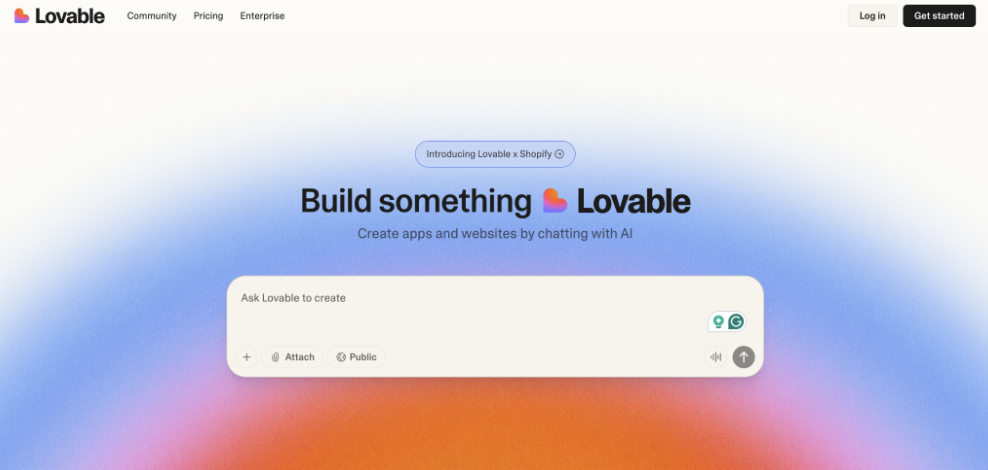
Lovable is a prompt‑driven AI app builder that positions itself as an AI engineer for building apps and websites by chatting. You describe the product you want, typically Next.js + Supabase or similar stacks, and Lovable generates a working app that you can refine conversationally. It’s very community‑driven, with a strong ecosystem of templates, examples, and the community apps you can remix. The platform is optimized for fast prototyping and internal tools as much as for consumer and B2B web apps. Lovable also abstracts away a lot of the pain of integrating AI features into your own app by offering direct access to models like Gemini and GPT without you managing API keys yourself.
Target audience. Solo founders, product managers, designers, and marketers who want to prototype and iterate on apps quickly without a heavy engineering setup. Especially useful for internal tools, lightweight SaaS experiments, marketing tools, and early MVPs where speed matters more than deep customization.
Key features
Chat‑based project creation and refinement: describe your app, then iterate via natural language.
Templates for internal tools, websites, B2B/B2C apps, and prototypes.
Built‑in support for adding AI features (LLM calls) without managing separate AI provider accounts.
Collaboration and user roles for teams building together in real time.
Hosting and lovable.app domains, with support for custom domains on paid tiers.
Pitfalls
It’s more closed than a full dev VM approach: while you can work with real stacks, there’s still a degree of platform dependence and less emphasis on deterministic generation.
For complex, highly customized enterprise backends, you may hit platform limits and need to move to a more flexible environment.
Credit‑based AI and cloud usage can be tricky to predict if you don’t track how much prompting and hosting you actually consume.
Pricing
Free: Starter tier (details not fully listed on the snippet, but includes core building and limited credits).
Pro: $25/month, shared across unlimited users, includes 100 monthly credits plus daily bonus credits, custom domains, unlimited lovable.app domains, and removal of Lovable branding.
Business: $50/month, again shared across unlimited users, adds internal publishing, SSO, personal projects, and the ability to opt out of data training.
Enterprise: Custom pricing with dedicated support, onboarding, custom connections, and design systems.
Student discounts offer up to 50% off Pro plans.
Bolt.new
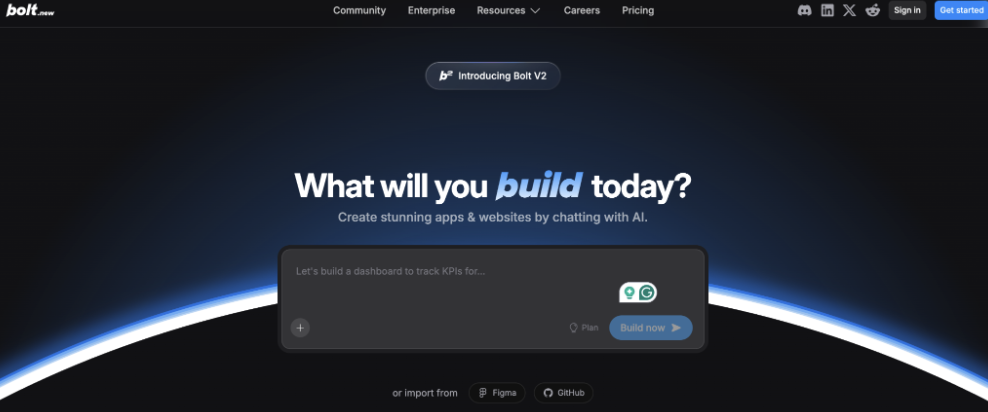
Bolt.new (by StackBlitz) is a browser-based AI coding environment that turns natural‑language prompts into full‑stack React apps running in your browser. You describe what you want, and Bolt generates code, installs dependencies, runs tests, and lets you inspect and refine the result in real time. The platform leans heavily into live development, your project is always running in an instant dev environment powered by StackBlitz’s WebContainers technology. Over the last year, Bolt has evolved from a pure AI code generator into an end‑to‑end platform with hosting, domains, databases, serverless functions, auth, SEO tooling, and payments bundled into its subscription tiers. It’s particularly attractive if you love React/Tailwind/Node and want to move fast with a visual, AI‑assisted dev setup.
Target audience. Developers and technical founders who are comfortable with code but want an AI‑boosted environment to skip scaffolding, wiring, and repetitive work. Also appealing for smaller teams building marketing sites, SaaS dashboards, or prototypes that may later be exported to a different setup.
Key features
Natural‑language prompts for full‑stack app generation (front end + backend).
Real-time browser IDE with instant preview and live code editing.
Modern default stack (React, Tailwind, Node/Next.js) plus integration with external infra partners like Netlify and Supabase.
Hosted deployments, domains, serverless functions, database, auth, SEO, and Stripe-powered payments wrapped into subscription plans.
Token‑based AI usage, with different tiers defining how many tokens you can burn per month.
Pitfalls
Token-based pricing can get expensive at scale; once you’re doing heavy AI generation or complex apps, you can blow through tokens quickly.
Historically, some flows restricted direct code editing (you’d prompt instead of editing files), which can frustrate experienced developers, though this is evolving.
As with other hosted builders, you’re tied into Bolt’s runtime; if you need unusual infra or strict compliance, you may eventually need to export and migrate.
Pricing
Free: $0, limited tokens, good for experimentation and small demos.
Pro: Starts around $25/month for roughly 10M tokens; higher Pro tiers go up in token capacity and price.
Teams: Around $30/month per member for team plans with more tokens and collaboration features.
Enterprise: Custom pricing, with enterprise-grade infra and support.
(Details change frequently. Always check Bolt’s official pricing page for the exact current numbers.)
Replit
Replit started life as a browser-based IDE, but in 2024-2025, it evolved into one of the most advanced autonomous coding platforms in the market. Replit AI and Agent 3 let you describe an app in natural language; the agent then plans, generates, tests, fixes, and deploys it, sometimes even spawning other agents to handle workflows. Replit integrates hosting, databases, and auth directly into the experience, so you can go from ideato public URL in a single environment. It has also doubled down on vibe coding as a philosophy: making software creation accessible to non‑programmers while still serving professional developers and enterprises. With large funding rounds, big‑name customers, and a projection of $1B in revenue by 2026, Replit is positioning itself as a default place to build AI‑first apps.
Target audience. Everyone from students and indie hackers to teams and enterprises that want an all‑in‑one coding + hosting + AI environment. Particularly good if you want fast iteration, built‑in collaboration, and are comfortable with pay‑as‑you‑go usage credits.
Key features.
Replit Agent: autonomous app setup, feature addition, testing, and self‑debugging via AI.
Integrated hosting, database, and authentication, with easy deployment and private deployments for teams.
Visual editor and import from Figma for front‑end heavy apps.
Team features: SSO, SOC 2 compliance, role‑based permissions, centralized billing, etc.
Effort‑based Agent pricing: you pay proportionally to the work the agent does, rather than flat per‑checkpoint fees.
Pitfalls.
Credit‑style pricing can be hard to predict; it’s easy to underestimate how much agent work your project will need.
For strict enterprise environments that require custom infra or on‑prem, Replit’s hosted nature can be a constraint.
As with all vibe‑coding, if you don’t maintain structure and tests, you can accumulate hidden complexity inside the project.
Pricing
Starter: Free. Public projects only, limited dev time, and basic AI access, good for learning and small prototypes. Core: Around $25/month ($20/month if billed annually), including full Agent access, private and public apps, hosting, and about $25 in usage credits each month.
Teams: Roughly $40/user/month ($35 annually) with more credits, 50 viewer seats, private deployments, and team governance.
Enterprise: Custom pricing for large organizations needing stronger compliance and security guarantees.
How to Actually Build a SaaS in 2026 (With These Tools)
Tools are just leverage. You still need a process.
Here’s a practical end‑to‑end playbook that uses these platforms intelligently.
Step 1: Nail a narrow, painful problem
Forget AI CRM for everyone. Talk to real customers in a tight niche, HR for logistics companies, finance teams in mid‑market SaaS, clinic operations, etc.
Map their current workflow.
Identify the one or two jobs that are slow, error‑prone, or visibility‑poor.
Write a one‑sentence product statement: We help [segment] do [job] without [pain], in [time].
No AI builder will fix a fuzzy value proposition.
Step 2: Design your domain model and workflows
Before you open AppWizzy or Replit, define:
Entities (e.g., Company, User, Contract, Invoice)
Relationships (e.g, one company has many contracts)
Agentic builders like AppWizzy literally want this clarity; they turn your structure into schemas and then into code.
Step 3: Choose the right builder for your first version
A rough rule of thumb:
AppWizzy, if you want a production‑grade B2B SaaS with real backend logic, a full data model, and a clear path to code export and self‑hosting later.
Lovable if you’re doing rapid MVPs, marketing tools, or early experiments where collaboration between non‑technical teammates matters a lot.
Bolt.new if you or your team are comfortable with React/Node and want an AI‑turbocharged dev environment that still feels like coding.
Replit if you want an all‑in‑one IDE + agent + hosting and are okay running on their infra with usage‑based pricing.
You’re not marrying any of them forever. Use whichever gets you to a usable prototype in 1-2 weeks, not 1-2 quarters.
Step 4: Build the MVP and wire in analytics & billing immediately
Whichever builder you pick:
Use AI to generate the core flows and screens.
Add basic analytics from day one (Mixpanel, PostHog, or even a simple event log).
Integrate billing early (Stripe, Paddle, or B2B invoicing).
Get 5-10 real users using the product and watching metrics:
activation (how fast they reach a value)
retention
willingness to pay
If your builder makes it hard to add analytics, auth, or billing, that’s a red flag for long‑term viability.
Step 5: Iterate on workflows, not features
When customers give feedback, translate it into workflow changes, not random feature requests:
I forgot to renew contracts→ add nudges, timelines, and dashboards, not just another filter.
My CFO doesn’t trust the numbers.→ add audit logs, exportable reports, and permissions.
Use the AI builder to quickly restructure flows and screens, but keep your domain model stable. That’s what gives you a durable product instead of a pile of demos.
Step 6: Decide on your long‑term architecture
Once you see real traction (paying users, strong retention), you have a choice:
Stay on the builder if:
You have code export and clear ownership (e.g., AppWizzy).
The pricing model comfortably fits your unit economics.
You’re still shipping fast and don’t hit platform ceilings.
Migrate to your own infra if:
You need strict compliance, performance, or special infra.
You’re starting to hit cost ceilings on tokens/credits.
You want to mix several infrastructures or vendors.
This is the moment where many founders regret starting on closed systems. If you know that migration is likely, opt for platforms that prioritize code export and open stacks from day one.
Step 7: Build your moat around data, workflows, and distribution
Your defensibility comes from:
Owning unique datasets (from your customers’ workflows).
Embedding into core workflows (becoming the system of record or the main cockpit).
Nailing distribution, channels, partnerships, and communities, not just winning Product Hunt once.
The AI builder accelerates your learning loop: idea → product change → usage & revenue data. The moat comes from how many loops you run and how well you learn from them.
Conclusion
If you strip away all the buzzwords, this guide boils down to a few hard truths about building SaaS in 2026. First, shipping an app is trivial; finding real product-market fit is not. AI builders like AppWizzy, Lovable, Bolt, and Replit make it easy to spin up dashboards and CRMs, but they don’t choose your niche, define your customer, or design a business model that survives contact with reality. Second, agentic AI builders are leverage, not magic: use them to generate scaffolding, CRUD, and dashboards fast, while you focus your human brainpower on workflows, pricing, onboarding, and distribution. Third, ownership and architecture matter. Choose tools and stacks that give you control over your code, data, and infra so you can evolve from “AI demo” to durable SaaS without painful rewrites. Finally, the winners will be the teams that iterate fastest on real usage, wiring analytics and billing from day one, and building a moat around customer workflows and data, not around “we used AI”.
If you’re serious about doing this properly, not just generating another prototype, Flatlogic can sit on your side of the table: using AppWizzy and our AI + engineering team to design the right architecture, generate a production-ready foundation, and then extend it with the custom features, integrations, and hardening you need so your SaaS can actually survive growth instead of collapsing under it.
Nouveau flux conversationnel de style ChatGPT : créez une application à partir d’une seule invite en anglais simple.
L’IA mappe votre invite à un schéma structuré, générant ainsi le code extensible et prêt pour la production que vous possédez.
Clarifie uniquement les éléments essentiels lorsque cela est nécessaire ; sinon, il se construit immédiatement.
Les premiers tests montrent que les builds se terminent environ 60 % plus rapidement ; disponible maintenant dans Flatlogic Generator et AppWizzy.
Boîte d’information
Flatlogic a lancé un flux conversationnel de style ChatGPT pour la création d’applications.
Vous pouvez démarrer une build à partir d’un seul message en anglais simple.
Le système mappe les invites à un schéma structuré pour générer le code prêt pour la production que vous possédez.
Les questions de clarification n’apparaissent que lorsque l’essentiel manque.
Les premiers tests montrent que la plupart des builds se terminent 60 % plus rapidement.
Nous lançons une mise à jour majeure de l’expérience de création d’applications Flatlogic, une Flux conversationnel de style ChatGPT qui vous permet de passer de l’idée à l’application générée avec un seul message.
Au lieu de remplir plusieurs champs, de choisir des modèles ou de cliquer sur les étapes, il vous suffit désormais de décrivez votre candidature dans un anglais simple. Notre IA comprend vos besoins et lance le processus de génération. Si votre description n’est pas claire, le système vous posera des questions spécifiques pour clarifier l’essentiel avant de continuer.
Il s’agit d’une étape importante vers le flux de travail « dites-le une fois, récupérez le code » dont beaucoup ont rêvé, mais que peu de plates-formes ont réalisé.
Essayez maintenant!
Ce qui a changé
En coulisses, l’entrée conversationnelle est mappée à un schéma structuré qui entraîne le générateur existant, donc la sortie est toujours code extensible et prêt pour la production vous possédez, pas des blocs fragmentés. Cela maintient les meilleures pratiques d’ingénierie tout en offrant la vitesse du langage naturel.
Exemples d’invites désormais prises en charge :
Construisez-moi un CRM SaaS avec des équipes d’utilisateurs, une facturation et un tableau de bord d’analyse.
Système d’inventaire Web avec lecture de codes-barres, alertes de stock et rôles.
Mini place de marché avec vendeurs, commandes et intégration des paiements.
Clarification de l’IA uniquement en cas de besoin
Nous ne transformons pas l’interface utilisateur en un jeu de devinettes. Si votre invite répond à tous les éléments requis, le système ignore les questions et construit immédiatement. S’il manque quelque chose (comme une clé primaire, une relation cruciale ou un comportement de rôle), vous verrez une invite de suivi compacte telle que :
Souhaitez-vous que les rôles d’utilisateur incluent l’administrateur, le gestionnaire et l’invité ?
Voilà, juste ce qui est essentiel pour compléter le cahier des charges avec précision.
Pourquoi c’est important
Accélération massive de l’idée → application. Les premiers tests montrent que la plupart des builds se terminent 60 % plus rapidement.
Réduire les frictions cognitives: moins d’écrans de configuration, expression d’intention plus naturelle.
Sortie cohérente et déterministe conserve les flux de travail des développeurs professionnels.
Mieux pour les fondateurs, les PM et les créateurs non techniques qui pensent aux fonctionnalités, pas aux panneaux de configuration.
Cette mise à jour est disponible dès maintenant dans Flatlogic Generator et AppWizzy. Cliquez simplement sur la zone d’invite et commencez à saisir votre idée d’application. Vous verrez l’option pour création d’un message tout de suite.
Merci d’avoir construit avec nous ! Comme toujours, vos commentaires façonnent ces améliorations. Essayez le nouveau flux et dites-nous comment il s’adapte à votre flux de travail.
Dans ce blog, je souhaite vous présenter mon expérience personnelle de travail avec l’intégration de GraphQL avec ASP.NET Core et pourquoi cela change tellement la donne dans le développement Web moderne. Au fil du temps, la façon dont nous construisons des applications a beaucoup changé et les développeurs s’attendent désormais à des moyens plus rapides, plus propres et plus flexibles pour récupérer des données. C’est là que GraphQL se démarque vraiment.
Au lieu de s’appuyer sur les API REST traditionnelles, où vous obtenez souvent trop ou pas assez de données, GraphQL vous permet de demander exactement ce dont vous avez besoin, rien de plus. Il donne aux développeurs plus de contrôle et rend les applications plus rapides et plus efficaces.
Ce qui le rend encore plus puissant, c’est lorsque vous intégrez GraphQL à ASP.NET Core. Ensemble, ils simplifient le développement back-end, réduisent la complexité et rendent votre API plus intelligente et plus réactive. Dans ce blog, je partagerai ce que j’ai appris, les défis auxquels j’ai été confronté et pourquoi cette combinaison vaut la peine d’être essayée si vous travaillez sur des applications .NET modernes.
Comprendre GraphQL
GraphQL est un langage de requête moderne pour les API. Il a été créé par Facebook en 2012, puis open source en 2015. Contrairement à REST, où vous traitez souvent plusieurs points de terminaison et recevez parfois trop ou pas assez de données, GraphQL adopte une approche plus intelligente. Il permet au client de demander exactement les informations dont il a besoin, ni plus ni moins. Cela réduit à la fois la sur-récupération et la sous-récupération, rendant la gestion des données plus propre et plus efficace.
Concepts clés de GraphQL
Quelques concepts clés guident GraphQL, rendant la récupération de données prévisible, flexible et structurée. Ces éléments de base spécifient la livraison, la modification et la demande de données en temps réel.
Requêtes : la manière dont les clients demandent des données.
Mutations : utilisées pour modifier les données côté serveur.
Abonnements : permettez aux clients d’écouter les mises à jour en temps réel.
Schéma : définit les types et les relations dans l’API.
Pourquoi utiliser GraphQL avec ASP.NET Core ?
ASP.NET Core est déjà un framework puissant, rapide et flexible pour créer des applications Web et des API modernes. Mais lorsque vous le combinez avec GraphQL, les choses s’améliorent encore.
GraphQL apporte une manière plus intelligente de demander des données, vous pouvez demander exactement ce dont vous avez besoin et éviter d’obtenir trop d’informations inutiles. Cela rend vos applications plus rapides et plus efficaces.
Lorsque GraphQL s’exécute sur ASP.NET Core, vous obtenez le meilleur des deux mondes :
Efficacité : les clients peuvent demander uniquement les données dont ils ont besoin.
Typage fort : le schéma fournit un contrat clair entre le client et le serveur.
Outillage : Excellents outils de développement comme GraphiQL pour tester les requêtes.
Intégration de GraphQL dans votre application ASP.NET Core
Fondamentalement, pour intégrer GraphQL dans une application ASP.NET Core, vous suivez généralement ces étapes :
Installez les packages NuGet nécessaires, tels que HotChocolate.AspNetCore.
Définissez votre schéma GraphQL, y compris les types et les requêtes.
Configurez le serveur GraphQL dans le fichier Startup.cs.
Implémentez des résolveurs pour gérer la récupération de données.
Exemple : configuration d’un serveur GraphQL simple
Voici un bref aperçu de la façon dont vous pouvez configurer un simple serveur GraphQL :
public class Startup {
      public void ConfigureServices(IServiceCollection services) {
          services.AddGraphQLServer()
              .AddQueryType();
      }

      public void Configure(IApplicationBuilder app, IWebHostEnvironment env) {
          app.UseRouting();
          app.UseEndpoints(endpoints => {
              endpoints.MapGraphQL();
          });
      }
  }
Conclusion
L’intégration de GraphQL aux projets ASP.NET Core peut vraiment améliorer la façon dont vous créez des API. Ensemble, ils offrent un puissant mélange de flexibilité, de performances et de gestion plus propre des données. Cette combinaison aide les développeurs à créer des applications plus rapides, plus efficaces et adaptées aux besoins modernes.
Pendant que vous continuez à explorer GraphQL, réfléchissez à ses atouts, comme la récupération de données précise et la conception simplifiée de l’API. Cela peut également améliorer votre flux de travail et votre expérience globale de développement. C’est un outil qui vaut la peine d’être essayé, surtout si vous créez des applications évolutives et prêtes pour l’avenir.
Pick tools by acceptable failure mode: no‑code, code‑gen, or agents—choose what you can maintain.
Code ownership vs vendor runtime is the core 2026 trade‑off.
AI speeds scaffolding but adds tech debt and security risks later.
Pair AI builders with engineering discipline to ship durable products.
Use niche‑fit tools; launch fast, own what matters, avoid lock‑in.
Fact Box
A 2025 MIT study estimates 95% of generative AI projects fail to deliver meaningful outcomes.
Low‑code platforms projected to grow from ~$25–35B mid‑2020s to $65–100B+ by 2030.
McKinsey estimates generative AI could add $2.6–$4.4T in annual value worldwide.
Flatlogic Generator: ~$20/mo for AI credits; ~$399 per app/year for production code ownership.
Bolt.new raised entry Pro price from $20 to $25/month as it bundled end‑to‑end hosting in 2025.
If you pick the wrong AI app builder in 2026, you won’t just lose a month, you’ll bake technical debt, security risk, and vendor lock‑in into your product’s DNA. Read this to the end before you commit.
When people go searching for the best AI app builders, they’re usually really asking things like:
Which tool will actually ship my MVP, not just a prototype?
Will I own the code? Can this scale past a demo?
How much risk am I taking on security and vendor lock‑in?
In Satya Nadella’s words: Every company is now an AI company. The question is whether every worker will be an AI worker.
Here’s the uncomfortable truth: most organizations are getting AI software wrong. A 2025 MIT study estimates that 95% of generative AI projects fail to produce meaningful outcomes, despite tens of billions of dollars being poured into tools and pilots.
By the time you finish this article, you’ll know how to read through the marketing smoke, understand what an AI app builder really means in 2026, and choose one (or a stack) of tools that matches your stage, skills, and risk tolerance. You’ll see where each platform shines, where it quietly breaks, and how to design a setup where AI accelerates you instead of turning your roadmap into a graveyard of half‑finished prototypes.
Why AI app builders matter in 2026
A few big forces collided to make AI app builders the hot zone of 2026:
Low‑code/no‑code went mainstream. Low‑code platforms are projected to grow from roughly $25-35B mid‑2020s to $65-100B+ by 2030. Surveys show 98% of enterprises already use some form of low‑code, and over 80% report improved productivity.
GenAI is being wired into everything. McKinsey estimates generative AI could add $2.6-4.4 trillion of value annually worldwide, including a huge impact on software development and business process automation.
Code‑gen tools went from toys to platforms. Replit, Lovable, Bolt.new, AppWizzy, and others now let you go from prompt to full‑stack apps with hosting, auth, and CI/CD bundled in.
But the hidden costs are showing. Studies and industry reports are now talking openly about vibe‑coding and AI‑driven tech debt: more features, faster, but also bloated, untested, and insecure code bases that are expensive to maintain.
So the real game in 2026 is not Can AI build an app? The answer is clearly yes.
The real game is: Can AI help you build a durable product and business, without handing your future to a black‑box platform?
That’s the lens we’ll use for the 10 tools below.
Terminology & definitions (so we’re not talking past each other)
Before we dive into the tools, let’s make sure the words mean something.
AI app builder – Any platform where you can describe an app in natural language (prompt, chat, or wizard) and get back a working application, UI, logic, and often database + auth, without writing every line of code yourself. This spans both no‑code tools and AI‑augmented coding environments.
No‑code / low‑code platform – Visual builders (Glide, Softr, Bubble, Appsmith, FlutterFlow, etc.) where apps are composed via drag‑and‑drop components, workflows, and connectors, now increasingly infused with AI to generate UI, schemas, or AI features.
Text‑to‑app / vibe‑coding – Karpathy’s vibe coding idea: you describe the vibe (a Stripe‑like dashboard with usage analytics and role‑based access) and the AI builds it. Tools like AppWizzy, Lovable, Bolt.new, Replit Agent, and Flatlogic’s AI generator live here.
Full‑stack generation – The platform generates frontend, backend, and database, not just snippets or UI mockups. AppWizzy, Lovable.dev, Replit Agent, Flatlogic Generator, and some Bubble/FlutterFlow scenarios qualify.
AI agent / AI software engineer – More autonomous systems that plan, decompose, and iteratively refine apps, often with tools like browsing, testing, and code editing. Replit Agent 3, AppWizzy AI Engineer, Appsmith Agents, Flatlogic’s AI Software Development Agent, Softr’s Database AI Agents all fall into this bucket.
CRUD – Create/Read/Update/Delete; the bread‑and‑butter operations of business software for working with structured data (customers, orders, tickets, etc.). Many AI builders excel precisely here.
Once you see which tools are no‑code with AI sprinkles versus AI‑first full‑stack generators, the landscape stops looking like chaos and starts looking like a menu.
How to think about AI app builders in 2026
Here’s the main idea I want you to keep in your head while reading the rankings:
Don’t pick the smartest AI – pick the platform whose failure mode you’re willing to live with.
Some examples:
If a no‑code tool like Glide/Softr breaks, you’re blocked until the vendor fixes something or you hack around within its constraints.
If a code‑gen tool like AppWizzy/Lovable/Bolt misbehaves, you at least have a repo you can fork, patch, and move elsewhere, if your team can read the stack.
If you rely entirely on an agent like Replit Agent or Flatlogic’s AI Software Development Agent, your risk isn’t Will it build something? It’s Will my team be able to evolve it for years without the agent?
You should also assume:
AI will speed you up and slow you down at the same time – faster initial build, more time later paying off AI‑shaped tech debt.
Security is non‑optional – research is already showing dramatic spikes in AI‑introduced vulnerabilities, and platforms like Lovable have been abused to host phishing campaigns.
Most value comes when you combine: AI app builder + your own engineering discipline, not one or the other.
With that in mind, let’s look at the 10 tools.
The 10 best AI app builders in 2026
Before we dive in, a quick note: this isn’t a beauty pageant. I’m not ranking these from best to worst, because each tool shines in a different kind of fight. Think of this lineup as a toolbox, and your job is to pick the weapon that fits the battle you’re actually in.
Flatlogic sits in the AI software engineer for business apps category: it generates full‑stack web applications (frontend, backend, database) specifically optimized for CRUD‑heavy systems like ERPs, CRMs, admin panels, and internal SaaS. You describe your app in plain English, pick stack preferences, and Flatlogic scaffolds a production‑grade project with auth, roles, CRUD, and a sane architecture. The AI Software Development Agent can then extend the app with features, integrations, and AI capabilities such as text‑to‑chart or text‑to‑widget. Unlike many toy IDE vibe‑coding tools, Flatlogic is explicitly designed so that you own and download the code, plug it into your normal Git workflow, and keep evolving it with or without Flatlogic. The company also offers custom dev services around the generator, which matters for teams that want a partner to harden or extend the initial AI‑generated base.
Target audience Founders and teams building serious business apps (SaaS, ERP, CRM, internal tools) who care about code ownership, long‑term maintainability, and enterprise‑grade customization more than drag‑and‑drop UI tricks.
Key features
Text‑to‑app generator for full‑stack JS applications (frontend, backend, DB).
Built‑in auth, roles, CRUD, and admin scaffolding.
AI Software Development Agent that can extend flows, add AI features, and integrate APIs.
Code download, Git integration, and commercial use by default.
Option to hire Flatlogic’s team for custom work on top.
Pitfalls
Not a generic build anything no‑code toy, best payoff is for structured business applications, not wild consumer apps or games.
You still need at least one developer (or technical partner) to get full value from owning the stack.
Less of a fit if you’re happy to live entirely inside a visual no‑code runtime forever and never touch code.
Pricing
Generator platform starts around $20/month for basic AI credits, with additional per‑app licensing around $399/app/year for production use, templates, and code ownership. Custom development projects range higher depending on the scope.
AppWizzy is a vibe‑coding platform that lets you build and host full‑stack web apps by chatting with an AI that operates on a real development VM (PHP, Python, Node/Next, Postgres/MySQL). You describe your app, AppWizzy generates architecture, database schema, and code, and then keeps editing your Git repo via AI‑powered commits. You get pre‑built templates for SaaS, CRM, e‑commerce, and more, plus one‑click deployment to AppWizzy’s cloud. Crucially, this is not an edge‑only toy. Your app runs on a real machine you can tweak, extend, and integrate with other tooling. AppWizzy positions itself as a serious environment for people who want AI speed but developer‑grade control.
Target audience Developers, technical founders, and agencies who are comfortable with code but want AI to handle scaffolding, boilerplate, and boring infrastructure.
Key features
Natural‑language project definition → full-stack architecture + DB schema.
AI‑driven code edits directly in a Git repo, with history.
Real VM (PHP/Python/Node + Postgres/MySQL), not a limited sandbox.
One‑click deployment and flexible hosting on AppWizzy cloud.
Usage‑based billing for AI tokens & hosting, plus templates marketplace.
Pitfalls
Token‑based billing can spike if you do a lot of iterative AI edits without discipline.
Non‑developers will still get lost once things go beyond basic customization.
As with all AI‑generated code, you must enforce your own standards for tests, security, and performance.
Pricing Free plan with limited AI credits and up to 3 public apps; paid tiers like Basic ($20/month) and Basic 50 ($50/month) increase AI credits and unlock unlimited/private apps and collaboration.
Lovable
Lovable.dev pitches itself as an AI engineer that builds full‑stack apps from a prompt, handles hosting, and even helps you add AI features like chat, content generation, and more, without you juggling API keys. You describe your product, the AI builds a working application, and you iterate in a chat‑like interface that edits the code. Apps can be auto‑deployed and scaled on Lovable’s infra, making it feel like youhire a team in a browser. It has quickly become popular with solo founders and small teams needing fast green‑field apps. At the same time, security researchers have flagged Lovable‑hosted sites being abused for phishing campaigns, which the company has responded to with stronger detection and takedowns.
Target audience Non‑expert developers, technical founders, and product people who want to go from idea → running an app with minimal setup, and are okay living inside Lovable’s ecosystem.
Key features
Full‑stack generation from natural‑language prompts, including deployment.
Built‑in AI features (chat, text generation, etc.) without managing external LLM keys.
GitHub sync for version control and collaboration.
Cloud infrastructure tuned for AI‑built apps, with production‑ready deployments.
Pitfalls
You’re strongly tied to Lovable’s runtime and hosting, migrating out is non‑trivial.
Security concerns: public data shows that Lovable sites have been abused for phishing; you’ll need stricter internal security review, especially in regulated industries.
Code quality varies with prompts; without an in‑house engineer reviewing, you can easily ship fragile systems.
Pricing Lovable has a free tier with limited daily credits; Pro is around $25/month with 100 credits, and higher credit tiers scale up to enterprise levels.
Bolt.new
Bolt.new, built by StackBlitz, is an AI app builder that runs in the browser and uses modern frameworks under the hood, powered heavily by Claude‑class models. You describe the app, marketing site, SaaS dashboard, internal tool, and Bolt generates UI, code, and wiring, then lets you iterate conversationally. In 2024 – 2025, Bolt exploded from $0 to tens of millions in ARR and millions of users. In 2025, it repositioned from just a builder to an end‑to‑end platform, bundling hosting, domains, databases, auth, payments, and analytics into its subscription tiers, in partnership with providers like Netlify and Supabase. It’s optimized for people who want to stay inside one ecosystem from idea → launch → scale.
Target audience Solo creators, indie hackers, and product teams who want a fully integrated AI dev + hosting environment with modern web stacks and minimal DevOps.
Key features
Chat‑driven generation of modern web apps (React/Next, etc.).
Integrated hosting, domains, DBs, auth, SEO, payments, analytics bundled into subscriptions.
Strong browser‑based dev experience using StackBlitz’s WebContainers.
Good for fast prototyping and shipping public‑facing apps.
Pitfalls
Heavy AI usage can trigger high token costs; mis‑scoped projects can become expensive.
Opinionated about stack and hosting; migrating to a totally different infra later isn’t seamless.
Like all browser IDEs, large/complex projects can still feel cramped versus a full local toolchain.
Pricing Free tier, then Pro plans starting around $25/month for light usage; higher usage tiers (Pro 50, 100, 200, etc.) scale to serious daily usage, with the entry‑level price recently raised from $20 to $25/month as part of the end‑to‑end repositioning.
Replit Agent
Replit has evolved from an online REPL into an AI‑first development platform whose Agent can build, test, and deploy full apps from natural‑language prompts. You tell Replit Agent what you want, it scaffolds the app, runs it in a browser, and iteratively tests and fixes issues using its own autonomous loop. Replit emphasizes production readiness and recently hit a multi‑billion valuation off the back of its AI agents and rapid revenue growth. The Agent is tightly integrated with Replit hosting, databases, and a collaborative coding environment, so you can go from idea → live site in one place. It suits both no‑code‑curious founders and developers who want to offload grunt work but keep control via the editor.
Target audience Individuals and teams who want a cloud IDE + AI agent + hosting bundle, with the option to dig into code as much as they like.
Key features
Natural‑language → app generation with autonomous testing and self‑correction.
Integrated hosting, databases, and collaboration.
Agent supports extended thinking and high‑power models for complex tasks.
Massive community and ecosystem of templates and examples.
Pitfalls
Billing can be confusing: subscriptions + usage credits + per‑edit costs if you’re not watching your consumption.
The more you lean on Agent as a black box, the more you risk tech debt and security issues, especially without code review.
Some teams find Replit’s environment limiting compared to full local dev setups for very large codebases.
Pricing (late 2025) Free Starter plan with limited Agent usage; Replit Core is about $20/month billed annually (~$25 monthly) and includes full Agent access plus monthly credits and private apps. Teams plans scale further.
Bubble.io
Bubble is a veteran no‑code platform that added a powerful AI App Generator: you describe the app and Bubble generates a data model, UI, and workflows as a starting point. You then refine using Bubble’s visual editor, which still offers one of the richest component ecosystems for web apps. Bubble’s AI doesn’t just build once; it can co‑design features, propose changes, and wire in AI features to your own app. Because Bubble runs on its own proprietary runtime, you trade code ownership for sheer speed and ecosystem depth.
Target audience Non‑developers or small teams building complex internal tools or B2C/B2B web apps who are okay with a fully managed runtime and want mature no‑code workflows plus AI assistance.
Key features
AI app generator: prompt → working Bubble app with pages and workflows.
Rich visual editor, plugin marketplace, and integrations.
AI assistant that co‑edits and refines your app.
Strong community, education, and agencies ecosystem.
Pitfalls
No raw code export: you’re committed to Bubble’s platform for the life of the app.
Performance tuning and complexity management can get tricky for very large apps.
Developers sometimes find it restrictive compared to code‑first builders.
Pricing
Bubble offers a free tier for experimentation, then paid plans (Personal/Professional/Production/Enterprise) with pricing based on capacity and features; AI features are bundled at some tiers and metered above certain usage.
Glide
Glide started as apps from spreadsheets and now leans heavily into AI‑powered business apps. Glide AI adds a set of AI columns and actions (Text→JSON, Audio→Text, classification, summarization, etc.) plus AI‑generated UI components and automations. You still build visually, especially for operations and internal tools, but AI does a lot of the heavy lifting on data shaping. Glide is particularly good for teams living in Google Sheets, Airtable, or Glide’s own data stores, wanting to spin up apps for operations, logistics, CRM‑ish workflows, etc., without developers.
Target audience Ops, RevOps, product, and citizen developers who want spreadsheet‑powered business apps with embedded AI and can live happily in a no‑code environment.
Key features
Visual app builder tied tightly to tabular data.
Glide AI features: text classification, extraction, summarization, transformations, etc.
AI‑assisted UI generation for faster app starting points.
Wide range of templates and integrations.
Pitfalls
You’re constrained by Glide’s data model and limits; heavy transactional workloads or highly custom logic are awkward.
No traditional codebase to own or move; migration means a rewrite elsewhere.
As with all no‑code, it’s easy to accumulate spreadsheet‑shaped tech debt.
Pricing Plans range from Free to business and enterprise tiers, with AI features and app limits scaling by plan; business plans can run into the low three figures per month, enterprise starting around the high hundreds depending on usage.
Softr
Softr focuses on client portals, internal tools, and database‑driven web apps, with deep Airtable/Notion/Google Sheets integration. In 2025 Softr launched Ask AI, a built‑in AI chat that answers questions directly from your live app data, and Database AI Agents that auto‑fill and maintain database records by pulling data from the web and other sources. AI is woven into the runtime: instead of wiring APIs by hand, you toggle AI blocks that act as analysts, enrichment bots, or support assistants embedded into your apps. Softr is attractive if you want real business portals with AI on top of your existing data tools.
Target audience Teams wanting client portals, internal dashboards, or mini‑SaaS backed by Airtable/Notion/etc., and who like the idea of AI answering questions directly from their data.
Key features
Visual builder for portals/internal tools with membership, payments, and more.
Ask AI: an AI analyst that reads your app’s live data and answers user questions.
Database AI Agents: automated enrichment, auto‑fill, and data maintenance.
Native OpenAI integration for content and image generation.
Pitfalls
Again, you don’t own the underlying code; you own config + data.
Complex use cases may hit limits in performance or workflow expressiveness.
You’re betting heavily on Softr’s roadmap and pricing staying aligned with your usage.
Pricing Softr has a free tier; paid plans (Basic, Professional, Business, Enterprise) scale from tens to hundreds per month, with AI features available across plans and more advanced agents reserved for higher tiers.
Appsmith
Appsmith is an open‑source low‑code platform for internal tools that’s embraced AI. You drag‑and‑drop UI widgets, connect to databases/APIs, and write logic in JS, but you can now layer in Appsmith AI actions (text generation, classification, etc.) without dealing with raw LLM API keys. Appsmith Agents go further, letting you build AI agents that use RAG, function calling, and secured access to your internal systems, even exposing them via Chrome extensions. Because it’s open‑source and self‑hostable, Appsmith is attractive for security‑sensitive orgs who want AI‑powered internal apps without sending everything to a SaaS black box.
Target audience Engineering‑adjacent teams and IT/Platform teams who want internal tools and AI agents on top of internal data, with open‑source and self‑hosting as key requirements.
Key features
Drag‑and‑drop internal app builder with JS customization.
Appsmith AI: text generation, classification, etc., without manual API keys.
Appsmith Agents: RAG‑powered, function‑calling AI agents integrated with your apps & data.
Open‑source, self‑hosting, and enterprise‑grade security controls.
Pitfalls
Requires more technical skill than pure no‑code tools; not ideal for non‑technical founders alone.
The AI layer gives you power, but you still have to design sane workflows and guardrails.
Self‑hosting means you own uptime, scaling, and upgrades.
Pricing
The core Appsmith platform is open‑source; commercial offerings and Appsmith Cloud add usage‑based pricing and enterprise features. AI usage may incur additional costs depending on the deployment model.
FlutterFlow
FlutterFlow is a visual builder for cross‑platform apps (iOS, Android, Web, Desktop) built on Flutter. With FlutterFlow AI Gen, you can describe screens and flows in natural language and have them generated as Flutter pages, complete with widgets, layout, and some backend schema suggestions. You can export clean Flutter code, integrate with Firebase and custom APIs, and then continue development in Flutter proper if you want. This makes FlutterFlow one of the most interesting bridges between AI/no‑code speed and native‑grade app quality.
Target audience Teams that want mobile + web apps with near‑native performance, and either have or plan to have Flutter developers in the loop.
Key features
Visual builder for Flutter apps with Firebase and API integration.
AI Gen: prompt‑to‑screen/page generation, plus schema suggestions.
Code export so you can continue in pure Flutter.
Large template library and growing ecosystem.
Pitfalls
You still need Flutter literacy to maintain exported code or debug tricky UI/logic.
AI‑generated layouts can be messy; you’ll want to normalize design patterns before production.
Some users report that AI features feel more like speed‑ups than full automation, which is fine, if you set expectations correctly.
Pricing Free plan for building and testing apps; paid plans starting around $29-39/month unlock code export, additional projects, and more advanced features, with enterprise pricing for larger teams.
Pulling it all together: what actually matters
Let’s zoom out. Across these 10 tools, you can see three big patterns:
Runtime vs. code ownership
Bubble, Glide, Softr, Appsmith (cloud) keep you inside their runtime.
Flatlogic, AppWizzy, Lovable, Bolt, Replit, FlutterFlow let you own/ export more of the code and/or stack.
If your app becomes core IP, code ownership and stack control are not optional.
Technical founders / small dev teams: AppWizzy, Lovable, Bolt, Replit, FlutterFlow, Flatlogic.
Enterprise/platform teams: Flatlogic + Appsmith + Softr/Glide combination is a common pattern, AI‑assisted full‑stack apps plus AI‑powered internal tooling.
Your job is not to find the best AI app builder. It’s to assemble the least painful stack that lets you:
Launch fast
Own what matters
Avoid turning your org into a hostage of one vendor’s roadmap and pricing
Conclusion
AI app builders have finally reached the point where anyone can generate an app in minutes, but that doesn’t mean those apps will survive contact with real users, real scale, or real engineering constraints. The real challenge in 2026 isn’t building faster; it’s avoiding the hidden traps that come with speed: fragile code, security holes, vendor lock‑in, and platforms that look powerful in the demo but quietly fall apart when your product grows. If you choose wisely, AI becomes leverage, cutting out weeks of boilerplate, accelerating iteration, and letting your team focus on the parts of the product that actually matter; choose poorly, and you’ll spend the rest of the year untangling the shortcuts your tool took behind your back.
And if you want an AI builder that gives you speed without trapping you, a tool like AppWizzy is one of the few that lets you move fast while still keeping full control of your code and infrastructure.
Pick the platform whose failure mode you’re willing to live with, use AI where it gives you real leverage, and build in a way your future self won’t curse.
Bonjour! Dans ce blog, je partagerai mes expériences en matière de connexion dans des applications modernes.
En 2025, la création d’applications est devenue plus complexe que jamais, des microservices cloud natifs aux meilleures pratiques interactives pour Blazor et ASP.NET Core. Avec cette complexité, les erreurs ne peuvent être évitées. Mais voici le problème : sans une journalisation appropriée, même de petits problèmes peuvent se transformer en heures de débogage, en frustrations d’utilisateurs et en problèmes de production stressants.
Grâce à mon expérience, j’ai appris qu’une bonne journalisation n’est pas seulement une exigence technique mais aussi une bouée de sauvetage lors d’incidents. Dans ce blog, j’expliquerai pourquoi la journalisation est importante, les pièges courants à éviter et les meilleures pratiques exploitables pour Blazor et ASP.NET Core qui vous aident à maintenir des applications fiables et conviviales. Que vous débutiez ou que vous ayez des années d’expérience, ces conseils vous aideront à vous connecter plus intelligemment, pas seulement plus.
Pourquoi l’exploitation forestière est importante en 2025
Fondamentalement, des erreurs se produisent, c’est un fait. Mais une mauvaise journalisation peut faire de leur diagnostic un cauchemar. Les conséquences courantes incluent :
Crashs non diagnostiqués
Rapports de bogues déroutants
Cycles de débogage plus longs
Utilisateurs frustrés
Ici, problème du monde réel :
Imaginez qu’un utilisateur signale : « L’application ne fonctionne pas ». Vous vérifiez le journal et voyez :
“Une erreur s’est produite lors du processus. Cela ne vous dit rien.”
Pièges courants de la journalisation
Ici, de nombreux développeurs commettent involontairement des erreurs de journalisation qui entraînent des problèmes plus importants. Pour améliorer vos journaux et éviter les pièges courants, gardez ces conseils à l’esprit :
Aucune trace de pile : il est difficile de trouver la cause première.
Enregistrement de données sensibles : peut entraîner des problèmes de sécurité et du RGPD.
Aucune différenciation au niveau des journaux : tous les journaux se ressemblent, ce qui rend difficile le filtrage et la priorisation.
Aucun contexte de demande/utilisateur : rend le suivi des problèmes spécifiques des utilisateurs délicat.
Trop de journalisation : crée du bruit et augmente les coûts de stockage.
Éviter ces erreurs tôt vous évitera temps, efforts et frustration plus tard.
Meilleures pratiques pour la connexion à .Net 2025
Passons à l’étape 3 : comment se connecter correctement :
Tout d’abord, utilisez la journalisation structurée pour faciliter les requêtes.
Incluez des informations contextuelles : ID utilisateur, IP, nom de la méthode.
Appliquer les niveaux de journalisation : Information, Avertissement, Erreur, Critique.
Évitez de consigner des secrets comme des mots de passe ou des jetons.
Intégrez des outils tels que Serilog, Seq, ELK ou Azure Monitor.
Exemple : journalisation de base dans ASP.NET Core (compatible Blazor)
Dans Blazor Server, la journalisation doit être gérée avec soin pour éviter de bloquer les connexions SignalR.
public class WeatherService
{
    private readonly ILogger<WeatherService> _logger;

    public WeatherService(ILogger<WeatherService> logger)
    {
        _logger = logger;
    }

    public void GetWeatherData(string city)
    {
        try
        {
            // Simulate error
            throw new Exception("Weather API failed");
        }
        catch (Exception ex)
        {
            _logger.LogError(ex, "Failed to fetch weather data for city: {City}", city);
        }
    }
}
Pourquoi ça marche :
ILogger<T> injecte un service de journalisation.
LogError capture l’exception et le message.
{City} permet une journalisation structurée, ce qui facilite les requêtes ultérieures.
Connexion à une application Blazor Server
Dans Blazor Server, les applications nécessitent une journalisation minutieuse. La connexion au thread de l’interface utilisateur sans gestion asynchrone peut bloquer le rendu ou faire planter les connexions SignalR.
private async Task SubmitFeedback()
{
    try
    {
        // Simulate async DB save
        await SaveToDatabase();

        logger.LogInformation("Feedback submitted successfully by user: {User}", currentUser.Id);
    }
    catch (Exception ex)
    {
        logger.LogError(ex, "Error while submitting feedback by user: {User}", currentUser.Id);
    }
}
Astuce avancée : intégration de Serilog (Facultatif Avancé)
Serilog rend votre journalisation plus puissante par rapport à l’enregistreur .NET par défaut. Il vous offre des journaux structurés, un meilleur formatage et la possibilité d’envoyer des journaux n’importe où dans les fichiers, Seq, Elasticsearch ou les outils de surveillance du cloud.
Log.Logger = new LoggerConfiguration()
    .Enrich.FromLogContext()
    .WriteTo.File("logs/log.txt")
    .CreateLogger();

Log.Information("Starting app at {Time}", DateTime.Now);
Add UseSerilog() in Program.cs for full integration.
Conseils pour une meilleure gestion des journauxt dans Meilleures pratiques pour Blazor et ASP.NET Core
Utilisez les ID de corrélation par requête.
Faites pivoter les journaux automatiquement (quotidiennement/en fonction de la taille).
Définissez des politiques de rétention pour économiser du stockage.
Centralisez les journaux à l’aide d’ElasticSearch ou d’Azure App Insights.
Ajoutez des alertes en cas de pannes critiques pour réagir rapidement.
Conclusion
Une meilleure journalisation n’est pas seulement un détail technique, c’est une bouée de sauvetage lorsque des problèmes de production surviennent. Lorsque quelque chose ne va pas dans un environnement réel, des journaux significatifs peuvent faire la différence entre une solution rapide et des heures de débogage pénible.
En suivant les meilleures pratiques pour Blazor et ASP.NET Core, vous pouvez créer des applications plus faciles à maintenir, plus rapides à dépanner et plus fiables pour vos utilisateurs. La journalisation structurée, claire et contextuelle vous aide à comprendre instantanément les problèmes et à réduire les temps d’arrêt.
Commencez petit, connectez-vous intelligemment et rendez vos applications 2025 résilientes dès le premier jour. Votre futur moi et vos utilisateurs vous remercieront.
Vibe-coding lets founders build apps via conversation, but tools split: toys vs professional platforms
Deterministic generators tame AI chaos, yielding stable code, Git, real backends, and code ownership
Done right, MVPs drop from months to days and costs fall 10-30x; speed and iteration are the wins
Limits remain: complex logic, real-time/perf, compliance, drift, and unclear vision still need engineers
Use mature platforms (e.g., AppWizzy) for dedicated VMs and production code; avoid demo-only exports
Fact Box
HBR reports 67% of early-stage startups fail primarily due to execution speed.
McKinsey Digital says 85% of digital projects miss deadlines or ship reduced scope.
Gartner: IT backlogs span 6-18 months for routine internal tools.
With proper vibe-coding, MVP timelines drop from 2-3 months to 2-3 days.
Vibe-coding can cut early build costs by 10-30x, per the article’s analysis.
Most founders don’t fail because they had no idea. They fail because turning that idea into software takes longer, costs more, and burns more energy than expected. Vibe-coding claims to change that… but can it really?
Whenever a founder searches for articles like this one, the same anxieties show up behind the query:
Can AI actually build something real, or is this just hype?
Is vibe-coding fast enough and reliable enough for a real MVP?
Will I own the code, and can I scale it later?
Is this better than no-code… or just another startup toy that breaks under pressure?
As Marc Andreessen famously put it: Software is eating the world – but creating software is still too damn hard. Vibe-coding promises to make it easier. The question is whether it delivers.
There’s a reason vibe-coding exists at all. A massive and well-documented bottleneck has been building for years: the widening gap between how fast founders need to build and how slowly traditional software development moves.
Harvard Business Review reports that 67% of early-stage startups fail primarily because of execution speed – not the quality of the idea. McKinsey Digital adds that 85% of digital projects miss deadlines or ship reduced scope due to engineering bottlenecks.
And this doesn’t just affect early-stage founders. Enterprises, too, are collapsing under complexity: Gartner reports that IT backlogs now stretch from 6 to 18 months for even routine internal tools.
Meanwhile, AI accelerates everything except… software creation. We can brainstorm faster. We can outline faster. We can research faster. But actually turning an idea into software – with a backend, a database, roles, permissions, an API layer, deployment, testing, and all the messy glue – hasn’t changed much in 20 years. Vibe-coding is a direct response to this pressure.
By the end, you’ll have a simple framework to decide if vibe-coding is a toy… or a tactical weapon for your startup.
Terminology & Definitions
Before we dive deeper, it’s important to clarify a few terms. When people say “AI builds software,” they often mean completely different things – from simple prompt-based code generation to full-stack application assembly. Understanding these distinctions helps founders choose the right tools and avoid expensive dead ends.
Vibe-Coding
Vibe-coding is the practice of building software by talking to an AI in plain language – while the platform updates real code, in a real repository, running on real infrastructure. It combines the creativity and speed of no-code with the stability of traditional engineering.
In true vibe-coding:
You describe what you want your app to do,
The AI modifies real project files,
Changes appear instantly in a running environment,
The app lives on an actual VM or server,
And you fully own the resulting codebase.
The key idea, vibe-coding, isn’t a mockup generator or a toy. It’s conversational access to a genuine engineering workflow.
AI Code Generation (LLM-as-Compiler Tools)
This includes tools like GPT-4, Replit AI, Lovable, Cursor, Claude Projects, Codeium, and similar assistants.
These systems generate code from prompts, but they work in a very “guessing” manner:
They don’t maintain a global architectural plan,
They can overwrite or break earlier work,
They may hallucinate files, imports, or dependencies,
And they struggle to keep a project consistent over time.
They’re excellent copilots – great for small tasks, refactoring, or feature stubs – but they are not reliable as primary builders of a full, evolving application.
Deterministic Code Generators
These are hybrid systems such as Flatlogic Generator and AppWizzy, which blend AI with deterministic engineering.
Here’s how they work:
AI interprets your instructions and turns them into structured intent (schemas, models, roles, permissions, pages).
A deterministic generator then converts that intent into consistent, production-quality code using well-defined templates and rules.
This approach gives you:
stable architecture
predictable file structure
clean database models and routing
reliable iteration without drift
maintainable code that engineers can work with long-term
In short, deterministic generators solve the “AI chaos problem” by ensuring that every change follows the same patterns and conventions.
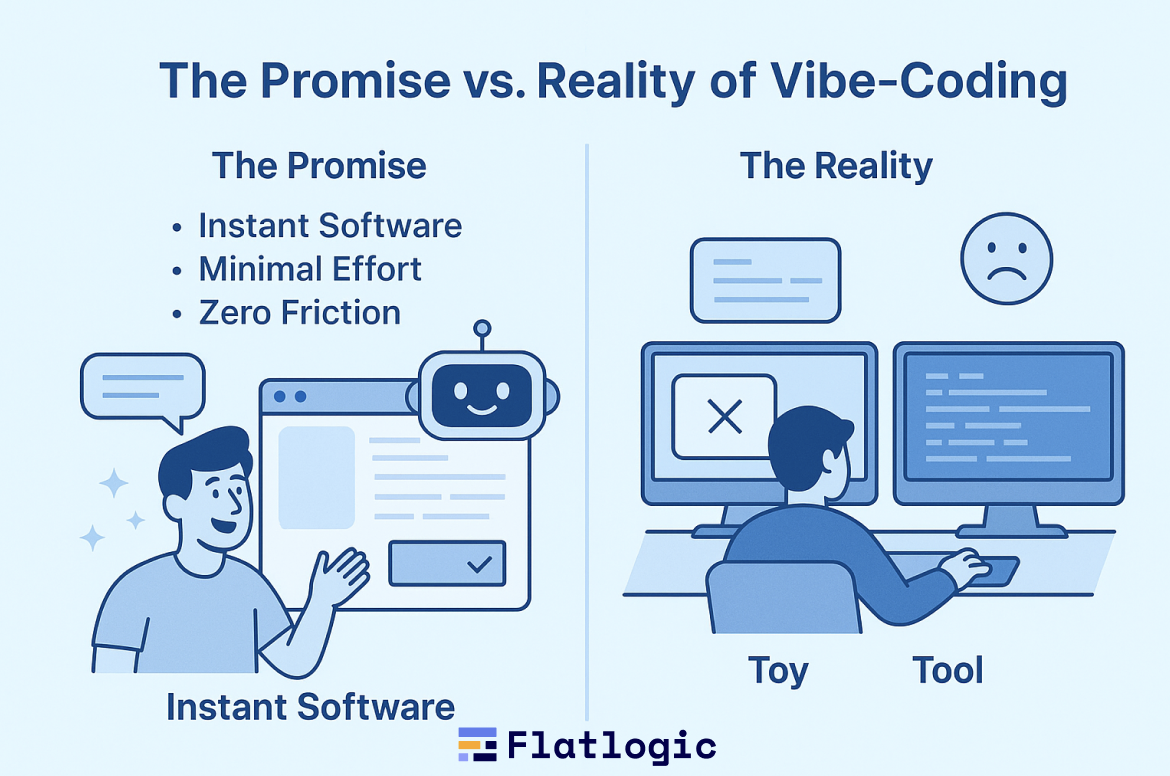
The Promise vs. Reality of Vibe-Coding
Vibe-coding comes with a powerful promise: the idea that anyone, especially founders, can build software simply by describing what they want. It suggests that the painful parts of development are finally dissolving into a simple conversation with an intelligent assistant. And on the surface, the demos appear miraculous: type a sentence, get an app; upload a screenshot, and it comes to life; describe a workflow, and it appears seconds later.
It’s no surprise that many founders look at vibe-coding and see a direct solution to the oldest startup barrier: “I know what I want to build – I just can’t build it fast enough.”
But the reality is more nuanced. Not all vibe-coding platforms are created equal, and the gap between what they promise and what they actually deliver can be massive.
The Promise: Instant Software, Minimal Effort, Zero Friction
Vibe-coding tools promise three main benefits:
Speed that feels unfair You can build screens, flows, and backend logic in minutes instead of days or weeks. For founders racing against time, this velocity is transformative.
Creativity without technical barriers You no longer need to write technical specs or understand frameworks. You just describe what the product should do in natural language.
Continuous iteration Instead of long development cycles, vibe-coding creates an environment where you can change anything instantly: new fields, new pages, new logic, new UI.
At its best, vibe-coding feels like “live co-founding with an engineer who never sleeps.”
The Reality: A Split Between Toys and Tools
The hype hides a critical divide: half of the vibe-coding platforms are fun toys, and the other half are legitimate engineering tools. This distinction determines whether vibe-coding accelerates your startup – or slows it down.
❌ Toy Vibe-Coding Platforms
These platforms look impressive in controlled demos but collapse under real startup pressure. Their limitations are severe:
ephemeral servers that vanish after sessions
no real backend or database
messy, AI-generated code with no structure
broken exports (or no export at all)
zero version control
inability to handle iterative changes
unsuitable for scaling, security, or team handoff
They’re perfect for prototypes and landing page demos, but terrible as foundations for a serious MVP. The promise is there – but the execution is shallow.
✔️ Professional Vibe-Coding Platforms
This is the category that delivers on the dream. Professional platforms combine the conversational flow of vibe-coding with real engineering principles:
dedicated VM/server per project
real source code, not pseudo-code
deterministic generators that maintain architecture
Git version control and observable changes
working backend + database + API
deployment you can control and move elsewhere
extensibility for future developers
Here, vibe-coding isn’t a shortcut – it’s a force multiplier. The promise becomes operational reality.
Where Vibe-Coding Overdelivers
When done properly, vibe-coding’s strengths are undeniable:
Building at conversational speed MVPs that took 2-3 months now take 2-3 days.
Founder-led development Technical bottlenecks shrink; founders stay close to the product.
10-30× lower cost Early engineering hiring becomes optional instead of mandatory.
Instant visual feedback You see the product evolving in real time, not in weekly sprint reviews.
Higher iteration velocity More experiments → faster product-market fit.
For early-stage teams, this is game-changing.
Where Vibe-Coding Falls Short
Even the best platforms have limits:
Complex business logic may require real engineering
Founders without product clarity struggle regardless of tools
The dream is powerful – but not magic.
So… Is Vibe-Coding the Future?
The honest answer: Yes – but not in the way most people think.
Vibe-coding won’t replace developers. It replaces the slow parts of development:
boilerplate
setup
scaffolding
CRUD
repetitive UI
deployments
prototypes
refactoring
schema updates
It becomes the engine that powers early-stage execution and frees developers to focus on the high-value logic. In real, production-grade platforms, vibe-coding is not a toy – it’s a competitive advantage. In toy platforms, it’s entertainment. Knowing the difference determines whether you sprint ahead… or waste weeks rebuilding your product from scratch.
Why Founders Adopt Vibe-Coding Faster Than Developers
Founders adopt vibe-coding more quickly because it directly solves their biggest constraint: speed. Early-stage teams feel every delay as lost momentum, missed customer feedback, and slipping investor interest. When vibe-coding turns a written idea into a working feature in seconds, founders immediately understand the competitive advantage. For them, fast execution matters more than perfect architecture.
Developers approach vibe-coding differently because their role is rooted in long-term technical stability. They naturally focus on structure, patterns, and maintainability, and they worry that rapid AI-generated changes may introduce problems they’ll later be responsible for fixing. What feels liberating to a founder can feel risky to a developer who thinks in terms of technical debt rather than market timing.
Another reason founders adopt vibe-coding faster is that it matches how they think. Founders speak in outcomes and workflows-how the product should behave, how users interact, and what business rules matter. Vibe-coding speaks that same language, translating intent into code without forcing non-technical people to think like engineers. This removes friction and gives founders direct control over the product for the first time.
Finally, vibe-coding dramatically lowers early costs, allowing founders to build meaningful prototypes or MVPs without hiring a full engineering team. Developers don’t feel this financial pressure in the same way, so they focus on code quality while founders focus on progress, validation, and survival. Vibe-coding aligns naturally with the founder mindset, fast, flexible, and outcome-driven.
The Limitations – Where Vibe-Coding Breaks
Vibe-coding shines when the goal is to move quickly, iterate rapidly, and turn ideas into functional software with minimal friction. But its strengths naturally expose several limitations, especially as a product grows more complex.
1. When Products Move Beyond Simple Features
Vibe-coding excels at generating CRUD features, dashboards, onboarding flows, and basic application logic. But as soon as a product demands deeper domain modeling or highly specific business rules, its limitations become visible. Complex workflows, multi-step interactions, approval chains, and systems with tightly interdependent components require deliberate architectural decisions. These are areas where conversational prompts alone cannot capture the nuance, and where human engineers must intervene to maintain coherence and long-term stability.
2. When Real-Time or Performance-Critical Systems Are Needed
There are entire categories of software that require extreme precision and optimization: multiplayer collaboration tools, streaming platforms, live analytics dashboards, trading engines, logistics systems, and anything with millisecond-level performance requirements. Vibe-coding can generate the scaffolding for these applications, but fine-grained performance tuning still belongs to experienced engineers. AI can accelerate the start, but it cannot fully deliver the predictability these systems need.
3. When Operating in Regulated or High-Security Environments
Industries like finance, healthcare, insurance, aerospace, and government impose strict standards around compliance, security, audit trails, data retention, and reliability. While vibe-coding can speed up early development, it cannot independently guarantee compliance with standards such as HIPAA, SOC 2, PCI DSS, or GDPR. Meeting these requirements demands manual review, structured processes, and careful engineering beyond what conversational AI can safely automate.
4. When Structural Drift Accumulates Over Time
Even the best AI-driven tools occasionally introduce inconsistencies-such as slightly misaligned database schema updates, subtle naming variations, or logic placed in less-than-ideal locations. Over multiple iterations, these small discrepancies can compound and make the project harder to maintain. Deterministic generators significantly reduce this risk, but no system is fully immune. Periodic human review remains essential for long-term health and clarity within the codebase.
5. When Product Vision Is Unclear
Perhaps the most common breaking point is not technical at all. Vibe-coding accelerates execution, but it cannot compensate for a lack of direction. If a founder is unclear about user behavior, feature priorities, or the core problem the product solves, the AI cannot fill those strategic gaps. It will produce software quickly, but that software may not reflect a coherent or valuable product. Vibe-coding sharpens clarity-but it also exposes confusion.
6. When Engineering Judgment Matters More Than Speed
Software development contains moments where trade-offs define the future: choices around architecture, performance boundaries, data flows, and long-term scalability. These decisions require experience, context, and intention. Vibe-coding tools can propose solutions, but they cannot replace human judgment in moments where a single choice can shape the next decade of the product.
Top 5+ Professional Vibe-Coding Tools
The vibe-coding landscape looks crowded from the outside, but only a handful of platforms genuinely aim to turn natural-language instructions into production-ready applications. Most tools promising “AI-built apps” are either demos, UI-only toys, or code snippet generators. Below is a breakdown of the leading professional vibe-coding tools, the ones that actually try to bridge conversation and real software.
These summaries focus on the key factors founders care about: how the tool works, who it’s for, what it does well, where it breaks, and how much it costs.
AppWizzy is currently the only vibe-coding platform that gives each app its own dedicated cloud VM and generates real full-stack code (LAMP, Node/Next, Django, etc.) while letting users interact through conversational AI. It blends a chat-based workflow with deterministic code generation, ensuring output remains consistent and structurally clean. Unlike many competitors that focus on visual prototypes or single-repo experiments, AppWizzy provides a deployable environment, a live URL, and a Git-tracked codebase from day one. It is built for founders who want AI speed without sacrificing control, flexibility, or engineering-grade reliability.
Target audience Founders, solo entrepreneurs, agencies, and technical PMs validating new product ideas or building real SaaS MVPs, internal tools, or production-ready prototypes.
Key features App-per-VM architecture, deterministic code generation, full code ownership, real-time editing through Gemini CLI, one-click deployments, image-to-app workflows, professional templates, and Git integration.
Pitfalls Complex domain logic or specialized workflows may still require manual engineering; vibe-coding accelerates the 0→1 phase but doesn’t eliminate the need for thoughtful architecture in advanced stages.
Pricing Free to start; AI agent calls billed by usage; VM runtime billed in credits (low cost); full source code included at no extra charge.
Lovable
Lovable gained rapid popularity by promising full apps from a single prompt. It generates a working prototype in one go and provides a visual editor where the AI can adjust files and structure on request. Its value lies in immediacy: founders can see something functional almost instantly. However, the generated apps often require careful review due to inconsistency or unreliable architectural decisions, and exports don’t always behave like standard production projects. The platform shines for demos and quick iterations, but can become fragile as complexity grows.
Target audience Founders needing visually impressive, quick prototypes, product teams preparing demos, and early-stage builders exploring concepts rapidly.
Key features Instant MVP generation, visual UI editor, AI-assisted file modifications, app previews, and quick iteration loops.
Pitfalls Exports are not always production-ready; long-term maintainability is limited; advanced workflows or large apps can lead to structural drift.
Pricing Subscription-based plans with project limits; additional charges for higher compute usage.
Replit AI
Replit AI combines an online IDE, hosted dev environment, and AI code agents to produce and modify code in real time. It doesn’t attempt full app generation automatically but instead acts like an always-on pair programmer who can scaffold, edit, or refactor code on demand. Because Replit AI operates inside a cloud-based IDE, users still need a basic understanding of development, but the platform removes friction from setup, deployment, and collaboration. It’s less “generate my whole app” and more “help me build it faster.”
Target audience Technical founders, indie developers, students, and early-stage engineers who want assistance, not automation.
Key features AI-assisted coding, cloud development environment, one-click deployment, instant hosting, and collaborative editing.
Pitfalls Not a true vibe-coder, requires coding knowledge; no deterministic structure; AI outputs vary heavily based on prompts and context.
Pricing Free tier with limited compute; paid “Replit Pro” with more resources, GPU time, and AI credits.
Cursor
Cursor is a desktop code editor built around LLM-assisted development. Instead of generating entire applications, it improves development speed through intelligent file edits, refactoring, test generation, and context-aware modifications. Cursor provides a strong developer experience by aligning closely with real-world coding workflows. While not an app builder in the vibe-coding sense, it’s one of the strongest “AI engineering accelerators,” particularly for teams that want to code but want to code faster.
Target audience Developers, technical founders, and engineering teams who prefer full manual control but want AI speed.
Key features Full-codebase context window, automated refactoring, test generation, large context editing, and prompt-to-code workflows.
Pitfalls Not suitable for non-technical founders; cannot bootstrap an application without developer input; relies on the user’s architectural understanding.
Pricing Subscription-based; different tiers depending on model access and context window size.
Builder.io
Builder.io is a visual development platform that focuses on creating front-end experiences using a drag-and-drop editor, custom components, and AI-assisted generation. It accelerates UI development by allowing teams to visually assemble pages and export them as real React or Next.js code. Unlike full vibe-coding tools, it doesn’t generate entire apps or handle backend logic, but it significantly speeds up interface creation and iteration.
Target audience Designers, frontend developers, and startups need fast UI work, landing pages, marketing sites, or component-driven product interfaces.
Key features Visual editor, integration with modern frameworks, AI-powered UI/content generation, code export, and a built-in headless CMS.
Pitfalls Not a full-stack builder; limited backend capabilities; still requires engineering for logic, state, and complex workflows.
Pricing Tiered plans based on usage and features; more expensive at scale or in enterprise configurations.
Conclusion
Vibe-coding emerged because founders are tired of waiting. The old approach to building software, long timelines, big budgets, endless handoffs, simply no longer matches the speed at which ideas need to move. The promise of vibe-coding is simple: describe what you want, and watch the product take shape. And while not every platform lives up to that vision, the best ones genuinely close the gap between concept and working software.
Tools like AppWizzy, which combine conversational input with deterministic, production-grade code generation, show what vibe-coding looks like when it actually works. They give founders real infrastructure, real code ownership, and an immediate way to turn clarity into progress. If you’ve ever wanted to build faster without sacrificing long-term stability, this is where the technology becomes more than a gimmick. It becomes a strategic advantage.
Still, vibe-coding isn’t perfect. It won’t replace thoughtful architecture, it won’t make complex business logic magically correct, and it won’t fix unclear product vision. But in the early stages, where speed matters more than polish, it changes the rhythm of execution. It reduces the cost of experimentation, compresses iteration cycles, and gives non-technical founders a way to create momentum instead of waiting for it.
So is vibe-coding a toy or a real tool? It’s both, depending on what you use. In weak systems, it’s a novelty. In mature ones, it’s a force multiplier that helps founders ship sooner, learn faster, and compete on pace rather than headcount. For anyone building in 2025, that difference is everything.
Construire un produit seul peut sembler héroïque, mais c’est rarement efficace, surtout lorsque vous connaissez une croissance rapide et que vous avez besoin d’un co-partenaire de confiance pour le développement et la modernisation de produits.
La plupart des entreprises de produits n’échouent pas à cause d’un manque de talents en ingénierie. Ils échouent lorsque leur vision du produit dépasse la bande passante de leur équipe. Les décisions d’architecture sont retardées, les versions ralentissent et les équipes s’épuisent.
C’est généralement à ce moment-là que vous commencez à réfléchir : est-il temps de faire appel à un partenaire ?
Mais la vraie question n’est pas de savoir avec qui collaborer, mais plutôt de savoir si vous êtes vraiment prêt à travailler avec un créateur de coproduit, et pas seulement avec une équipe de développement.
Le co-partenaire pour le développement et la modernisation de produits n’externalise pas
Le co-partenariat ne consiste pas à confier le travail, mais à partager la propriété.
Deux équipes travaillant vers un objectif commun pour assurer le succès du produit, voilà à quoi ressemble une véritable co-ingénierie. Elle repose sur la confiance, l’alignement et la responsabilité conjointe. Vous pouvez sous-traiter le développement. Ou vous ne pouvez pas sous-traiter la vision.
Signes que vous êtes prêt
Vision claire du produit mais bande passante limitée
Votre feuille de route est claire, le retard est hiérarchisé et l’analyse de rentabilisation est solide. Mais votre équipe est occupée par la maintenance et la lutte constante contre les incendies. Un co-partenaire élargit votre équipe en s’appropriant des modules ou des fonctionnalités tout en restant parfaitement en phase avec votre rythme.
Planifier la modernisation mais ne pas savoir comment
La modernisation n’est pas seulement une mise à niveau technique, c’est une évolution complète du produit. Un co-partenaire apporte les cadres appropriés, la clarté architecturale et un chemin sûr et évolutif pour moderniser votre produit.
Une équipe solide, mais manque de profondeur
Vos ingénieurs sont compétents, mais vous manquez peut-être d’expertise front-end avancée, de maturité DevOps ou de clarté architecturale. Le bon partenaire ne se contente pas d’ajouter des personnes, il ajoute de la profondeur.
La collaboration entre pairs est importante
Le co-partenariat fonctionne lorsque les ingénieurs des deux côtés collaborent en tant que pairs, débattant, révisant et partageant également les responsabilités.
Vous vous concentrez sur les résultats, pas sur les résultats
Si vos indicateurs de réussite sont uniquement « tickets fermés », vous pensez comme un fournisseur. Mesurez l’adoption par les utilisateurs, les performances et les délais de mise sur le marché : c’est à ce moment-là qu’un partenaire ajoute réellement de la valeur.
La liste de contrôle de préparation
Zone
Demandez-vous
Pourquoi c’est important
Vision produit
Pouvons-nous partager ouvertement notre feuille de route ?
La clarté est essentielle à l’alignement
Architecture
Sait-on ce qui doit évoluer ?
Détermine où le partenaire ajoute de la valeur
Culture d’équipe
Sommes-nous ouverts à la collaboration ?
La transparence stimule la co-ingénierie
Processus de livraison
Le partenaire peut-il s’aligner sur notre rythme agile ?
Une intégration fluide en dépend
Mesures de réussite
Mesure-t-on l’impact, pas l’effort ?
Les résultats partagés rendent le partenariat efficace
Les 6 premiers mois : la fondation compte
Durant les six premiers mois,
L’équipe client doit consacrer beaucoup de temps à la prise en main et à l’explication de l’origine du produit, du contexte commercial et de la feuille de route.
Des malentendus peuvent faire dérailler l’alignement plus tard.
La productivité est généralement mesurable au bout de 8 semaines, une fois que l’équipe partenaire a internalisé la vision et le rythme du flux de travail.
Cette phase concerne la propriété partagée et non la délégation totale. La co-création ne signifie pas que l’équipe élargie prend le relais tandis que le client prend du recul. Le client reste le gardien de l’avenir du produit, notamment en matière de décisions architecturales.
Fondamentalement, les POC doivent être construits en collaboration avec le partenaire, mais les décisions finales doivent toujours revenir au client.
Pourquoi les entreprises tardent et combien cela coûte
De nombreux dirigeants attendent trop longtemps, craignant une perte de contrôle ou une incompréhension de la part du partenaire. Les retards multiplient la dette technique, ralentissent les livraisons et nuisent au moral. Le bon moment pour établir un partenariat est juste avant que la bande passante ne devienne un goulot d’étranglement. Lorsque les attentes sont claires, l’intégration est plus fluide et la confiance peut s’établir naturellement.
Avantages de la co-ingénierie
Architecture validée plus rapidement
Des estimations de la feuille de route plus réalistes
La responsabilité partagée améliore la qualité
La culture passe de la livraison à la propriété
Les bons partenaires ne se contentent pas d’écrire du code. Ils mettent au défi, réfléchissent et s’améliorent
L’état d’esprit qui fait que cela fonctionne
Le co-partenariat fonctionne lorsque le client considère le partenaire comme une extension de l’équipe. L’ouverture, la confiance et la valorisation des idées plutôt que de la hiérarchie sont plus importantes que le prix ou l’emplacement.
Réflexion finale : la préparation est une question de maturité
Le co-partenariat n’est pas pour toutes les entreprises et ce n’est pas grave. Mais quand vous êtes prêt :
Tu avances plus vite
Tu penses plus profondément
Vous livrez en toute confiance
Le bon partenaire complète votre équipe. Ils remettent en question, renforcent et aident à transformer la vision en valeur.
Arrêtez de demander « Devrions-nous nous associer ? » Commencez à demander : « Sommes-nous prêts à ? »
Parce que la préparation n’est pas une question de taille d’équipe, c’est une question de clarté de vision.
Conclusion
Le co-partenariat n’est pas seulement une décision de soutien, c’est une décision de croissance. Lorsque votre vision est claire, que votre équipe est étendue et que vous êtes prêt à partager la propriété, le bon partenaire peut tout accélérer : la livraison, la réflexion et l’impact. Si vous êtes prêt à construire avec quelqu’un plutôt que par l’intermédiaire de quelqu’un, vous êtes prêt à collaborer.